Clear Sky Science · en
Machine learning predicts sepsis deterioration trajectories
Why this matters for patients and families
Sepsis is a common and often deadly complication of infection in the intensive care unit, and its course can change quickly. Families and clinicians struggle to know which patients will bounce back and which are headed toward life‑threatening organ failure. This study explores whether computer algorithms can read patterns in bedside data to forecast where a patient’s illness is going hours before it becomes obvious, opening a window for earlier, more targeted care.
Different paths of recovery and decline
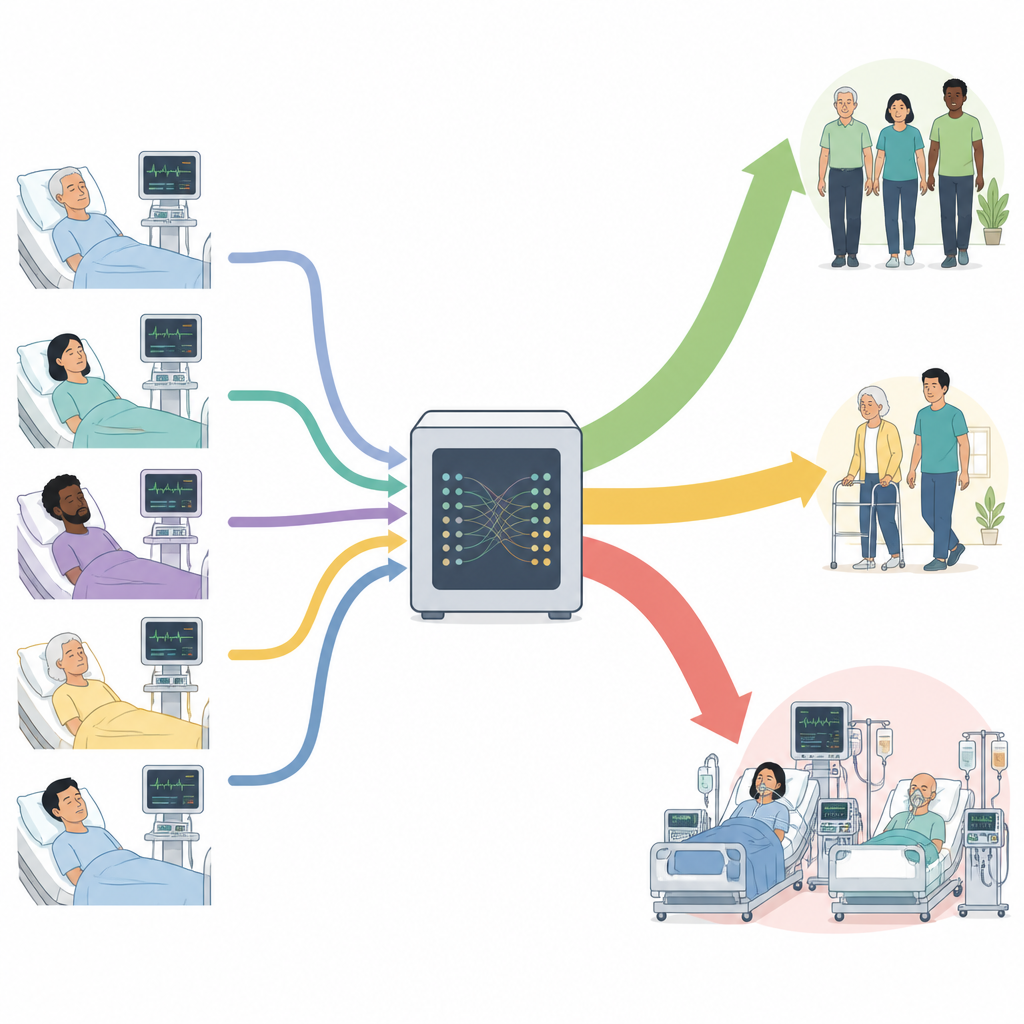
The researchers analyzed records from nearly 48,000 adults with sepsis treated in intensive care units in China and in large United States hospital databases. They looked at how organ function scores and vital signs changed over time, rather than at single snapshots. Using statistical tools, they found that patients tended to follow three broad paths after arriving in the ICU: rapid recovery, slow recovery, or steady clinical deterioration. These paths were not simply labels; they reflected clear differences in age, existing illnesses, organ damage, and survival. Patients on the deterioration path were older, had more chronic disease, and showed rising organ failure scores and growing need for breathing machines and blood pressure drugs.
Watching the rhythm of the body
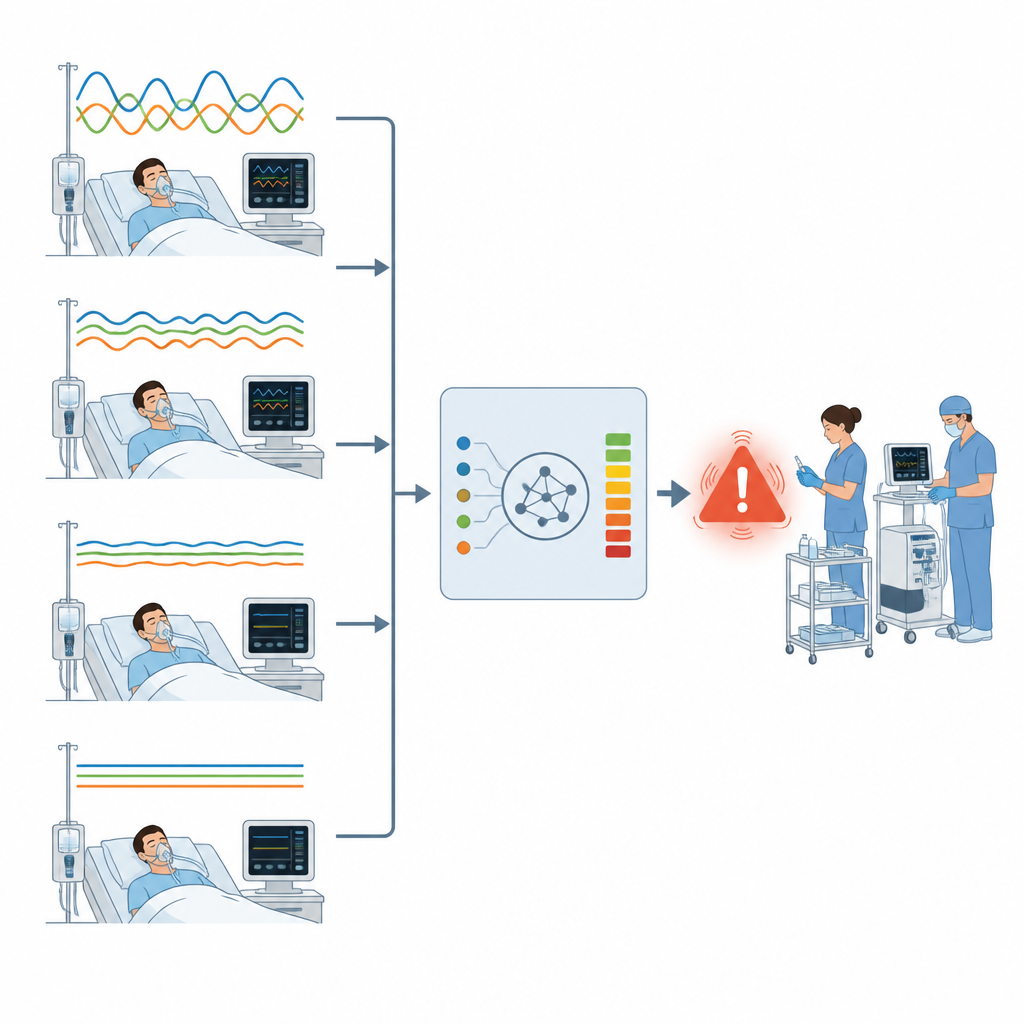
Beyond average values such as blood pressure or heart rate, the team focused on how much these signals varied over time. They discovered that the “wiggle” in heart rate, known as heart rate variability, carried important clues. Patients whose heart rate pattern became too steady, with little natural variability, were more than twice as likely to die within 28 days as those who kept a more flexible rhythm, even after accounting for age and illness severity. Similar, though smaller, effects were seen for swings in blood pressure and breathing rate. These findings support the idea that a healthy body has rich, adaptable rhythms, and that loss of this complexity can warn of an impending crash before traditional signs appear.
Teaching computers to spot danger early
To turn these patterns into a practical tool, the researchers built an ensemble machine‑learning model, a kind of advanced computer program that combines several prediction methods. It used both baseline information, such as age and type of infection, and dynamic features like trends, slopes, and variability of vital signs and lab tests. The model was trained in one hospital, then checked in a later group of patients and in two large public ICU databases. It accurately distinguished patients who would later deteriorate from those who would not, with strong performance across different hospitals, infection types, and age groups. On average, it warned of deterioration about 18 hours before it happened, and its risk estimates matched real outcomes well.
Impact on real‑world care
The team then embedded the model into a bedside decision support system that sorted patients into low, moderate, and high‑risk groups based on their predicted path. Clinicians followed standardized response plans for each level, such as closer monitoring or more aggressive treatment for those flagged as likely to deteriorate. After adjusting for differences between patients, those cared for with help from the system spent nearly two fewer days in the ICU, needed mechanical ventilation for about two fewer days, and had a 5.7% lower chance of dying within 28 days compared with similar patients treated before the system was used. Benefits were greatest for patients in the middle “slow recovery” group, who seemed most likely to be steered away from decline by earlier action.
What this means going forward
This study suggests that tracking how a sepsis patient’s condition changes over time, and especially how their heart and circulation rhythms lose flexibility, can help computers forecast who is drifting toward danger. When combined with clear bedside protocols, such predictions were linked to shorter ICU stays, less time on breathing machines, and fewer deaths. While the work still needs testing in randomized trials and in more health systems, it points toward a future in which smart, transparent monitoring tools help clinicians move from reacting to crises to anticipating and preventing them.
Citation: Zhang, R., Long, F., Zhao, Z. et al. Machine learning predicts sepsis deterioration trajectories. npj Digit. Med. 9, 385 (2026). https://doi.org/10.1038/s41746-026-02565-x
Keywords: sepsis, machine learning, ICU monitoring, heart rate variability, clinical deterioration