Clear Sky Science · en
Limited validity of an AI-powered app for dietary assessment in females with obesity
Why a Food-Tracking App May Not Tell the Whole Story
Many people turn to smartphone apps to keep an eye on what they eat, especially when trying to manage weight. These tools promise to turn quick snapshots of meals into precise calorie counts. This study tested whether one such artificial intelligence (AI)–powered app, called SNAQ, actually reflects how much energy women with obesity use in everyday life. The findings matter for anyone who might rely on these numbers to guide medical decisions, weight-loss plans, or long-term health goals.
How the Study Was Set Up
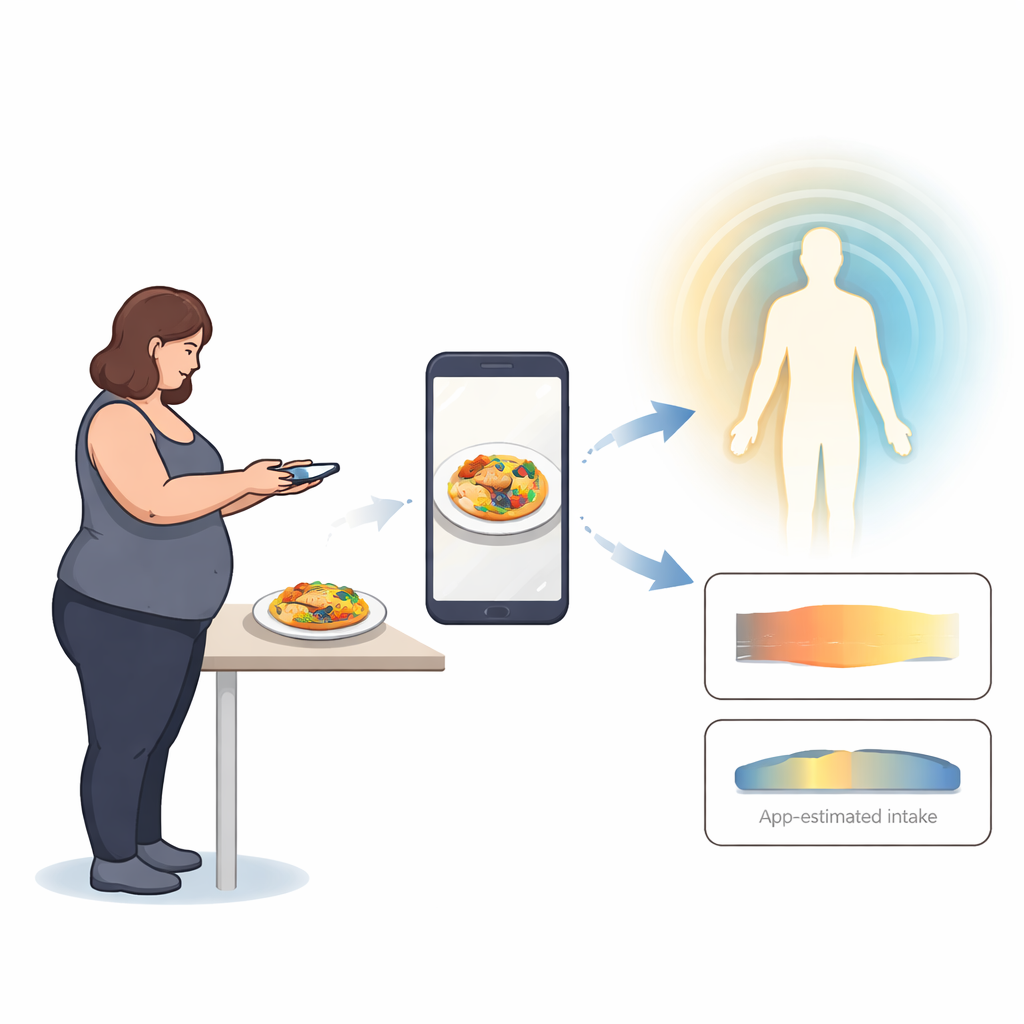
Researchers in Switzerland recruited 20 adult women living with obesity and followed them for a week during their normal daily routines. Each participant used the SNAQ app to photograph everything she ate and drank. The app used depth-sensing and computer vision to turn these pictures into estimates of daily calories and nutrients. To get a trustworthy yardstick, the team also measured each woman’s total daily energy use with a gold-standard lab method called doubly labelled water, which tracks how quickly harmless tracers leave the body. In addition, the women completed traditional 24‑hour diet interviews, a long‑standing but imperfect way of recalling the previous day’s intake.
What the App Got Wrong
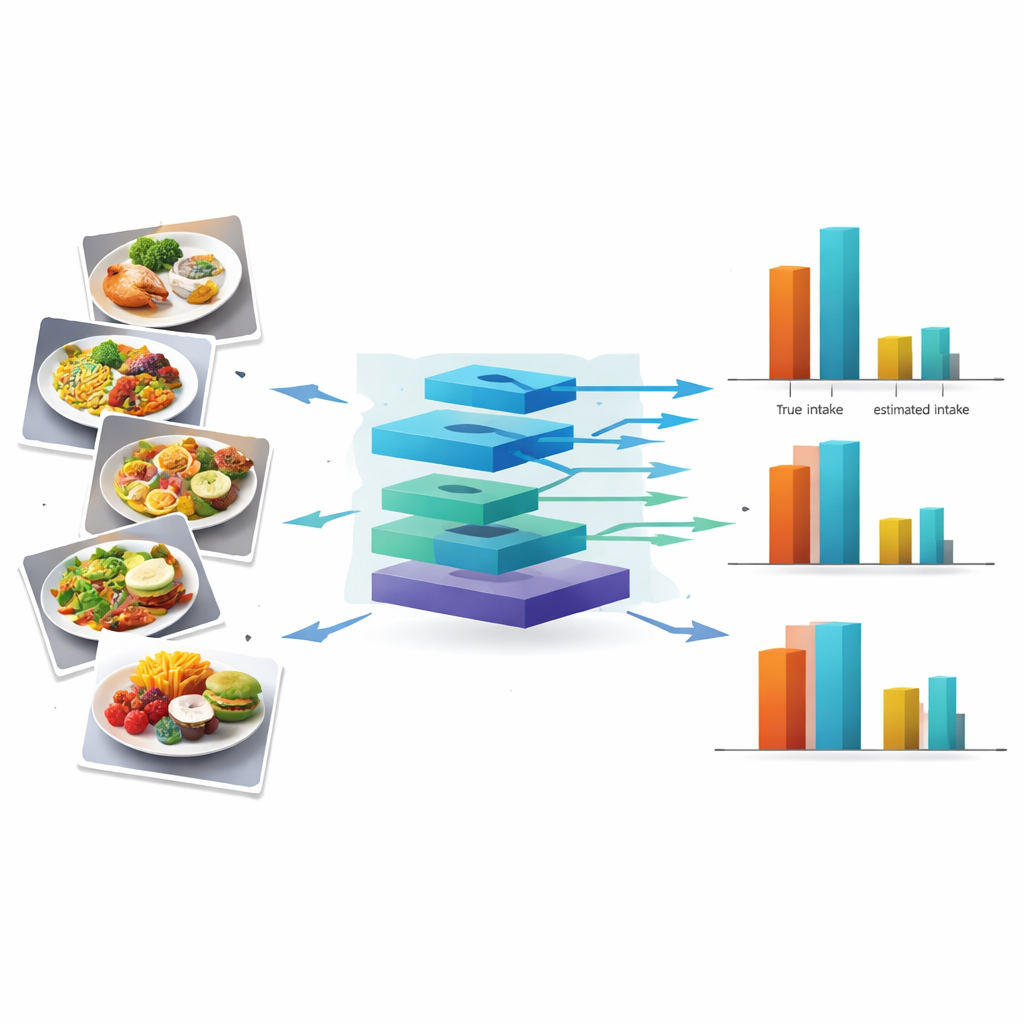
When the researchers compared the app’s numbers to the body’s actual energy use, the gaps were large. On average, the women’s bodies used about 3000 calories per day, but SNAQ reported only about 2200—an underestimation of roughly 25 percent. The 24‑hour recall interviews did even worse, missing about half of the true intake. Crucially, the errors were not consistent from person to person. For some women the app slightly overestimated calories, while for others it missed the mark by thousands. Statistical tests showed essentially no reliable match between what the app reported and what the body’s metabolism indicated for any given individual.
Why the Numbers Drift So Far Off
The researchers point to both human behavior and technology limits to explain the mismatch. Under real‑life conditions, people may forget to photograph snacks, change lighting, or partially cover food in the frame. The AI system must also guess what each item is and how much of it is present, which becomes harder when portions are large, foods are mixed together, or drinks are in opaque containers. Because training data often come from more standard meals and smaller portions, eating patterns common in obesity may fall outside the app’s comfort zone. Small mistakes at each step add up, leading to energy estimates that swing widely and fail to track body size, body composition, or short‑term weight changes.
Limits of Digital Shortcuts
Although group averages from the app looked somewhat closer to the lab method than the interview‑based recalls, this apparent success turned out to be misleading. A few big overestimates balanced many underestimates, hiding the fact that individual records were highly unstable from day to day. When the team applied standard checks that flag suspicious diet reports, only about one‑third of the app’s daily records could be considered even plausibly accurate. The app also showed no meaningful relationship to key physiological markers, such as fat‑free mass or changes in body weight, further undermining its usefulness for careful monitoring.
What This Means for Patients and Clinicians
The authors conclude that SNAQ, and likely similar AI‑based diet apps, are not yet dependable enough for precise dietary assessment in women with obesity. Underestimating energy intake by about a quarter—and doing so inconsistently—could easily mislead doctors and patients about why a treatment is or is not working. The study argues that before such tools are woven into clinical care, they must pass clear, standardized tests of accuracy, stability, and safety, much like medical devices or diagnostic tests. For now, digital convenience should be viewed as a helpful extra for raising awareness, not as a stand‑alone measuring stick for serious decisions about obesity treatment.
Citation: Serra, M., Alceste, D., Jucker, N. et al. Limited validity of an AI-powered app for dietary assessment in females with obesity. npj Digit. Med. 9, 357 (2026). https://doi.org/10.1038/s41746-026-02536-2
Keywords: diet tracking apps, artificial intelligence in nutrition, obesity management, dietary assessment accuracy, digital health validation