Clear Sky Science · en
Designing digital mental health interventions for older adults: a scoping review
Why this matters for aging minds
Many older adults struggle with low mood, anxiety, grief, and sleep problems, yet never receive help. At the same time, phones, tablets, and other digital tools are becoming everyday companions, even for seniors. This article maps out what works—and what doesn’t—when using digital technology to support the mental health of older people, offering a roadmap for families, clinicians, and designers who want technology to be a help rather than a hurdle.
How the researchers took a wide-angle view
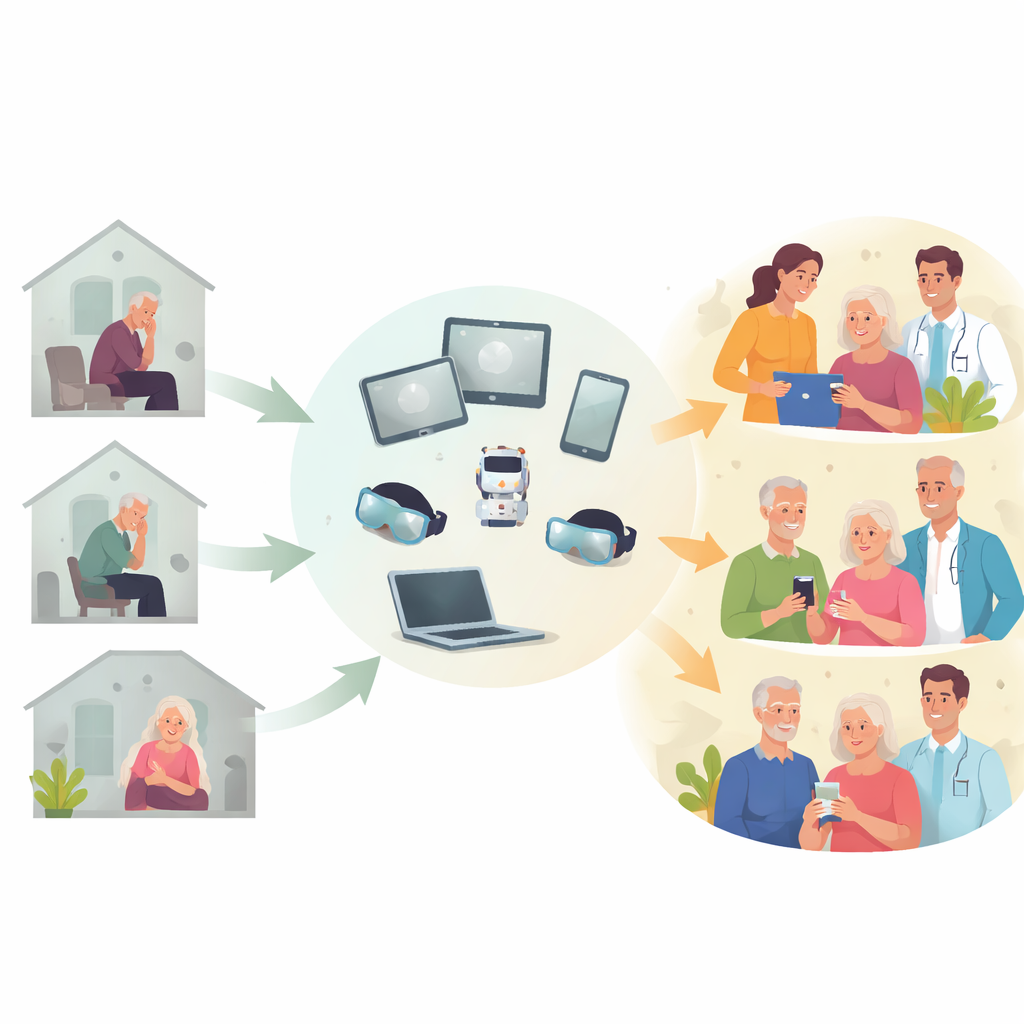
Instead of testing a single app or website, the authors performed a scoping review—an umbrella look across many kinds of evidence. They gathered 98 papers from around the world, including 81 experimental studies and 17 expert opinion pieces, all focused on digital mental health tools for adults in later life. These tools ranged from simple video calls with therapists to self-guided online courses, smartphone apps, virtual reality experiences, wearable sensors, and even socially assistive robots. Most were aimed at depression and anxiety, but some addressed grief, loneliness, sleep problems, or broader well-being.
What current tools for older adults look like
The review found that existing programs usually deliver structured psychological help in small modules, often 20–60 minutes long and spread over several weeks. Many rely on well-known approaches such as cognitive behavioral therapy, mindfulness, acceptance and commitment therapy, or psychoeducation. Content is often text-based but may be enriched with audio, images, videos, animations, or games. Interactivity is a key ingredient: some programs include chatbots that give automatic feedback, online groups where users can share stories, or messaging with coaches and clinicians. Older adults commonly access these tools through phones, tablets, or computers, sometimes with added sensors or virtual reality to track movement, sleep, or mood. Support from therapists, nurses, coaches, or trained laypeople frequently accompanies the digital program, helping with both technical problems and emotional guidance.
Making technology fit the realities of aging
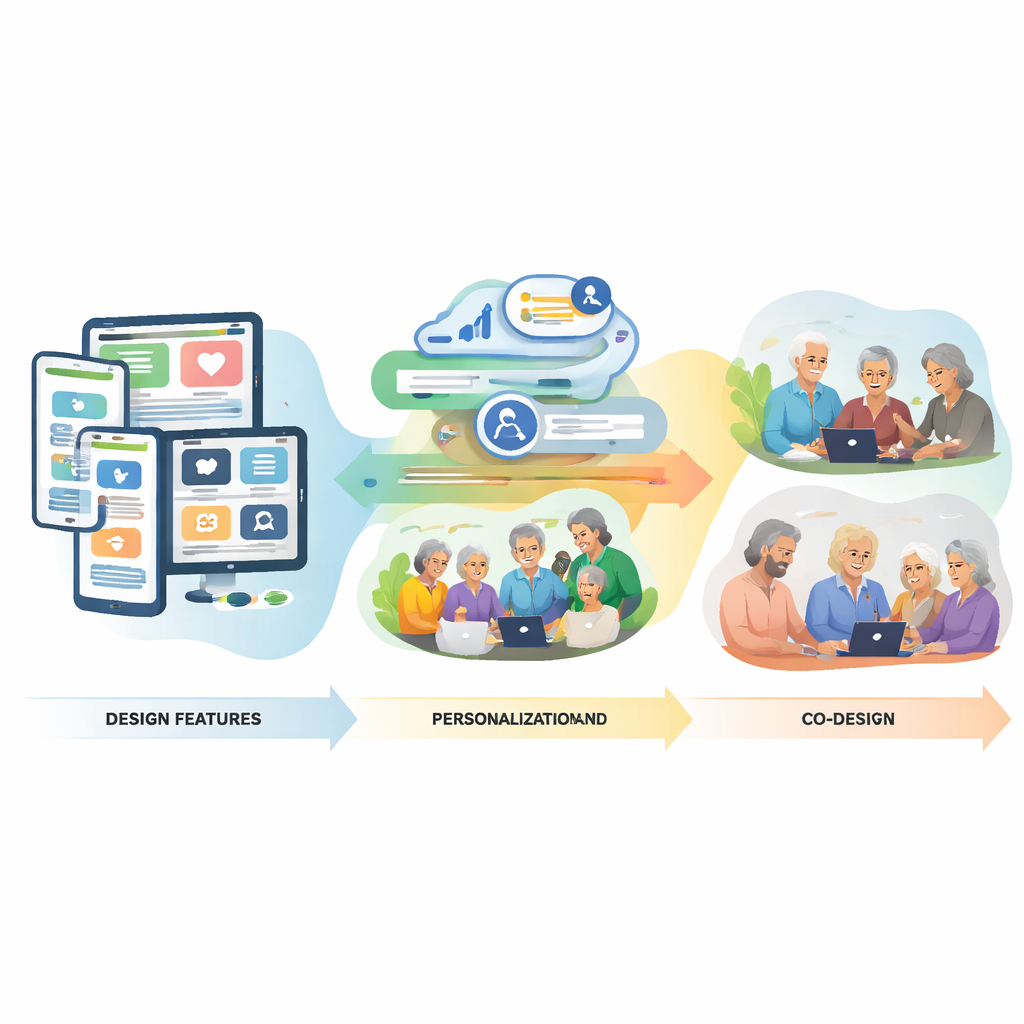
A central message of the review is that older adults are not just “slower versions” of younger users. Age-related changes in vision, hearing, memory, and hand strength mean that design details matter. Helpful adjustments include larger text, high-contrast color schemes, subtitles and audio descriptions, simple controls suited to shaky hands, and clear, plain-language instructions broken into short chunks. Programs that use stories, examples, and topics drawn from later life—such as retirement, bereavement, changing roles, and staying independent—tend to feel more relevant. Personalisation is also crucial: some tools tailor content and reminders to a person’s preferences and health profile, or use machine learning to adjust music, exercises, or module order based on ongoing feedback. Yet only about half of the interventions clearly reported such age-specific adaptations, and co-design—building tools together with older adults from the ground up—was rare.
Barriers, blind spots, and expert advice
Even well-intended tools can fall short. Studies reported that older users sometimes found exercises confusing, content too dense, or prompts too frequent and disruptive. Experts highlighted three broad challenge areas: personal limitations (such as frailty, low digital skills, or lack of interest), technology issues (interfaces not designed with seniors in mind, and worries about privacy or errors made by artificial intelligence), and social barriers (limited access to devices or the internet, language and cultural gaps, and stigma around mental health). To address this, experts recommend co-designing tools with older adults, building in strong accessibility features, using playful game-like elements to keep people engaged, involving caregivers and health professionals for ongoing technical and emotional support, and following strict standards for data protection and confidentiality.
What this means for future care
Overall, the review suggests that digital mental health tools can reduce symptoms of depression, anxiety, and loneliness in many older adults, but only when thoughtfully designed and supported. The most promising vision is a blended approach in which simple, accessible technology delivers flexible, personalised help, while trusted people—clinicians, family members, peers, or trained helpers—stay involved to guide and encourage use. Emerging technologies such as virtual reality, wearables, sensors, and artificial intelligence may further personalise care, but they must be developed with seniors’ input and privacy in mind. For families, practitioners, and designers, the takeaway is clear: when digital mental health tools are built around the real needs, abilities, and preferences of older adults, they can become powerful allies in protecting emotional well-being in later life.
Citation: Rajappan, D., Yin, R., Martinengo, L. et al. Designing digital mental health interventions for older adults: a scoping review. npj Digit. Med. 9, 264 (2026). https://doi.org/10.1038/s41746-026-02523-7
Keywords: digital mental health, older adults, telehealth, cognitive behavioral therapy, accessibility design