Clear Sky Science · en
The role of agentic artificial intelligence in healthcare: a scoping review
Smarter Helpers Behind the Hospital Scenes
Imagine a digital assistant in the hospital that doesn’t just answer questions, but quietly watches what is happening, decides what needs to be done next, and takes action without being asked every time. This article explores that emerging kind of technology—called “agentic AI”—and looks at how close we are to having such systems safely support doctors, nurses, and patients in real clinical care.
From Simple Programs to Goal-Driven Partners
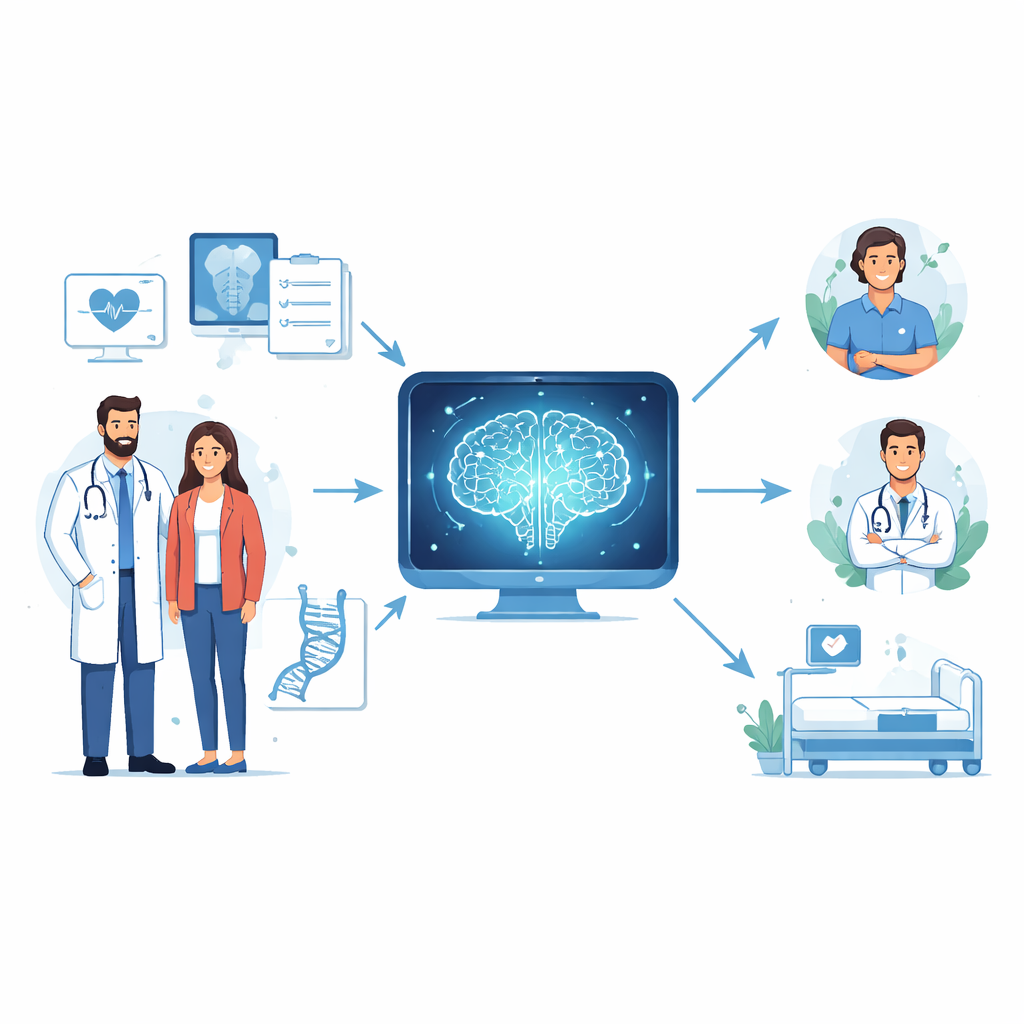
Computers in medicine started out as calculators and rigid rule-followers: they could classify an image or flag an abnormal lab value, but only when told exactly what to do. Newer “generative” systems, such as chatbots, can produce text, images, or code, yet still wait for human prompts. Agentic AI goes a step further. These systems are designed around goals—like improving a trauma team’s response, tailoring cancer treatment, or helping a child progress in therapy. They gather information from many sources, plan a course of action, call other software tools on their own, and adjust what they do based on how things unfold, all while humans remain in charge of the big decisions.
Where These Digital Agents Are Being Tested
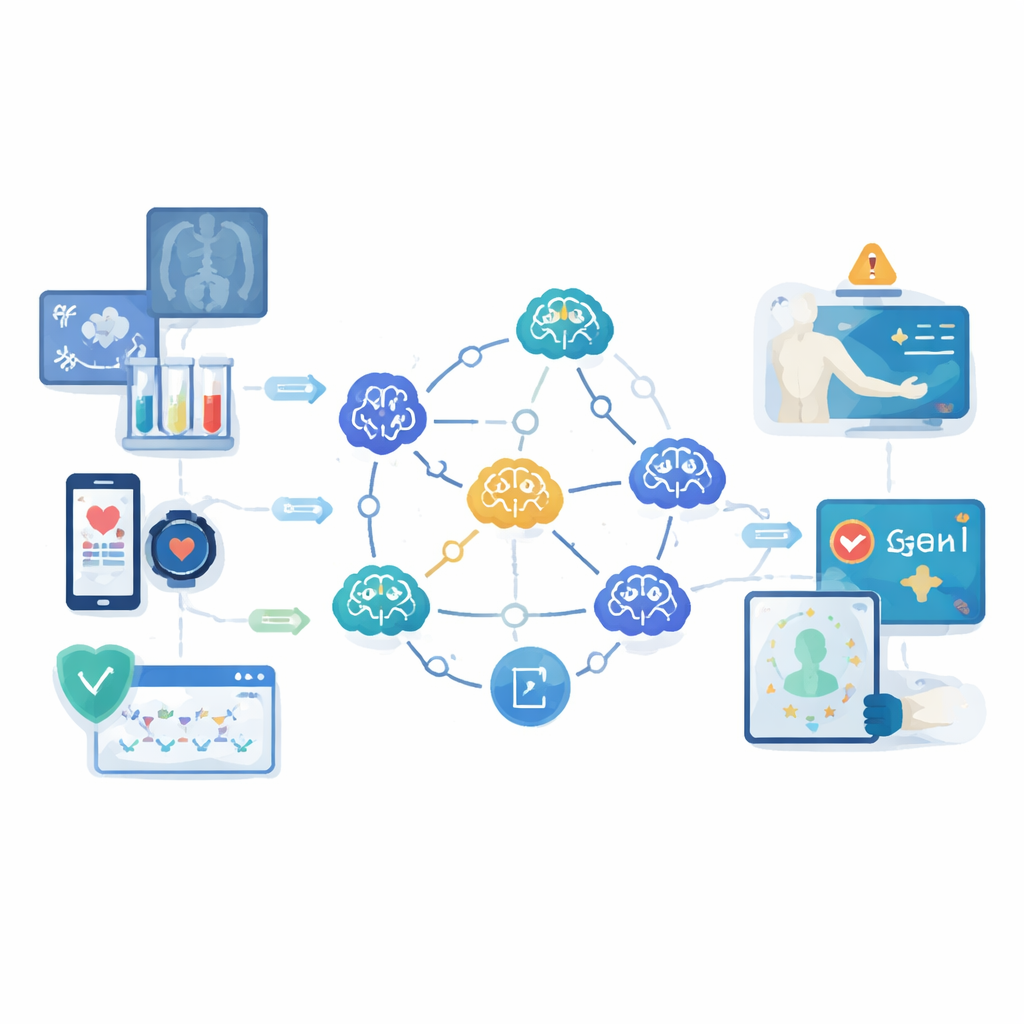
The authors searched five major research databases and found only seven studies worldwide that truly used this more independent style of AI in healthcare. The projects covered emergency care, cancer treatment and diagnosis, medical imaging, rehabilitation, and protein analysis for drug discovery. One system tracked trauma cases in real time, creating more complete reports and triggering alerts when vital signs went off track. Another sent customized daily messages to cancer survivors to encourage walking. A virtual reality game adjusted its difficulty to help children with Down syndrome build motor and social skills. Other systems focused on reading chest X-rays, planning radiation treatments, detecting liver cancer from tiny particles in blood, and automatically analyzing complex protein data relevant to new therapies.
What These Systems Can Do Well—and Where They Fall Short
Across these experiments, the agentic systems showed they could operate with a degree of independence: they pursued clearly defined goals, took the initiative to run analyses or call other programs, and in some cases combined the efforts of several cooperating AI “agents.” Results were often impressive. One tool distinguished liver cancer from non-cancer cases with over 94 percent accuracy, including patients whose usual blood marker was misleading. Another matched or beat expert planners in designing radiation treatments, and a chest X-ray reasoning system reached state-of-the-art performance without being retrained for each new question. Yet these successes were tightly bound to narrow tasks. Most systems worked only in controlled settings, on carefully prepared data, and none could truly learn and improve over long stretches of time or remember past patients in a meaningful way.
Safety, Trust, and the Human Touch
The review also flags important risks. Because these agents can act on their own—retrieving data, suggesting plans, even triggering alerts—errors or poor coordination could have serious consequences, especially in time-sensitive fields like cancer care. Many of the studies had moderate to serious risk of bias and did not test the tools in everyday clinical practice. There are also concerns about hidden reasoning (“black box” behavior), cybersecurity, and who is responsible if an autonomous system contributes to harm. Regulators in the United States and Europe are beginning to treat medical AI as “high risk,” but current rules were not written with highly independent, goal-seeking software in mind. The authors argue that human oversight must remain central, and that clearer rules are needed about how far such systems may go on their own.
What Needs to Happen Next
For now, agentic AI in healthcare is more a promising prototype than a finished product. The review shows that these systems can help with a wide range of tasks—from monitoring patients and supporting rehabilitation to planning complex cancer treatments—but only one study has involved real patients in a controlled trial. The authors call for shared definitions of what counts as “agentic,” standard ways to measure safety and benefit, and larger, real-world clinical studies. Hospitals will also need better data systems, stronger privacy protections, and clear guidelines that keep clinicians in charge. If these foundations are built carefully, agentic AI could mature into a reliable digital teammate that lightens workloads, sharpens decisions, and ultimately improves patient care, rather than a mysterious black box making choices on its own.
Citation: Collaco, B.G., Haider, S.A., Prabha, S. et al. The role of agentic artificial intelligence in healthcare: a scoping review. npj Digit. Med. 9, 345 (2026). https://doi.org/10.1038/s41746-026-02517-5
Keywords: agentic AI, healthcare automation, clinical decision support, medical imaging AI, digital health