Clear Sky Science · en
From blink to care: smartphone video–based functional analysis and personalized management in pediatric blepharoptosis
Helping children with droopy eyelids
Some children are born with droopy upper eyelids, a condition called ptosis, which can block vision, affect how their eyes develop, and even influence how they feel about their appearance. Yet testing eyelid muscle strength in young kids usually requires a cooperative child, a trained eye specialist, and a clinic visit—three things that do not always line up. This study explores whether an ordinary smartphone, combined with modern artificial intelligence, can turn a simple blink video into a reliable eye exam and tailored guidance for families.
A new way to look at a blink
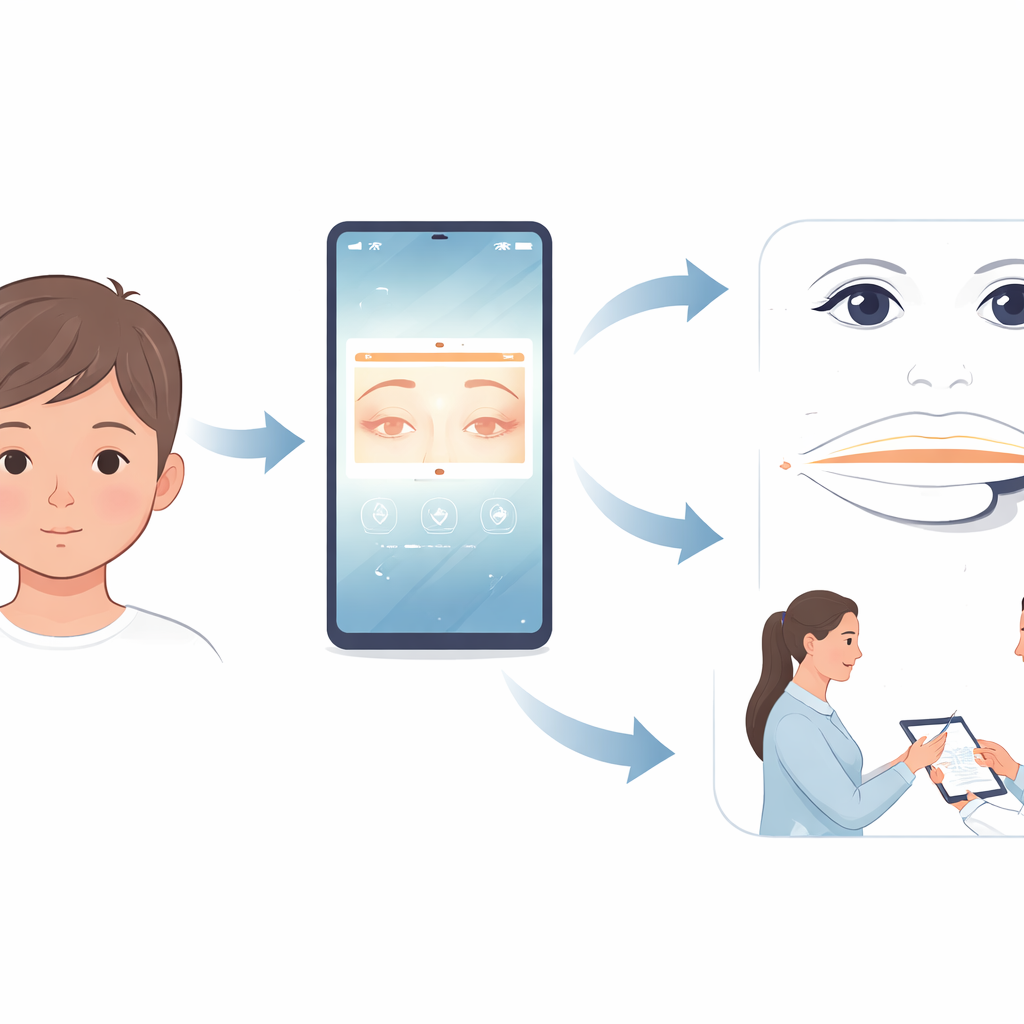
The researchers built a smartphone-based system to evaluate children with ptosis using three main parts: measuring eyelid shape, judging how well the eyelid muscle works, and answering parents’ questions through a specialized chat tool. Families or clinicians record short, high-speed videos of children blinking with a smartphone. From these recordings and regular face photos, the system automatically tracks how wide the eye opens, how far the lid droops, and how the eyelid moves during each blink. These measurements help doctors decide whether surgery is needed and which type is best, tasks that normally depend on a hands-on test done by a highly trained specialist.
Turning videos into trustworthy measurements
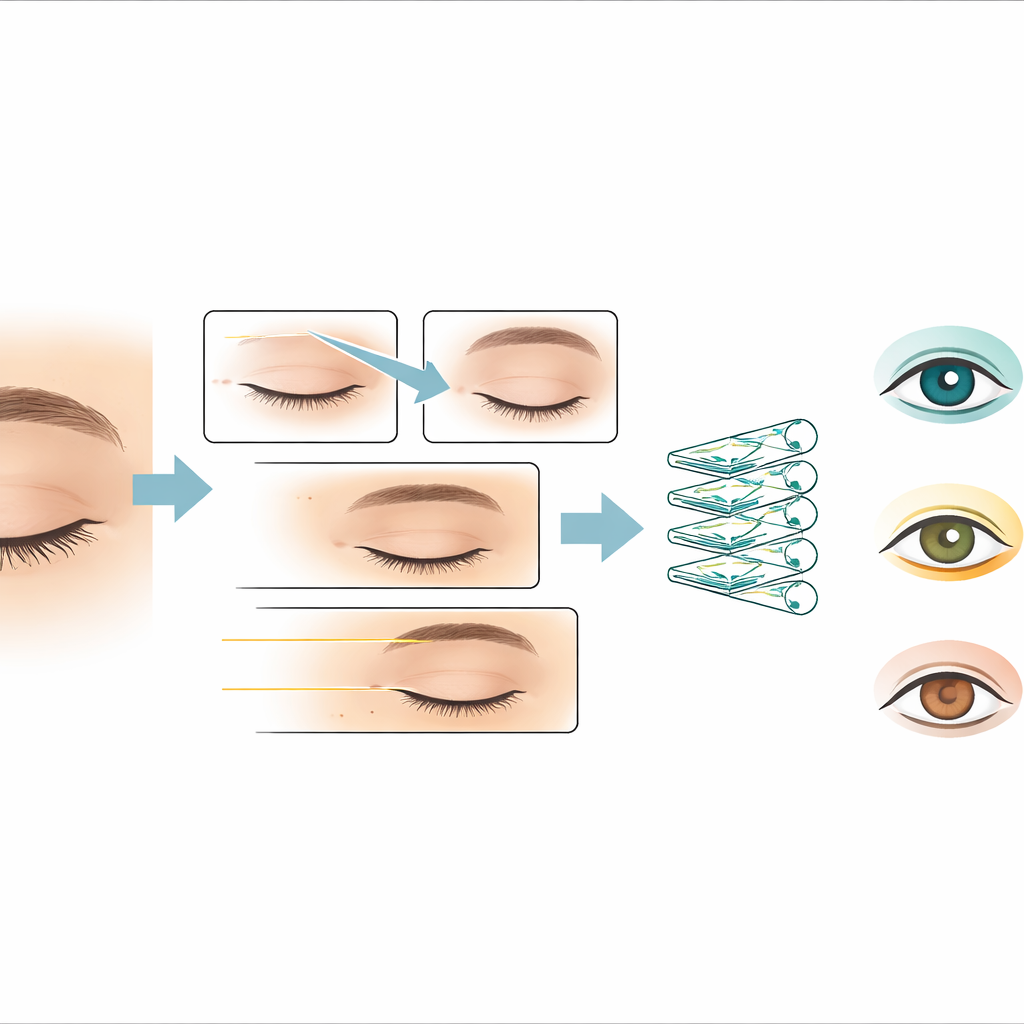
To see if the automated measurements could stand in for human experts, the team collected more than three thousand blink video clips and over a thousand facial images from several major hospitals. They trained an image analysis model to outline the opening between the eyelids and the colored part of the eye, then compared its readings with those made by ophthalmologists. The agreement between the computer and the human measurers was very high, with differences of only a few hundredths of a millimeter on average. The system also converted the blink videos into smooth curves showing how the eyelid moved over time, revealing that children with stronger eyelid muscles had faster closing speeds and more vigorous blinking than those with weak muscles.
Reading eyelid strength from motion
The next step was to judge how well the eyelid muscle was working—information that strongly guides surgical decisions. The researchers tested several advanced video-recognition models to see how well they could sort blinks into different strength levels. Their best model used two intertwined video pathways, one focused on overall appearance and one on quick movements, and it could also take in simple numeric information such as eyelid measurements and age. This combined approach nearly matched the performance of an expert oculoplastic surgeon in grading eyelid strength and clearly beat the accuracy of junior doctors. The system worked reliably across different video resolutions, both boys and girls, and a range of ages.
From diagnosis to guidance on a phone
To make the technology usable in daily life, the team wrapped these tools into a WeChat smartphone applet called the Blepharoptosis Evaluation Tool. In multicenter testing, the applet maintained strong accuracy when used on new patients and different phones, successfully spotting most children with abnormal eyelid muscle function and correctly assigning many of them to detailed strength categories. On top of the measurements, the applet includes a ptosis-focused language model, trained on medical references and expert–written answers. Parents could ask this chat tool questions about the condition, treatment options, and home care; eye specialists rated its answers as medically sound and easy to understand, and parents reported high satisfaction and felt its explanations matched in-person consultations.
What this could mean for families
In simple terms, this study shows that a smartphone can do much more than take cute videos—it can capture blinks that help doctors judge how serious a child’s droopy eyelid is and what to do about it. The system’s measurements closely match expert assessments, and its guidance tool can explain complex choices in plain language. While it still needs testing in more diverse populations and is tailored mainly to children, this approach could reduce unnecessary travel, speed up referrals to the right specialists, and give families clearer, earlier information. For many children with ptosis, that could mean better vision protection, more timely surgery when needed, and less anxiety for both kids and parents.
Citation: Li, H., Cao, J., Duan, S. et al. From blink to care: smartphone video–based functional analysis and personalized management in pediatric blepharoptosis. npj Digit. Med. 9, 358 (2026). https://doi.org/10.1038/s41746-026-02510-y
Keywords: pediatric ptosis, smartphone eye exam, blink video analysis, medical artificial intelligence, digital health tools