Clear Sky Science · en
Meta-analysis of computerised working memory training: behavioural gains, training parameters, transfer mechanisms, and neural correlates
Why Training Your Mind on a Screen Matters
Many people wonder whether brain-training apps can truly sharpen the mind or protect it from age-related decline. This study takes a hard, scientific look at one popular approach: computer-based exercises that challenge our ability to hold and juggle information in mind, known as working memory. By pooling results from dozens of brain-scanning experiments, the authors ask not only whether these programs help people perform better on thinking tasks, but also how they change activity in the brain itself.
Brain Training in the Digital Age
Working memory sits at the heart of everyday thinking, supporting attention, planning, and problem-solving. When it weakens, people may struggle to follow conversations, manage complex tasks at work, or live independently. Drug treatments to prevent or slow such decline are still limited. Computerised working memory training steps into this gap by offering structured, game-like tasks that can be delivered at scale, at home or in clinics, while automatically tracking how often and how well users train. This meta-analysis focuses specifically on these digital programs, treating them as a form of “digital medicine” aimed at preserving or improving cognitive health.
Pulling Together Evidence from Many Studies
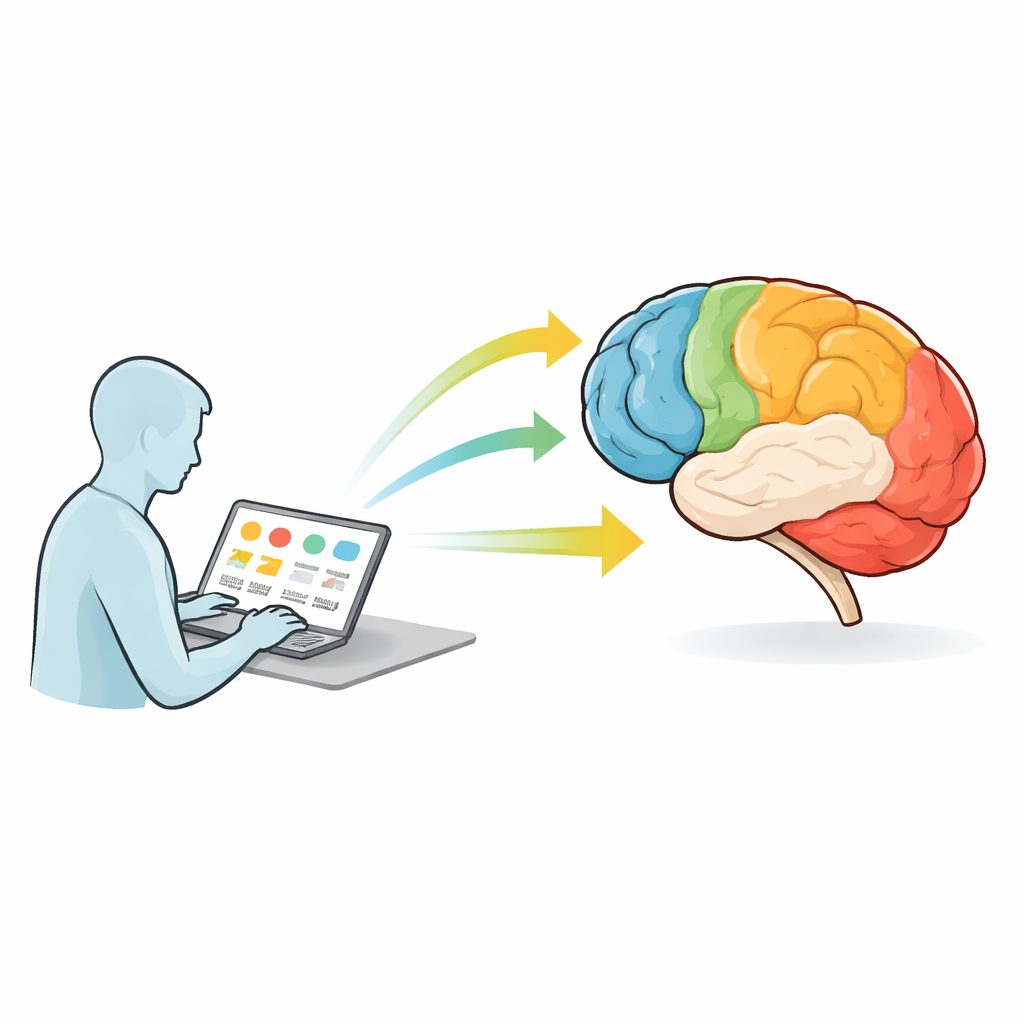
To obtain a clear picture, the researchers combined data from 45 neuroimaging studies involving almost 1,500 participants, ranging from children to older adults and including both healthy individuals and people with conditions such as stroke, schizophrenia, or attention difficulties. Participants typically trained several times a week for about a month, often with tasks that adjusted their difficulty in real time. The team used advanced statistical methods to pool behavioural results across many different tests and to integrate brain imaging findings reported as three-dimensional coordinates. This approach allowed them to estimate both how much performance improved relative to control groups and which brain areas consistently showed shifts in activity after training.
What Changes in Thinking and in the Brain
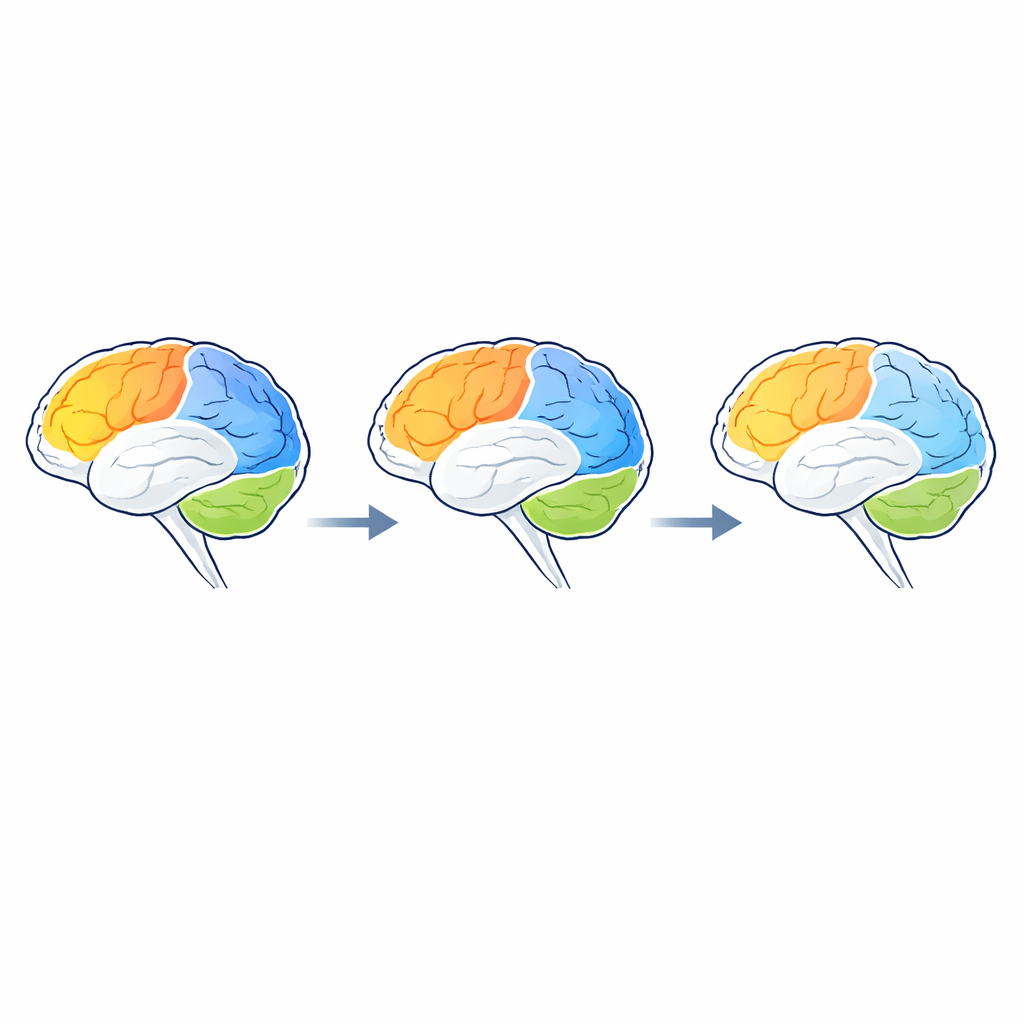
Across studies, people who completed computerized working memory training showed a moderate overall boost in their performance on thinking tasks compared with those in control conditions. Gains were strongest on tasks very similar to the ones they had practiced, but there were also smaller, reliable improvements on new tasks that tapped related skills. Importantly, these benefits appeared in both cognitively healthy volunteers and in individuals with existing cognitive problems, suggesting that the approach can help across a broad spectrum of users. When the authors turned to brain scans, they found that training reliably reduced activity in a set of regions spanning the front and side of the brain and the cerebellum at the back of the head—areas that are heavily involved in holding and manipulating information, focusing attention, and organizing sequences of actions.
How Much You Train and Who You Are
The amount of training people actually completed turned out to matter. Higher total training “dose” and better adherence were linked to greater improvements in task performance and to larger drops in activity in frontal brain regions that steer attention and control. Older adults did not gain less than younger adults on behavioural measures, but they did show stronger reductions in activity in one key frontal region, hinting that they may start out relying more heavily on these control systems and relax them as they become more efficient. Notably, one region near the back of the brain, the angular gyrus, stood out: people who improved the most on cognitive tasks also showed the largest decreases in activity there, and its activity changed in step with several other regions, suggesting a coordinated shift across a wider network.
What This Means for Everyday Brain Health
Taken together, the findings suggest that well-designed computerized working memory programs can produce meaningful, though not magical, improvements in how people perform on demanding thinking tasks, while also reshaping how key brain networks are engaged. The consistent pattern of reduced activation after training is broadly in line with the idea that the brain can learn to carry out familiar mental operations more efficiently, calling on fewer resources to achieve the same or better results. At the same time, the authors caution that most evidence comes from laboratory-style tasks, and it remains to be shown exactly how far these gains carry over into everyday life. Even so, the work strengthens the case for digital working memory training as a scalable tool to support cognitive health, especially when delivered with sufficient intensity and monitored for regular use.
Citation: Li, G., Liu, Y. & Chen, A. Meta-analysis of computerised working memory training: behavioural gains, training parameters, transfer mechanisms, and neural correlates. npj Digit. Med. 9, 337 (2026). https://doi.org/10.1038/s41746-026-02478-9
Keywords: working memory training, brain plasticity, digital medicine, cognitive aging, neuroimaging