Clear Sky Science · en
Machine learning–guided Huanglian Jiedu decoction targets STING in periodontitis-induced Alzheimer’s Disease
When Gum Disease Meets Memory Loss
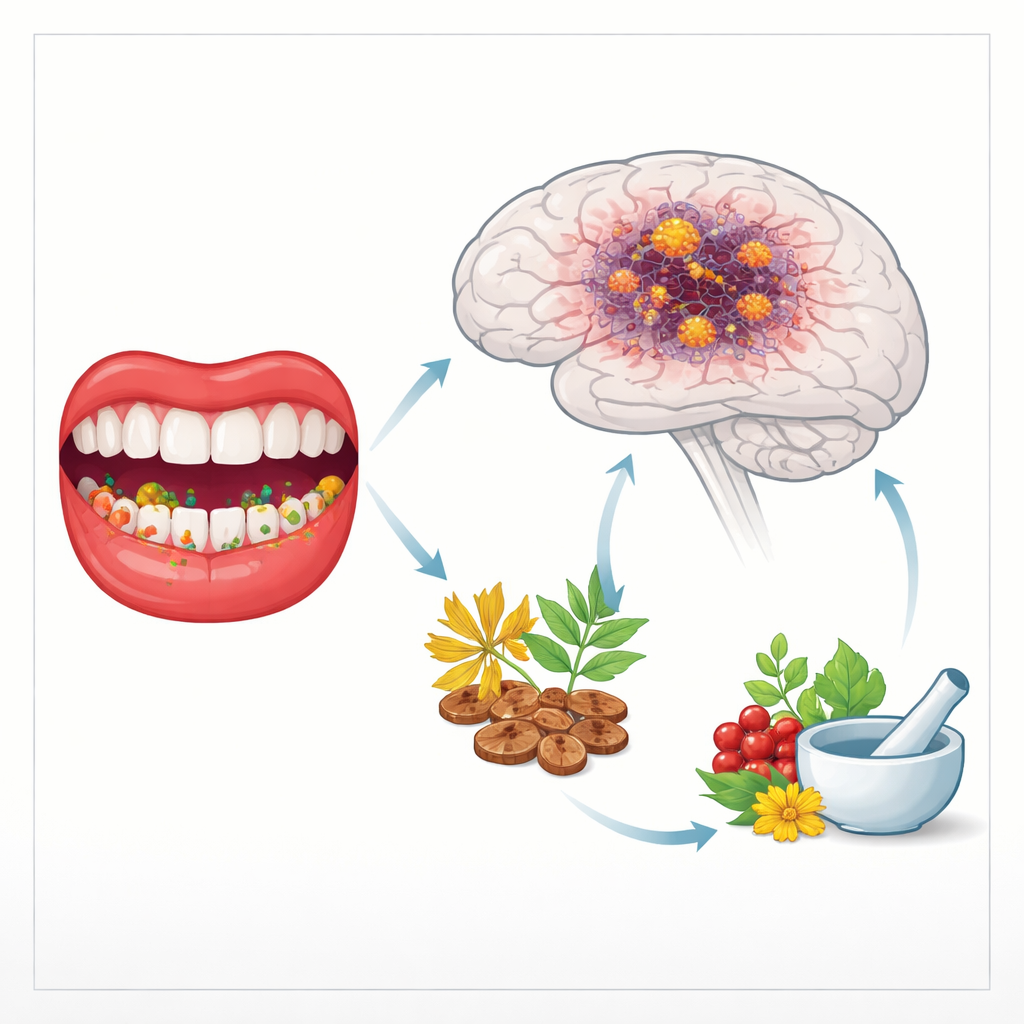
Many people think of bleeding gums and forgetfulness as completely separate problems. This study shows they may be more closely linked than we realize. The researchers explore how chronic gum infection could help drive changes in the brain seen in Alzheimer’s disease—and how a traditional herbal mixture, Huanglian Jiedu Decoction, might interrupt this harmful chain reaction.
From Sore Gums to a Troubled Brain
Chronic periodontitis is a long-lasting infection of the tissues that hold teeth in place. A key culprit is the bacterium Porphyromonas gingivalis, which can damage gums, enter the bloodstream, and even reach the brain. In people with Alzheimer’s disease, traces of this microbe and its toxic enzymes have been found in brain tissue. These bacterial products can worsen the buildup of sticky amyloid plaques and abnormal tau protein, both central features of Alzheimer’s, and they stir up a strong immune reaction in the brain’s resident support cells, microglia. The team started from this emerging picture: ongoing oral infection may act like a slow-burning fuse that eventually affects memory and thinking.
A Hidden Alarm System Inside Brain Cells
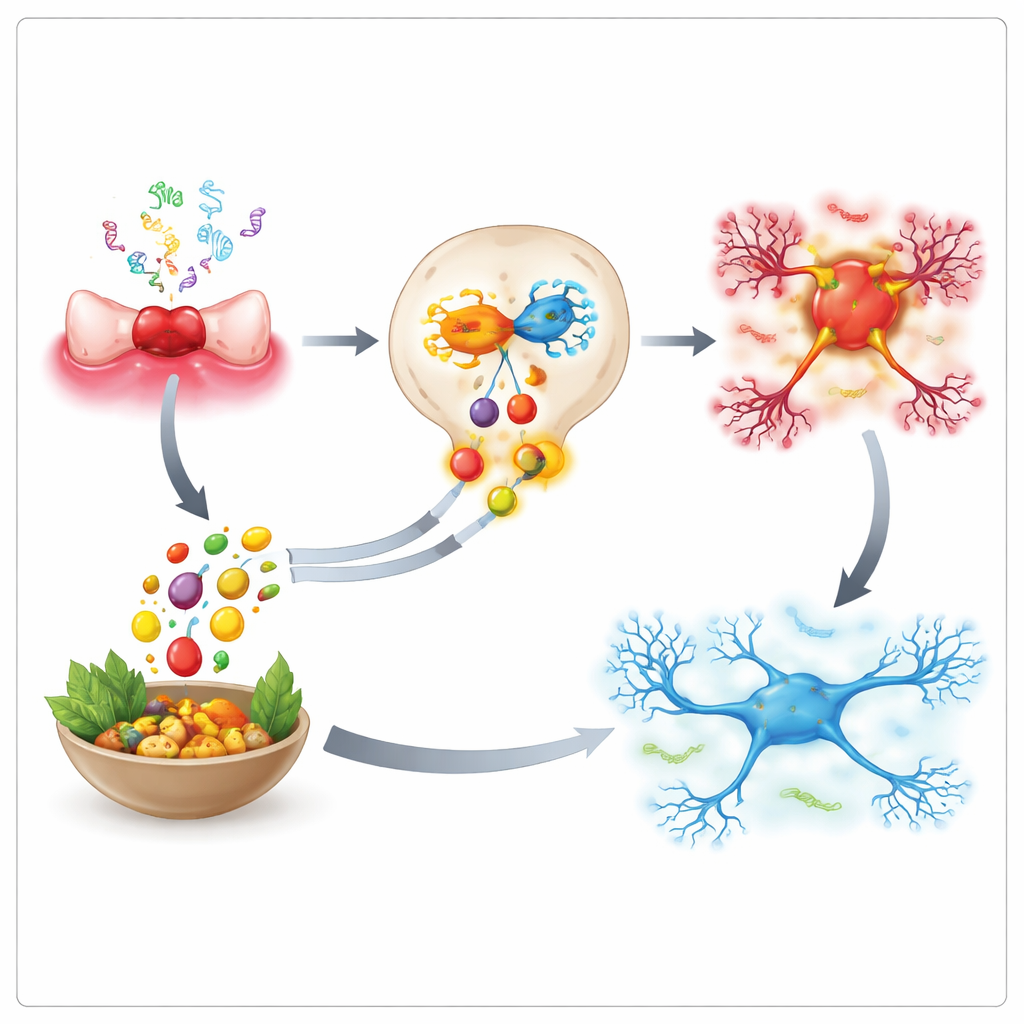
To understand how gum infection might talk to the brain, the researchers focused on an internal alarm system called the cGAS–STING pathway. This molecular “burglar alarm” detects stray DNA inside cells, whether from invading microbes or from damaged parts of the cell itself. When switched on, it triggers a wave of inflammatory signals. By mining public single-cell RNA sequencing data from human brains, the team showed that this alarm pathway is especially active in microglia from people with Alzheimer’s compared with healthy controls. They also examined gene activity data from gum tissue in periodontitis and found overlapping patterns, suggesting the same inflammatory axis is at work in both mouth and brain.
Rats, Herbal Medicine, and Smarter Computers
The scientists then built a rat model that ties these pieces together. Rats were given ligatures around their teeth and exposed to P. gingivalis to induce chronic periodontitis, which led to bone loss around teeth, brain colonization by the bacteria, and memory problems in maze tests. In these rats, the hippocampus—a region crucial for learning—showed more amyloid, more abnormal tau, and higher levels of inflammatory molecules. The team treated some animals with Huanglian Jiedu Decoction, a four-herb formula long used in Chinese medicine for infections and brain disorders. Treated rats lost less bone around their teeth, carried fewer bacterial traces in their brain and spinal fluid, showed calmer immune signals, and performed better on memory tasks than untreated diseased animals.
Letting Algorithms Point to the Main Culprit
Because thousands of genes change their activity in disease, the authors turned to machine learning to pick out the most important pathways. They fed hippocampal RNA sequencing data from healthy, diseased, and herb-treated rats into a suite of algorithms, including random forests, support vector machines, neural networks, and Bayesian networks. These tools consistently elevated the cGAS–STING pathway to the top of the list as a key driver linking gum disease to brain inflammation. When the team zoomed in experimentally, they found that Huanglian Jiedu Decoction dampened the activation of cGAS, STING, and their downstream partners TBK1 and IRF3 in brain tissue and in cultured microglia exposed to toxic bacterial enzymes. In cell experiments, the herbal extract curbed nitric oxide and a range of inflammatory messengers, with effects similar to a known drug that blocks STING.
A New Way to Calm the Brain’s Fire
Put together, the findings support a simple story that hides complex biology: ongoing gum infection can feed an internal alarm system in brain immune cells, pushing them into an overactive state that damages neurons and worsens Alzheimer-like changes. Huanglian Jiedu Decoction appears to work as a multitarget firebreak—reducing bacterial burden, quieting the cGAS–STING alarm, and easing inflammation in both mouth and brain. While more work in humans is needed, the study shows how modern data tools and traditional remedies can be combined to uncover new ways of cooling chronic inflammation that links oral health to brain health.
Citation: Li, J., Chen, M., Ren, P. et al. Machine learning–guided Huanglian Jiedu decoction targets STING in periodontitis-induced Alzheimer’s Disease. npj Digit. Med. 9, 293 (2026). https://doi.org/10.1038/s41746-026-02468-x
Keywords: Alzheimer’s disease, chronic periodontitis, cGAS–STING pathway, Huanglian Jiedu Decoction, neuroinflammation