Clear Sky Science · en
Ambient scribe in general practice: a multi-perspective before-after longitudinal mixed-methods study
Doctors, Computers, and the Fight Against Burnout
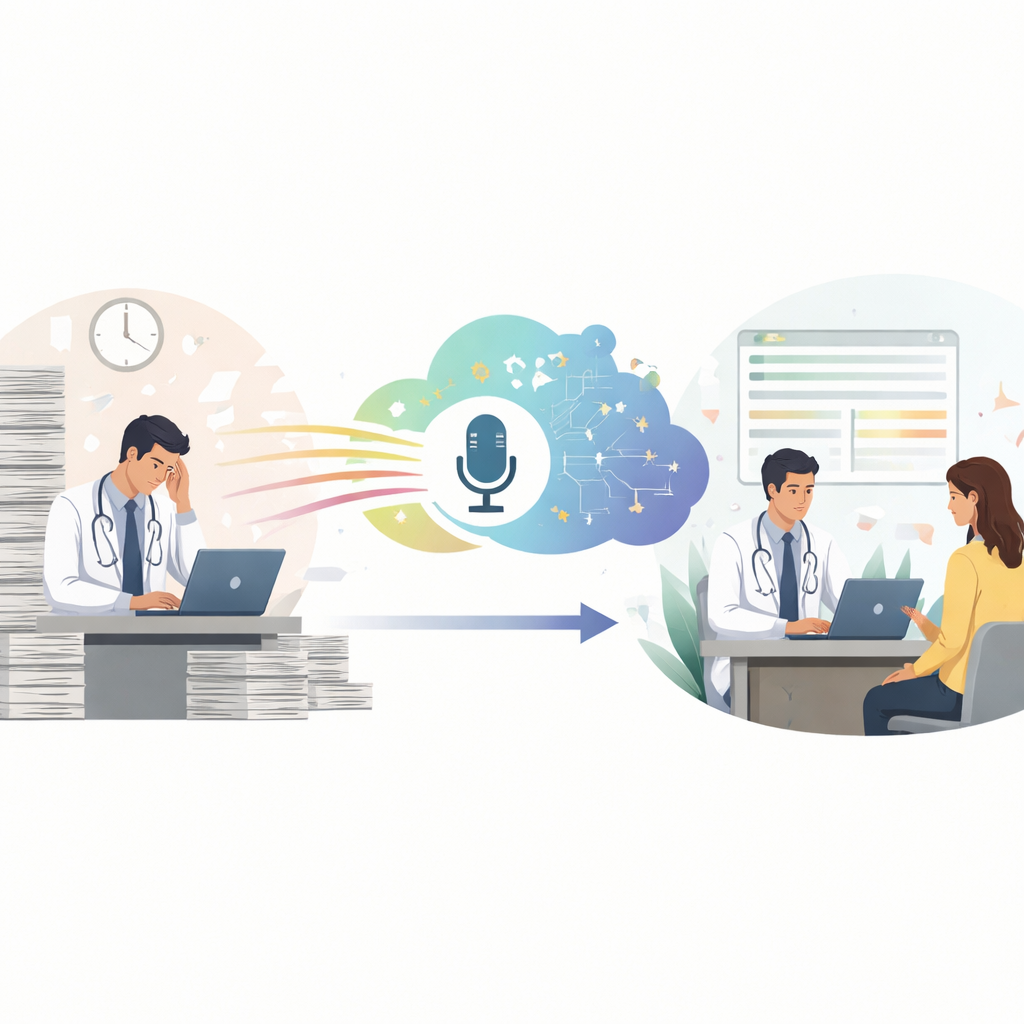
Family doctors are under growing pressure worldwide. Many feel they spend nearly as much time wrestling with computer systems as they do talking with patients. This study looks at a new kind of digital helper—an “ambient scribe” that quietly listens to the visit and drafts the medical note—to see whether it truly lightens the load for general practitioners and what it means for patients sitting in the exam room.
A Quiet Assistant in the Consultation Room
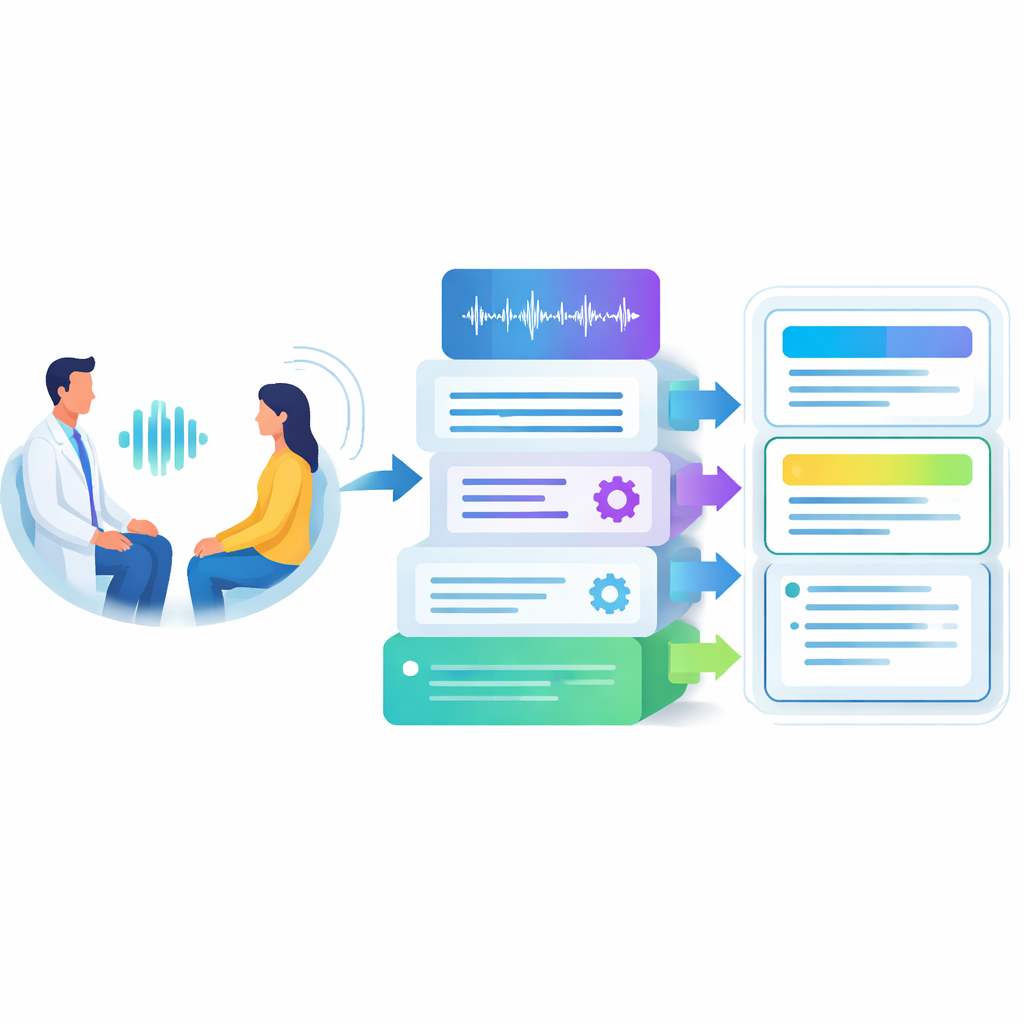
The ambient scribe tested in this research is a software tool that uses large language models to listen to conversations between Dutch family doctors and their patients. With a small microphone in the room, it turns speech into text in real time and then produces a structured summary of the visit in the familiar SOAP format: what the patient reports, what the doctor observes, the assessment, and the plan. Doctors can then review, edit, and paste this summary into the electronic health record. The tool was used by twelve general practitioners and trainees in everyday practice, without any previous experience with such systems, across 535 patient consultations.
Measuring Time, Words, and Experiences
The researchers designed a before-and-after study: first they observed consultations over two days with usual documentation, then again after the doctors began using the ambient scribe. An external observer carefully timed how long doctors spent writing notes and how long each visit lasted. They also examined how detailed the notes were, counting both the number of words and the number of clinically relevant items, such as symptoms, signs, diagnoses, and plans. To understand human experiences, patients filled in questionnaires about their visit, and both patients and doctors took part in in-depth interviews about communication, privacy, workload, and trust in the technology.
Time Saved, But Not Where You Might Expect
The headline finding is that the ambient scribe reduced the time doctors spent on documentation by about 43 seconds per consultation on average, a difference that remained when the data were tested in several statistical ways. However, total visit length did not shrink in a clear or consistent way. Doctors appeared to use the freed-up moments to expand the conversation, add detail to the medical history, or explain diagnoses and treatment plans more thoroughly. The notes themselves became longer overall, especially in the sections on signs and plans, while fewer symptom and measurement details were recorded, likely because the tool often failed to capture physical examination findings unless the doctor said them out loud.
How It Felt for Doctors and Patients
Many doctors described feeling less rushed and mentally taxed, reporting that it was easier to tweak an AI-generated summary than to type the entire note themselves. Some said they ran less behind schedule and that their job felt more satisfying when they spent less energy on paperwork. Patients usually did not notice the microphone at all and, in surveys, rated their experience about the same as before. In interviews, a subset of patients and doctors felt that with less typing, eye contact and connection improved, but this was not universal. Others worried that the tool could subtly discourage people from raising very personal issues, such as abuse, addiction, or sexual health, even though most interviewees said they themselves did not feel inhibited. Concerns about data security existed but were generally outweighed by trust in their doctor and the health system.
Hidden Trade-Offs and Future Directions
The study also uncovered some unintended downsides. Because the summaries were not always accurate and occasionally invented details, doctors had to review every note carefully. Some grew concerned that relying on the tool could weaken their own habit of summarizing the visit—a key part of how clinicians think through a case. The lower quality of documentation for symptoms and measurements, especially in more complex visits or when languages were mixed, raised questions about whether important information might be lost over time. The authors argue that better integration with electronic records, improved handling of physical exam findings, and features that can draft referrals or orders automatically will be needed before ambient scribes can safely take on a larger role.
What This Means for Everyday Care
For now, the ambient scribe looks less like a miracle time-saver and more like a promising helper that mainly eases mental strain. It shaves off some note-writing time and can make doctors feel less burdened, but it does not shorten visits or allow them to see many more patients. The technology may slightly strengthen doctor–patient connection for some people, yet it also risks leaving out key clinical details and making sensitive conversations harder for a vulnerable few. As these tools spread, the study suggests that health systems should treat them as aids for well-being and communication—while paying close attention to documentation quality, fairness, and the subtle ways that artificial intelligence can shape the most human parts of medical care.
Citation: van Linschoten, R.C.A., van Loon, C.M., Joanknecht, L. et al. Ambient scribe in general practice: a multi-perspective before-after longitudinal mixed-methods study. npj Digit. Med. 9, 299 (2026). https://doi.org/10.1038/s41746-026-02454-3
Keywords: ambient scribe, general practice, clinical documentation, physician workload, artificial intelligence in healthcare