Clear Sky Science · en
Evaluating a digital decision aid for atrial fibrillation rhythm control in a hybrid implementation-effectiveness trial
Why this matters for patients and families
Atrial fibrillation, a common heart rhythm problem, often forces people to choose between taking long-term medications or undergoing a procedure called catheter ablation. Both paths have trade-offs, and many patients feel unsure or pressured when making this decision. This study tested an online tool designed to help older adults understand their options, think about what matters most to them, and feel more confident partnering with their doctors. The findings show both the promise and the limits of digital tools in real-world clinics, and what needs to change to make them truly helpful for patients.
A heart rhythm problem with tough choices
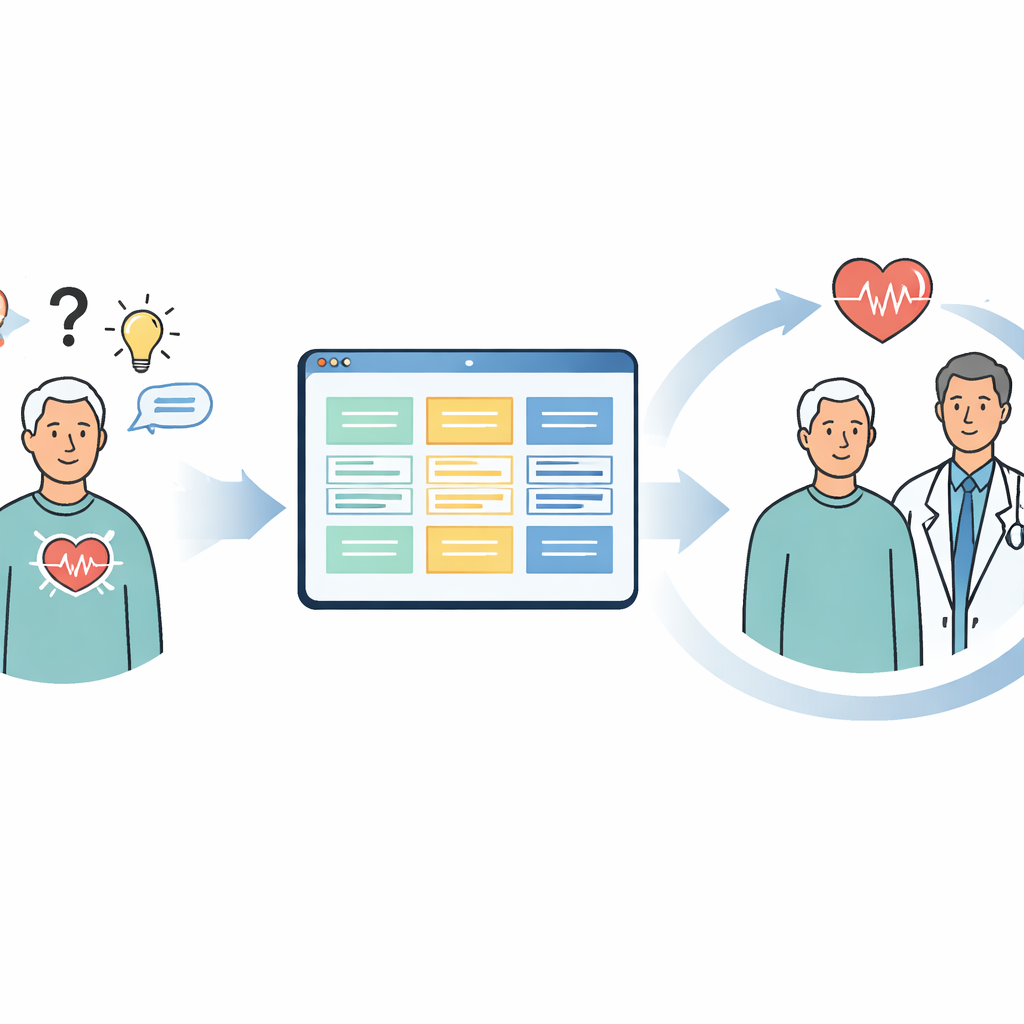
Atrial fibrillation (AF) affects about one in ten adults over 65 and can cause palpitations, fatigue, and a higher risk of stroke. For stroke prevention, decision tools already help patients weigh blood thinner medicines. But when it comes to controlling the rhythm itself—through daily antiarrhythmic drugs or an ablation procedure—patients rarely receive structured support. In one large survey, fewer than a quarter of people with AF said they took part in a shared decision about rhythm treatment, and many did not understand their options. The authors set out to build and test a web-based decision aid, created with input from patients and heart specialists, to fill this gap for older adults.
Testing a digital guide in real clinics
The research team ran a hybrid trial in two New York hospital centers, blending a feasibility test of the tool with an in-depth look at how it fit into everyday practice. Seventy-five adults with AF who were scheduled to discuss ablation were enrolled; their average age was 67, and nearly half had limited health literacy. After completing baseline surveys, participants received a link to the decision aid, which explained AF, compared medicines and ablation, laid out benefits and risks, and encouraged users to reflect on their values. Researchers measured how conflicted people felt about the decision, how confident they felt in making it, and later how much regret they experienced about the path they chose. They also interviewed 15 patients and 4 electrophysiologists to understand how, when, and why the tool was used.
What improved, what didn’t, and for whom
On average, the decision aid did not produce big changes in conflict or confidence across the entire group. Some patients started out very unsure and became more settled after using the tool; others began fairly comfortable and grew more conflicted once they learned new information, especially if they had already leaned toward one choice. At three months, most respondents had chosen medicines, some had ablation, and a few picked other options. Interestingly, people who underwent ablation reported the lowest regret, while those staying on medication reported the highest. Many users rated the website as clear, balanced, and the right length, and about two-thirds felt it gave enough information. Yet only about a quarter said it actually made their decision easier, and most said it did not change their choice.
Timing, comfort with technology, and clinic routines
Interviews revealed why the results were so mixed. Patients came to the decision aid at very different stages: some were just learning about ablation, while others had already decided for or against it. When the tool arrived after minds were mostly made up, it added little value and could even stir up new doubts. Health literacy and digital skills also mattered. Many participants had trouble with written medical information, and those with lower digital confidence struggled more to engage with a web-based resource, even if they could understand health content in general. Doctors described busy clinics, multiple online portals, and limited time, making it hard to build the tool into visits. Some patients preferred to defer to their doctors and were less comfortable with a model that asks them to take a more active role.

What this means for future decision tools
The study shows that a well-designed digital guide can be acceptable and informative, but it is not a magic fix for difficult medical choices. The authors conclude that such tools work best when offered to the right patients, at the right moment in their care journey, and in a way that matches their reading skills, comfort with technology, and preferred level of involvement. To truly support shared decision-making, future tools may need to be more personalized—adapting depth of information, visuals, and language to each user, and being tightly woven into clinic workflows. New technologies like artificial intelligence and large language models could eventually help tailor these resources and keep them up to date, but only if they are developed with attention to equity so that they narrow, rather than widen, gaps in care.
Citation: Reading Turchioe, M., Shamnath, A., Slotwiner, D. et al. Evaluating a digital decision aid for atrial fibrillation rhythm control in a hybrid implementation-effectiveness trial. npj Digit. Med. 9, 326 (2026). https://doi.org/10.1038/s41746-026-02405-y
Keywords: atrial fibrillation, shared decision making, digital health tools, catheter ablation, patient decision aids