Clear Sky Science · en
Development and explainable AI-driven characterization of a prognostic model for haploidentical transplantation outcomes
Why choosing the right donor matters
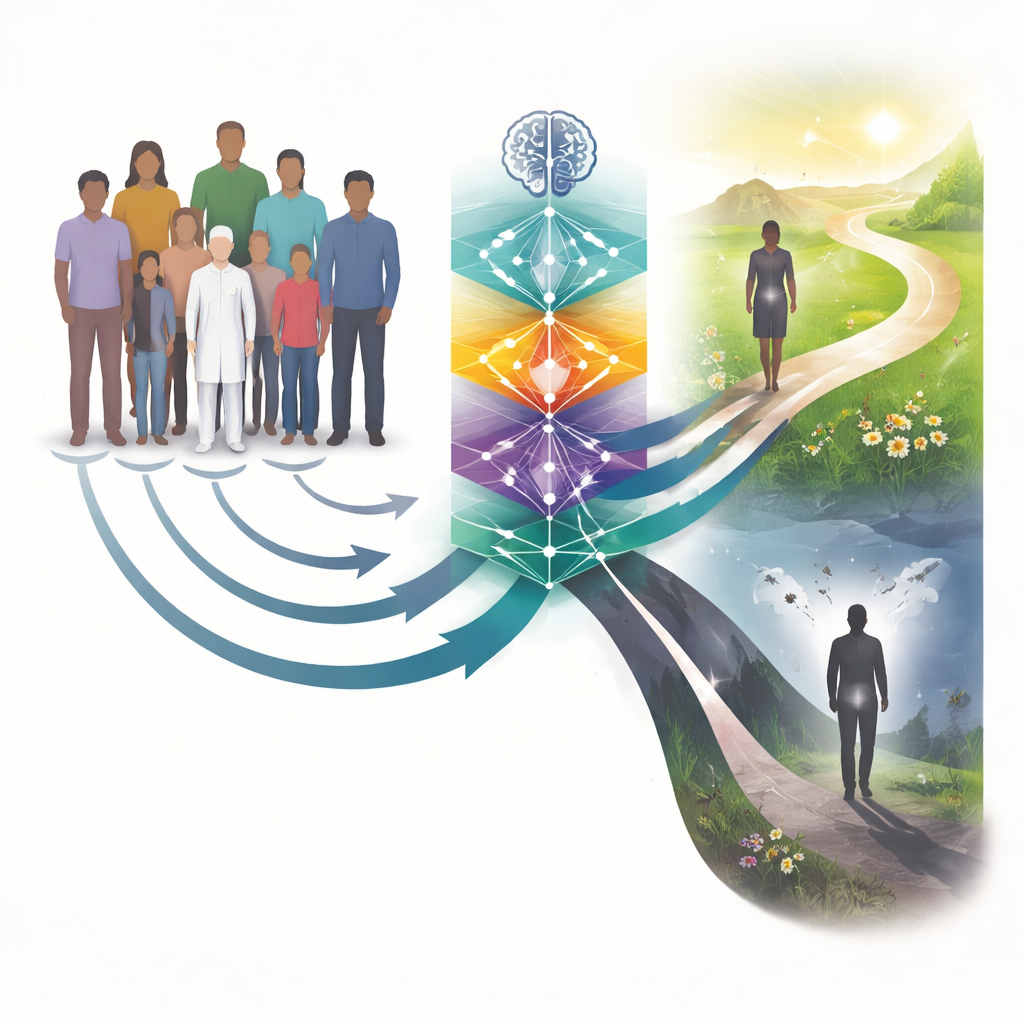
For people with serious blood cancers, a stem cell transplant from a partially matched family member can be lifesaving. Thanks to modern drugs that tame the immune system, nearly every patient now has several relatives who could donate. But that success creates a new problem: when there are many possible donors, how do doctors choose the one most likely to give the patient the best chance of long-term survival? This study uses an "explainable" form of artificial intelligence to turn thousands of data points from 668 transplants into a simple, practical guide for picking the safest donor.
A closer look at real-world transplants
The researchers analyzed every patient who received a half-matched (haploidentical) stem cell transplant with a standard immune-suppressing drug combination at a major cancer center between 2015 and 2024. Most patients had acute myeloid leukemia or related bone marrow diseases, were in their early fifties, and received intensive chemotherapy before transplant. Donors were typically relatives in their mid-thirties, and the majority of grafts came from bone marrow rather than circulating blood. The team gathered details on patient age, disease severity, medical conditions, donor age, and fine-grained tissue type differences known as HLA mismatches, then fed all of this into a machine learning model that predicts survival over time.
What age really means for donors and patients
Many earlier studies treated donor age as a simple “younger is better” rule. The new model revealed a more nuanced picture. It found a U-shaped relationship between donor age and risk of death: outcomes were best when donors were in their late twenties to early forties, and got worse both for very young donors and for older ones. Patient age, however, had a steadily rising impact—risk climbed sharply after about age 40 and dominated the overall picture. A heatmap of donor and patient ages showed that the most dangerous combinations were older patients paired with older donors, whereas younger patients with donors in their late twenties to early forties had the lowest risk. This means that donor age cannot be judged in isolation; its effect depends strongly on who the recipient is.
Hidden influence of tissue matching
Beyond age, the model examined how specific HLA mismatches between donor and recipient shape survival. By virtually holding all other factors constant and changing one feature at a time, the researchers found a clear ranking. The most harmful mismatch involved a region called HLA-DPB1 when it fell into a high-risk category, cutting predicted three-year survival by nearly 10 percentage points. Mismatches in the HLA-B leader and HLA-DQB1 regions also worsened outcomes, though to a slightly lesser degree. Surprisingly, one commonly watched region, HLA-DRB1, had no independent effect once DQB1 was taken into account, suggesting that much of the risk in this area comes from DQB1 itself. A newer way of grouping HLA differences, based on how proteins bind tiny fragments, slightly outperformed older matching rules and reclassified some “mismatched” pairs as safer than previously thought.
Sorting patients into risk groups
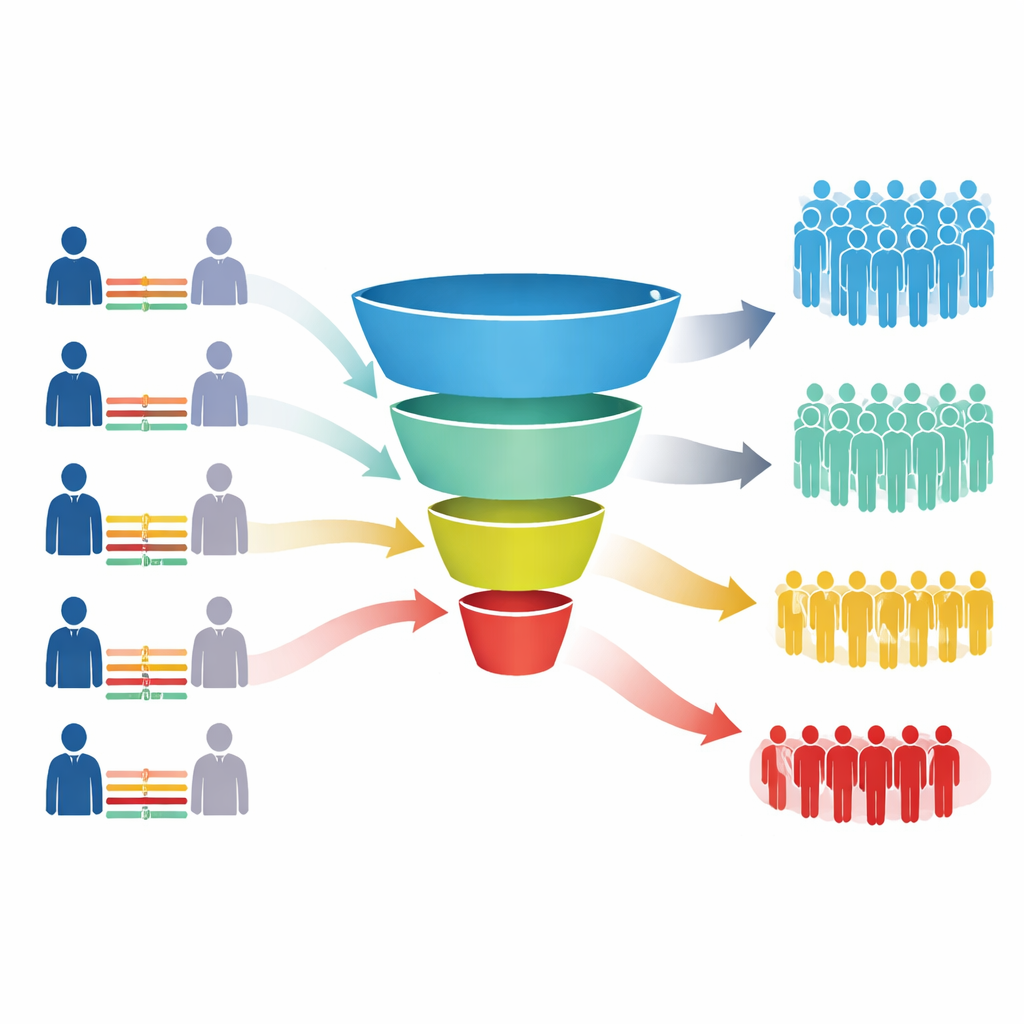
Using its full set of inputs, the AI model assigned each patient a continuous risk score and then divided the group into four quartiles, from lowest to highest risk. The separation in real-world outcomes was striking: around three-quarters of patients in the safest quartile were alive at three years, compared with less than one in five in the riskiest group. Patients in the highest-risk quartile tended to be older, to have more aggressive disease, and to carry heavier burdens of other illnesses. To make the complex model usable at the bedside, the team trained a simple decision tree that distilled the key message: people who are younger, have less advanced disease, and fewer other health problems sit at the safer end of the spectrum, while older, sicker patients with many comorbidities face much higher risks regardless of donor choice.
How a better donor can shift the odds
The researchers then asked a practical question: given a patient’s baseline risk, how much can smart donor selection actually help? They ran computer simulations that compared a “best-case” donor—about 30 years old with no high-risk HLA mismatches—to a “worst-case” donor—around 50 years old with all key mismatches. For many patients, especially those in the middle risk groups, picking the better donor shifted their risk by roughly one whole quartile. For example, a typical intermediate-risk patient could see predicted three-year survival climb from about 20% to 50%. Even among those in the highest-risk group, an optimal donor tripled the chance of being alive at three years, from roughly 10% to 30%. A detailed sensitivity check showed that avoiding the most dangerous HLA mismatches mattered even more than fine-tuning donor age alone.
What this means for patients and doctors
This work shows that in modern half-matched stem cell transplants, who the patient is and how advanced their disease has become still drive outcomes the most. Yet donor choice remains a powerful lever—especially steering away from certain high-risk tissue mismatches and favoring donors around their thirties. By combining large-scale clinical data with an explainable AI model, the study offers doctors a transparent, data-backed way to rank potential family donors and to estimate how much a better match can improve survival. While the findings need to be confirmed in multi-center studies, they point toward a future in which donor selection is guided not by simple rules of thumb, but by personalized risk forecasts that can be clearly explained to both clinicians and patients.
Citation: Mehta, R.S., Aljawai, Y.M., Kebriaei, P. et al. Development and explainable AI-driven characterization of a prognostic model for haploidentical transplantation outcomes. npj Digit. Med. 9, 302 (2026). https://doi.org/10.1038/s41746-026-02377-z
Keywords: haploidentical transplantation, donor selection, explainable artificial intelligence, HLA mismatch, stem cell transplant outcomes