Clear Sky Science · en
KRAS and BRAF mutations modify adjuvant chemotherapy outcomes in early stage colorectal cancer
Why this cancer study matters
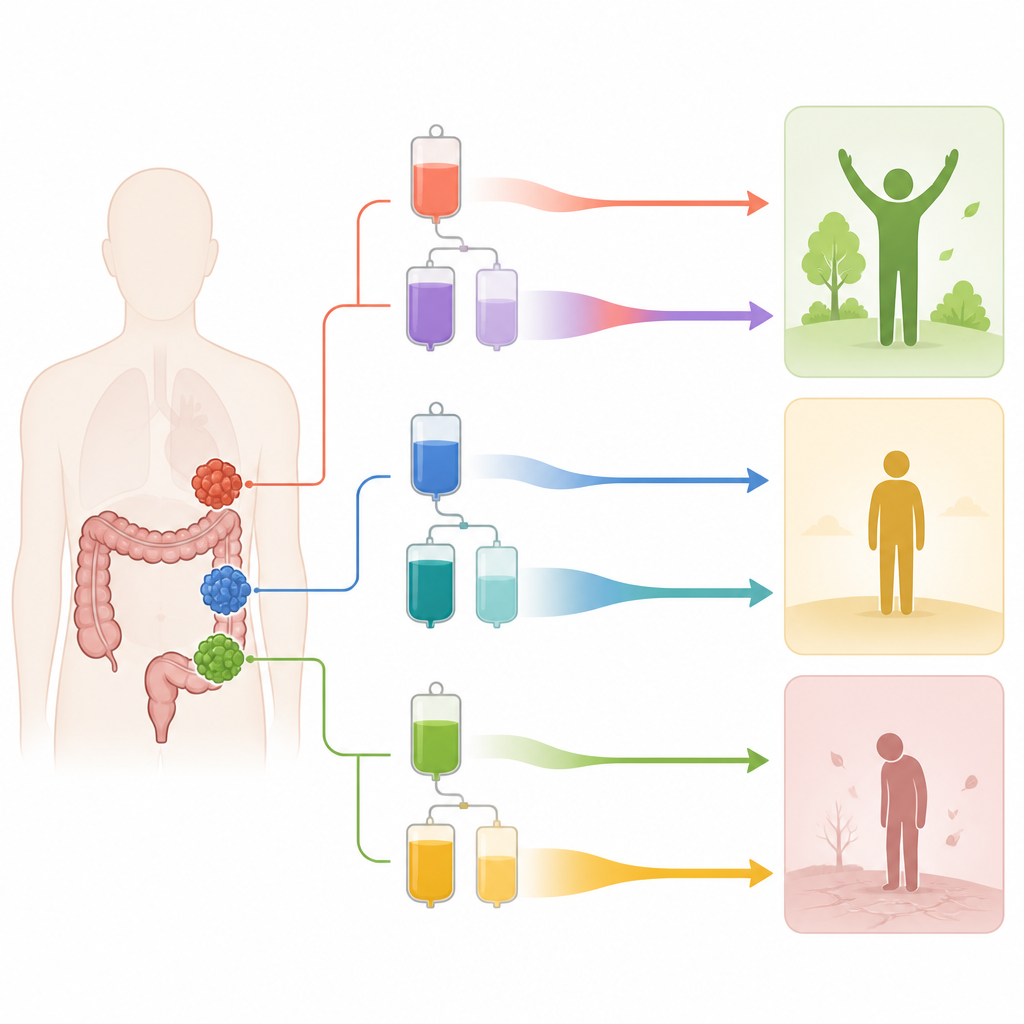
For many people treated for early stage colon or rectal cancer, chemotherapy after surgery is meant to wipe out hidden cancer cells and prevent the disease from returning. Yet not every patient benefits equally, and the drugs can cause nerve damage and other lasting side effects. This study asks a simple but crucial question: can common tumor gene changes help doctors decide who really needs a stronger chemotherapy mix and who might safely avoid it?
Two key tumor signals
The researchers focused on two genes, called KRAS and BRAF, that are often altered in colorectal tumors. These altered genes help drive cancer growth and are already used to guide treatment in patients whose cancer has spread. What has been less clear is whether these same gene changes matter for patients with earlier stage disease who undergo surgery with the hope of a cure. The team wanted to know if the benefit of adding a drug called oxaliplatin to standard chemotherapy depends on which of these gene changes is present, or if both genes are in their normal form.
Who was studied
The team analyzed data from the long running DACHS study in Germany, which follows thousands of people diagnosed with colorectal cancer. They selected 1185 patients with stage III cancer or a higher risk form of stage II cancer who had curative surgery and detailed testing of their tumors. About one third of tumors carried a KRAS mutation, 8 percent had a BRAF mutation, and the rest had neither change. Most patients received chemotherapy after surgery: either a fluoropyrimidine drug alone, such as 5 fluorouracil or capecitabine, or a combination that also included oxaliplatin. The researchers then tracked how long patients lived without the cancer returning, and overall survival, for more than 10 years on average.
Different genes, different payoffs from treatment
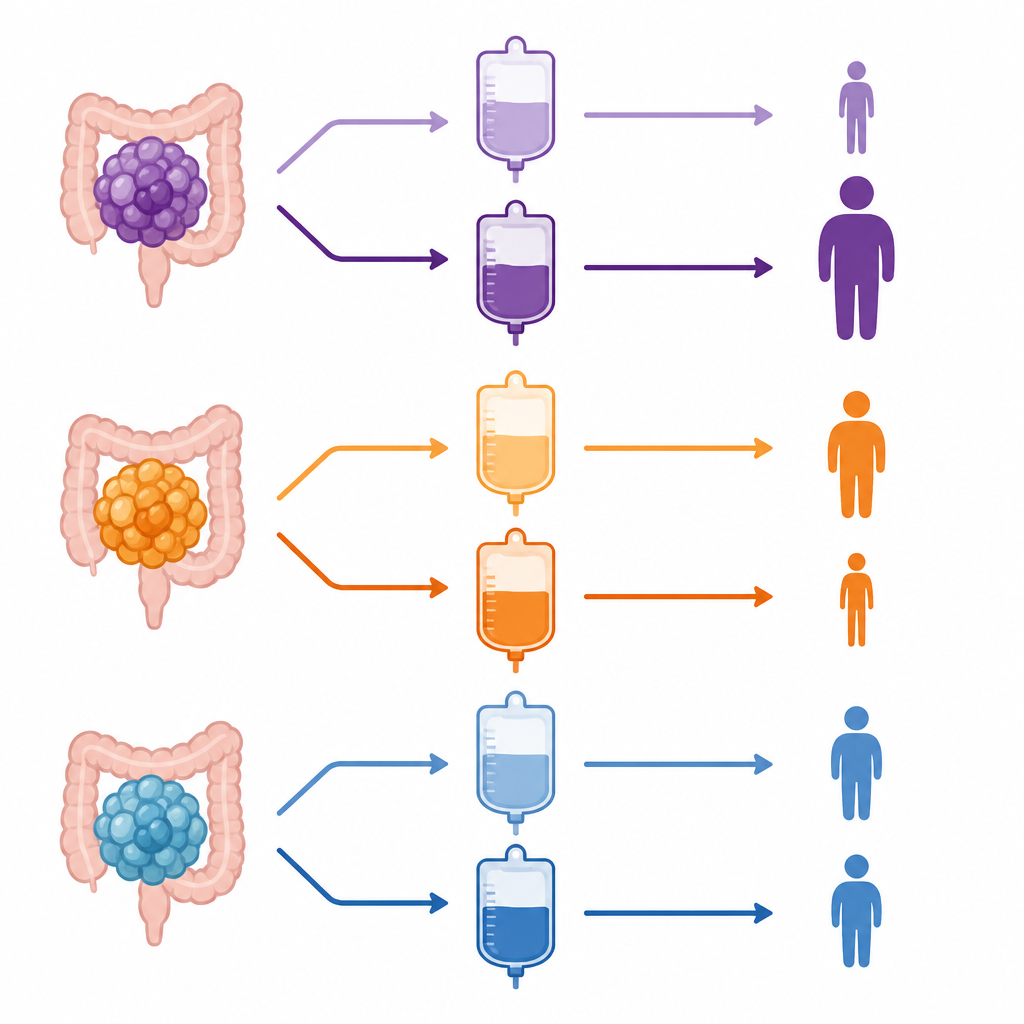
To fairly compare treatments, the team used advanced statistical methods to balance out differences between patients who received the two chemotherapy types. When they looked at all treated patients together, the overall benefit of adding oxaliplatin appeared modest. But once they separated people by tumor gene status, a striking pattern emerged. Patients whose tumors carried a KRAS mutation did better with the oxaliplatin combination, showing fewer recurrences and better overall survival than similar patients who received fluoropyrimidine alone. In contrast, patients with BRAF mutated tumors actually had worse outcomes when oxaliplatin was added, compared with those who received the simpler regimen. For patients whose tumors had neither mutation, survival was similar regardless of whether oxaliplatin was used.
What might explain these patterns
The findings echo laboratory work suggesting that KRAS mutated cancer cells may be less able to repair the DNA damage caused by platinum drugs like oxaliplatin, making them more sensitive to this treatment. BRAF mutated tumors, on the other hand, are often located in the right side of the colon, tend to have other genetic features linked to treatment resistance, and are already known to have a poorer outlook. In this study they remained hard to treat, and the data hinted that these tumors might not only fail to benefit from oxaliplatin, but could fare worse, although the number of such patients was relatively small and estimates were less precise.
How this could change care
Because this was an observational study rather than a randomized trial, the authors caution that hidden differences between patients could partly explain the results. Still, the work supports a more tailored approach to chemotherapy after surgery. If future studies confirm these patterns, doctors might favor oxaliplatin based combinations for patients with KRAS mutated tumors, while considering fluoropyrimidine alone or other strategies for those with BRAF mutations or with neither mutation. Such a strategy could spare many patients from unnecessary side effects while focusing the most intensive treatment on those most likely to benefit.
Citation: Wankhede, D., Rodriguez, M.J.U., Edelmann, D. et al. KRAS and BRAF mutations modify adjuvant chemotherapy outcomes in early stage colorectal cancer. npj Precis. Onc. 10, 186 (2026). https://doi.org/10.1038/s41698-026-01494-y
Keywords: colorectal cancer, KRAS mutation, BRAF mutation, adjuvant chemotherapy, oxaliplatin