Clear Sky Science · en
NAALADL1 modulates cellular resistance to Tumor Treating Fields in colorectal cancer
Why this research matters
Colorectal cancer is one of the most common cancers worldwide, and many people with advanced disease eventually run out of effective treatment options. This study explores a gentle, noninvasive therapy that uses alternating electric fields, called Tumor Treating Fields, and asks a key question: why do some colorectal cancer cells respond well while others resist, and can we tip the balance to make the treatment work better?
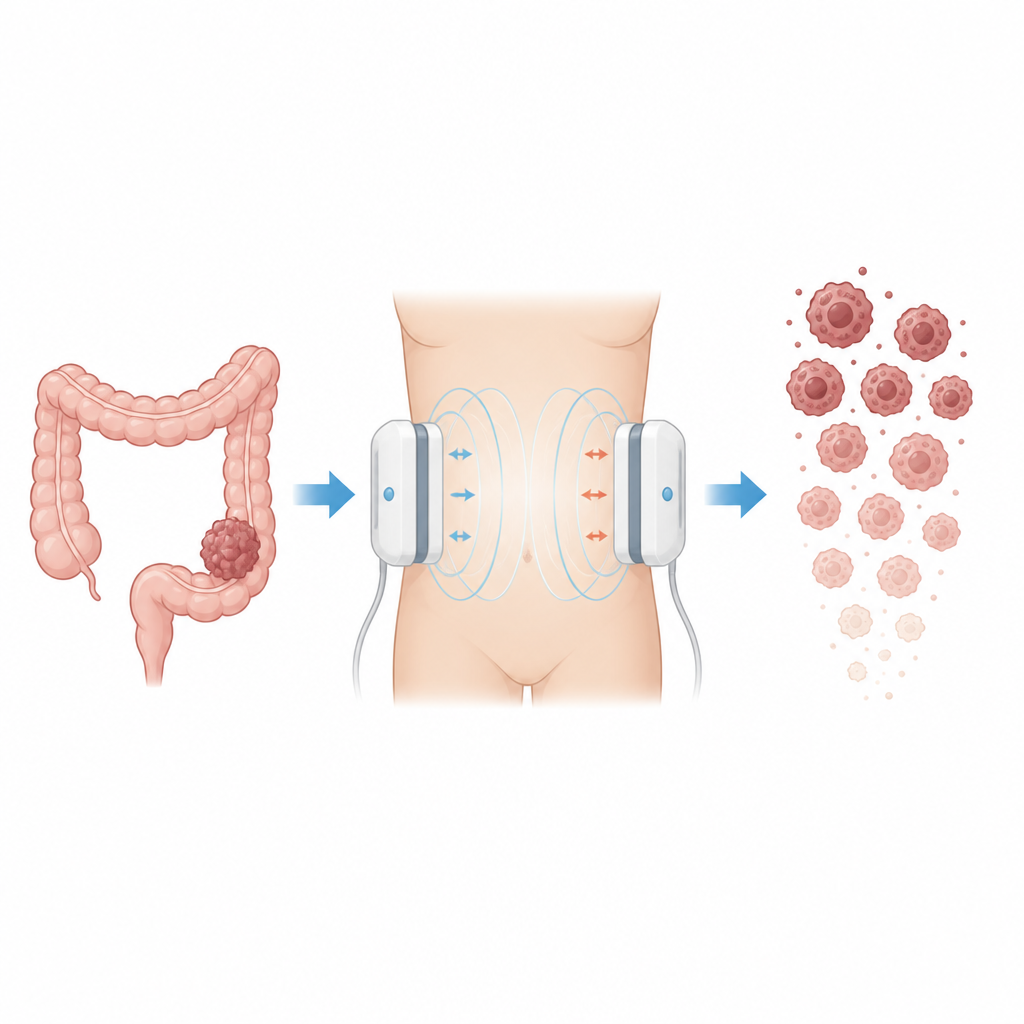
A new way to stress cancer cells
Tumor Treating Fields expose dividing cancer cells to low intensity, intermediate frequency electric fields delivered from outside the body. These fields interfere with the machinery that cells use to divide, especially tiny protein fibers called microtubules that pull chromosomes apart. The result is that cancer cells can stall during division, become structurally damaged, and often move toward programmed cell death, while nondividing normal cells are much less affected. The approach is already used for brain tumors, but its impact on colorectal cancer has been unclear.
Testing many patient-like cancer cell samples
The researchers worked with 21 colorectal cancer cell lines grown from patients or patient-derived mouse tumors, which closely mimic the original cancers. When they treated these cells with Tumor Treating Fields for several days, they saw a wide range of responses: in some lines, most cells died, while in others many survived. Closer inspection with high resolution electron microscopy revealed that sensitive cells showed clear signs of stress, including shrunken or misshapen nuclei, swollen and damaged mitochondria, and vacuoles in the cytoplasm. In contrast, resistant cells looked almost unchanged, underscoring that not all colorectal cancers are equally vulnerable to this treatment.
How electric fields push cells toward death
To understand what was happening inside the cells, the team compared protein patterns in the most sensitive and most resistant lines after exposure to Tumor Treating Fields. Sensitive cells showed large shifts in proteins linked to DNA repair, metabolism, and DNA copying, suggesting a broad internal crisis. Under the microscope, their microtubule networks were fragmented, and the normal stages of cell division were disrupted. Flow cytometry, a technique that counts and characterizes cells, confirmed that many sensitive cells were undergoing apoptosis, a controlled form of cell death. Resistant cells showed fewer protein changes, milder structural damage, and much lower rates of apoptosis, indicating that they could better tolerate the electric field stress.
Finding a resistance switch inside cancer cells
Because standard cancer traits such as growth rate, mutation patterns, tumor location, and stage did not explain the different responses, the scientists turned to RNA sequencing, which measures which genes are turned on or off. Using a network analysis that groups genes by shared activity, they pinpointed one standout gene, NAALADL1, which was consistently more active in resistant cell lines. Protein tests confirmed that resistant lines made more NAALADL1 than sensitive ones. When the team used genetic tools to reduce NAALADL1 in resistant cells, those cells suddenly became much more sensitive to Tumor Treating Fields, showing lower survival after treatment.
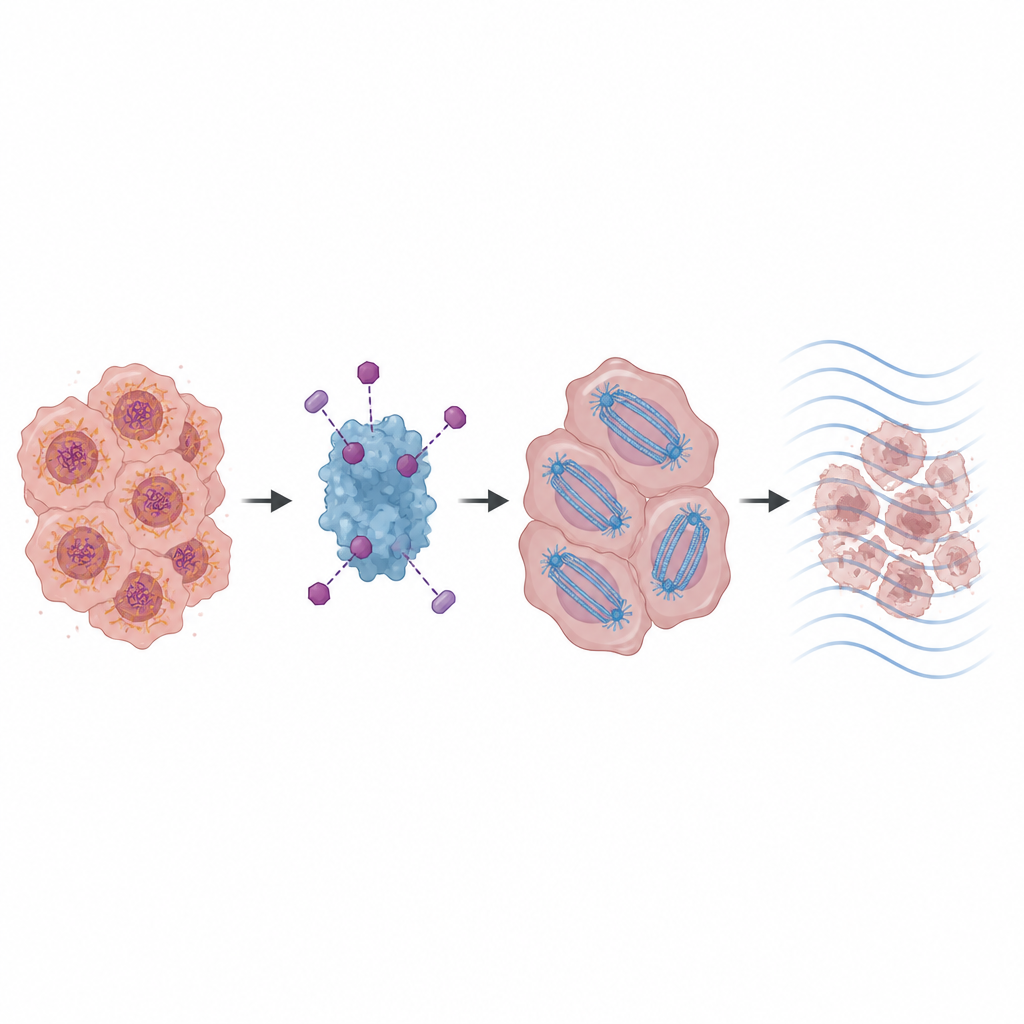
Putting the brakes on cell division
Further work showed that dialing down NAALADL1 changed how cancer cells handled their internal scaffolding. Knockdown of this gene increased the amount of acetylated tubulin, a marker of more stable microtubules, and led to a buildup of cells stuck at the checkpoint just before they divide into two new cells. Interestingly, these cells were not dying mainly by classic apoptosis but were stalled in the division cycle, making them more exposed to the disruptive effect of Tumor Treating Fields. Using computer models, the researchers mapped structural pockets in the NAALADL1 protein and screened existing drugs, identifying compounds such as Lumacaftor and Bestatin that could bind to it. In lab tests, combining these drugs with Tumor Treating Fields further reduced the growth of resistant colorectal cancer cell lines.
What this could mean for future treatment
In plain terms, the study suggests that NAALADL1 acts like a resistance knob inside colorectal cancer cells, helping some of them shrug off electric field therapy. Turning this knob down, either by genetic methods or with specific drugs, pushes cells into a vulnerable pause in their division cycle and makes Tumor Treating Fields more effective. While these findings come from cell models rather than patients, they outline a path toward using NAALADL1 levels as a marker to select who might benefit most from Tumor Treating Fields and toward designing combination treatments that block this resistance and bring a gentler, targeted option closer to people with colorectal cancer.
Citation: Su, Z., Liu, M., Krohn, M. et al. NAALADL1 modulates cellular resistance to Tumor Treating Fields in colorectal cancer. npj Precis. Onc. 10, 191 (2026). https://doi.org/10.1038/s41698-026-01492-0
Keywords: colorectal cancer, Tumor Treating Fields, NAALADL1, microtubules, cancer resistance