Clear Sky Science · en
Perspectives from machine learning and multi-omics to decoding the effects of VDAC2 malignant subsets on tumor evolution
Why this matters for cancer care
Cancer is not just a mass of rogue cells; it is a living community that reshapes how cells burn fuel and how the immune system responds. This study zooms in on a tiny protein gate in the wall of cell powerhouses and asks a big question: does this gate help tumors grow and hide from the body’s defenses, and could it become a signpost or target for future treatments?
A small gate with a big role in tumor cells
At the center of the work is VDAC2, a channel sitting in the outer membrane of mitochondria, the structures often called the cell’s power plants. VDAC2 helps control both energy flow and whether a cell lives or dies. Earlier research showed that when VDAC2 is missing, immune cells known as CD8 T cells can more easily destroy tumors in laboratory models. Building on this, the authors asked how VDAC2 behaves across many human cancers and what that might mean for tumor growth and the immune response.
Looking across many cancers with modern data tools
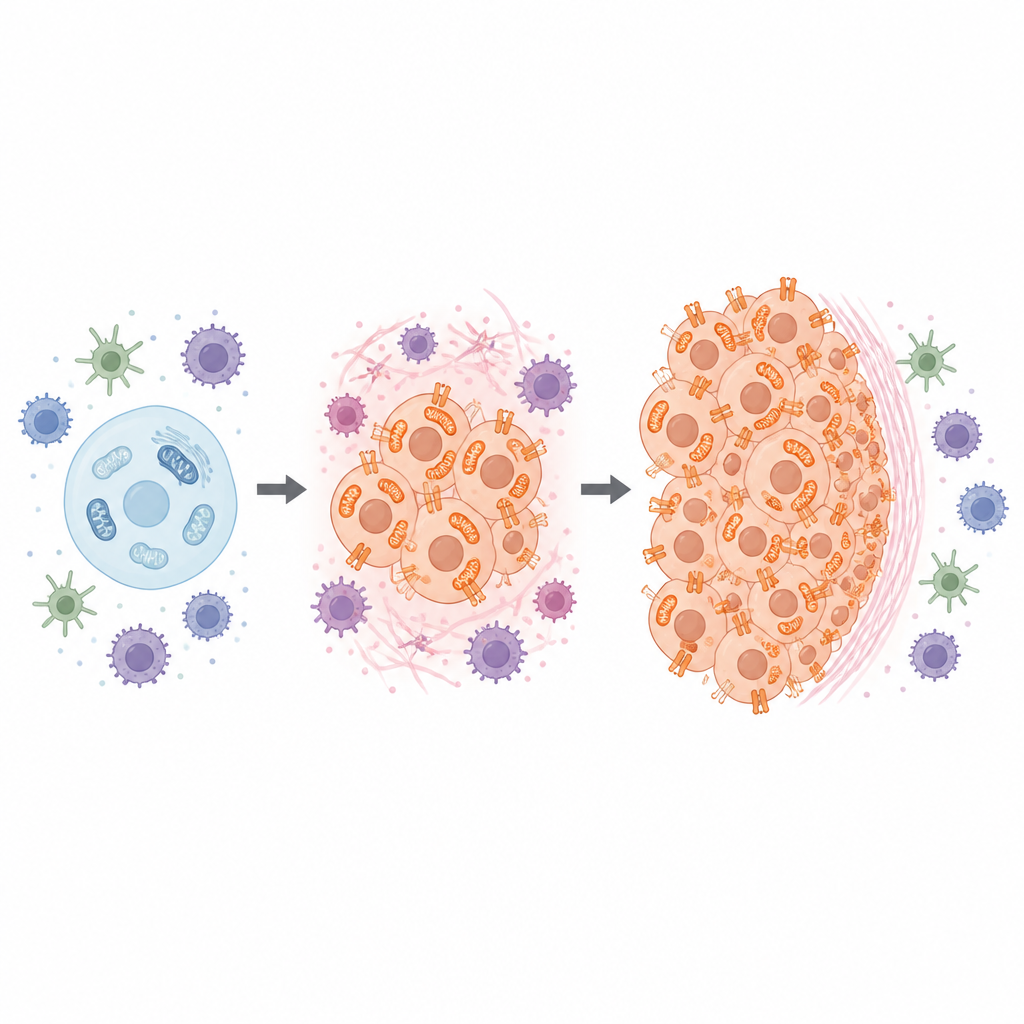
The team used large public collections of genetic and protein data from many tumor types and nearby normal tissues. They combined bulk RNA sequencing, single-cell sequencing, and spatial maps that show which genes are active in precise locations of a tissue slice. This broad view revealed that VDAC2 is turned up in most solid tumors compared with normal tissue. Its activity was linked to pathways that boost energy production, support rapid cell division, and relate to mitochondrial stress, all hallmarks of aggressive cancer cells. Spatial maps showed that high VDAC2 levels tend to appear in the dense tumor core, alongside clusters of immune cells, hinting at a close relationship between this protein and the tumor’s local environment.
How VDAC2 shapes the immune neighborhood
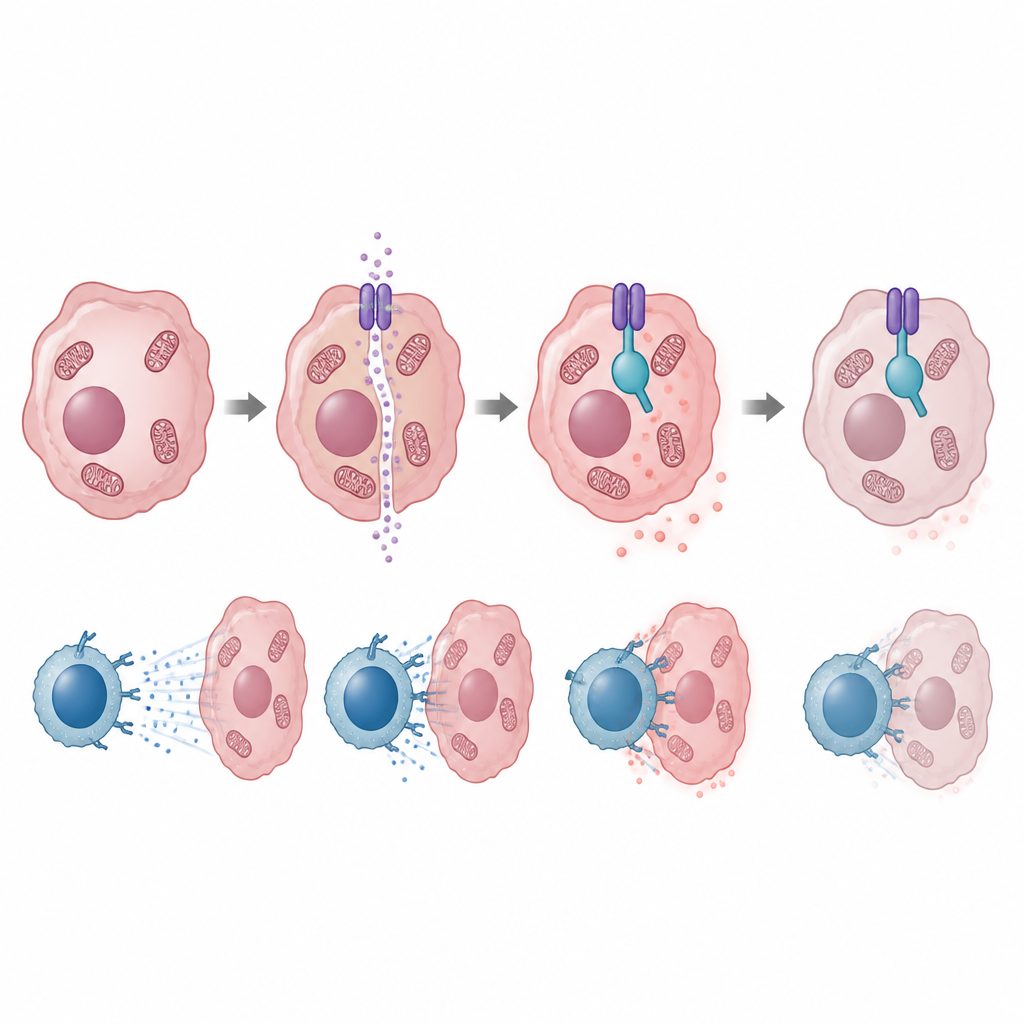
Because earlier work tied VDAC2 to immune attack, the researchers examined how its levels relate to immune cell patterns. They found that tumors with more VDAC2 often had fewer CD8 T cells, the main killer cells, and more helper T cells, suggesting a shift toward an immune setting that is less effective at clearing cancer. Communication maps between cell types showed that cancer cells rich in VDAC2 send and receive stronger signals than their low-VDAC2 counterparts. In cancers of the digestive system, such as colon, esophageal, rectal, and gastric cancer, they focused on a trio of players: VDAC2, a partner protein called BAK1, and the immune messenger interferon gamma. In most of these cancers, VDAC2 and BAK1 rose together, and BAK1 tracked with interferon gamma, outlining a pathway that ties mitochondrial gates, cell death control, and immune signals into one network.
Testing the pathway in stomach cancer cells
To move beyond patterns in databases, the team ran experiments in gastric (stomach) cancer cells and patient samples. They confirmed that VDAC2 levels were higher in tumor tissue than in nearby noncancerous tissue and that this difference could help distinguish the two, suggesting value as a screening marker. When they forced cancer cells to make more VDAC2, the cells multiplied faster and were more invasive in lab tests. At the same time, levels of BAK1 rose, and when these cancer cells were grown together with CD8 T cells, the amount of interferon gamma in the culture fluid dropped. This indicates that high VDAC2 not only fuels tumor cell growth but also blunts the strength of immune attack signals.
Implications for prognosis and treatment choices
Across many tumor types, high VDAC2 levels were linked to poorer patient survival, though strong CD8 T cell presence could partly offset this risk. Using drug sensitivity databases and machine learning methods, the authors also explored which medicines might work better or worse when VDAC2 is high. They identified several compounds whose effectiveness appears tied to VDAC2 activity and showed that tumors rich in VDAC2 may resist a range of common anticancer drugs. This suggests that measuring VDAC2 could help guide personalized treatment and could point to new drug targets focused on the mitochondrial gate itself or its downstream network.
What this means for patients and future research
For non-specialists, the take-home message is that a single channel protein in the cell’s power plant can influence how fast tumors grow, how well immune cells can attack them, and how they respond to drugs. The study maps out VDAC2 as both a marker of risk and a potential handle for future therapies, especially in cancers of the digestive system and stomach. While more work in animals and clinical studies is needed, targeting this gate and its partners could one day help doctors better predict cancer outcomes and design treatments that both slow tumor growth and restore the immune system’s ability to keep cancer in check.
Citation: Yan, J., Wang, J., Dong, H. et al. Perspectives from machine learning and multi-omics to decoding the effects of VDAC2 malignant subsets on tumor evolution. npj Precis. Onc. 10, 189 (2026). https://doi.org/10.1038/s41698-026-01394-1
Keywords: VDAC2, tumor microenvironment, immune evasion, gastric cancer, mitochondria