Clear Sky Science · en
Habitat-based CT radiomics profiling spatial-temporal heterogeneity in resectable NSCLC predict pathological response to neoadjuvant chemoimmunotherapy: a multi-center study
Why this matters for people with lung cancer
For people facing surgery for non small cell lung cancer, doctors now often add a mix of chemotherapy and immunotherapy before the operation to shrink tumors and boost long term control. Yet not all patients benefit equally, and today there is no simple, noninvasive way to tell in advance who is likely to respond well. This study explores whether patterns hidden inside routine CT scans can reveal which tumors are sensitive to this combined treatment and which are not.
Looking inside tumors with picture based clues
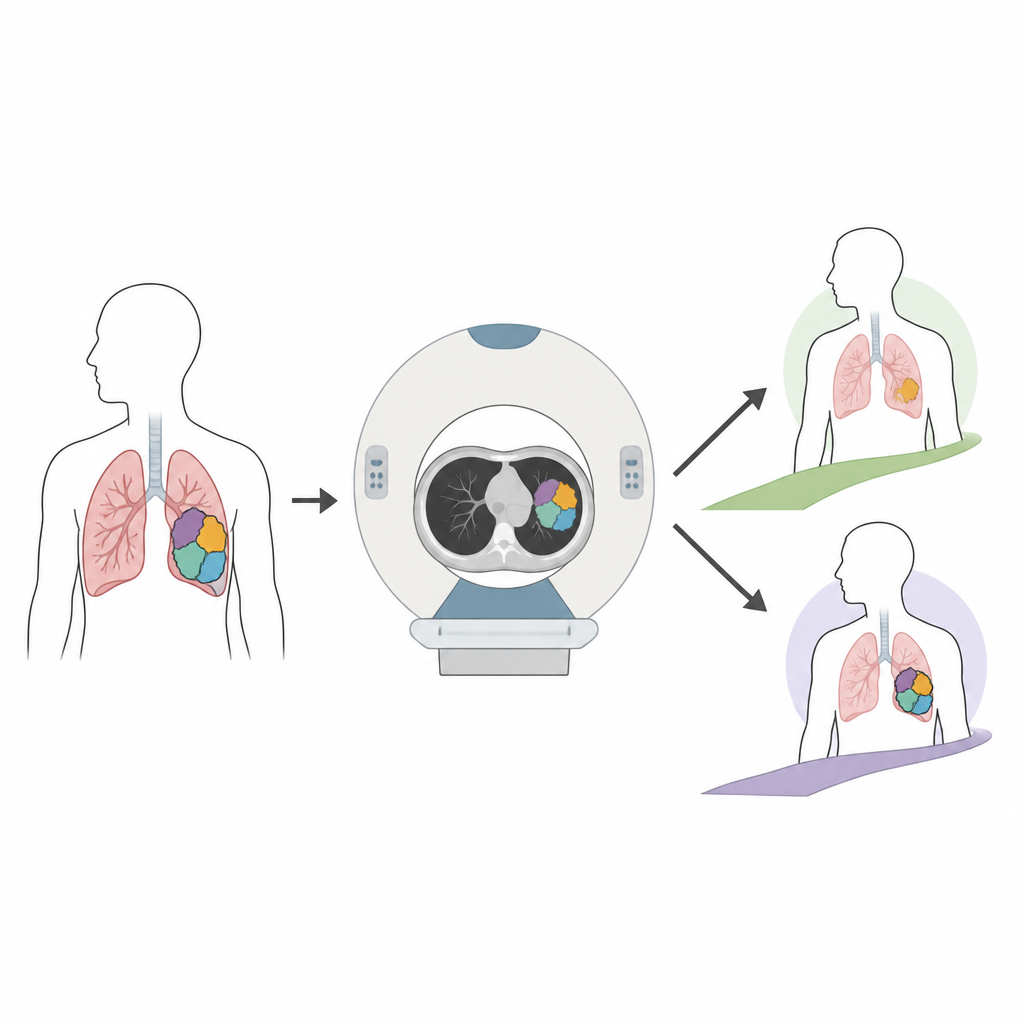
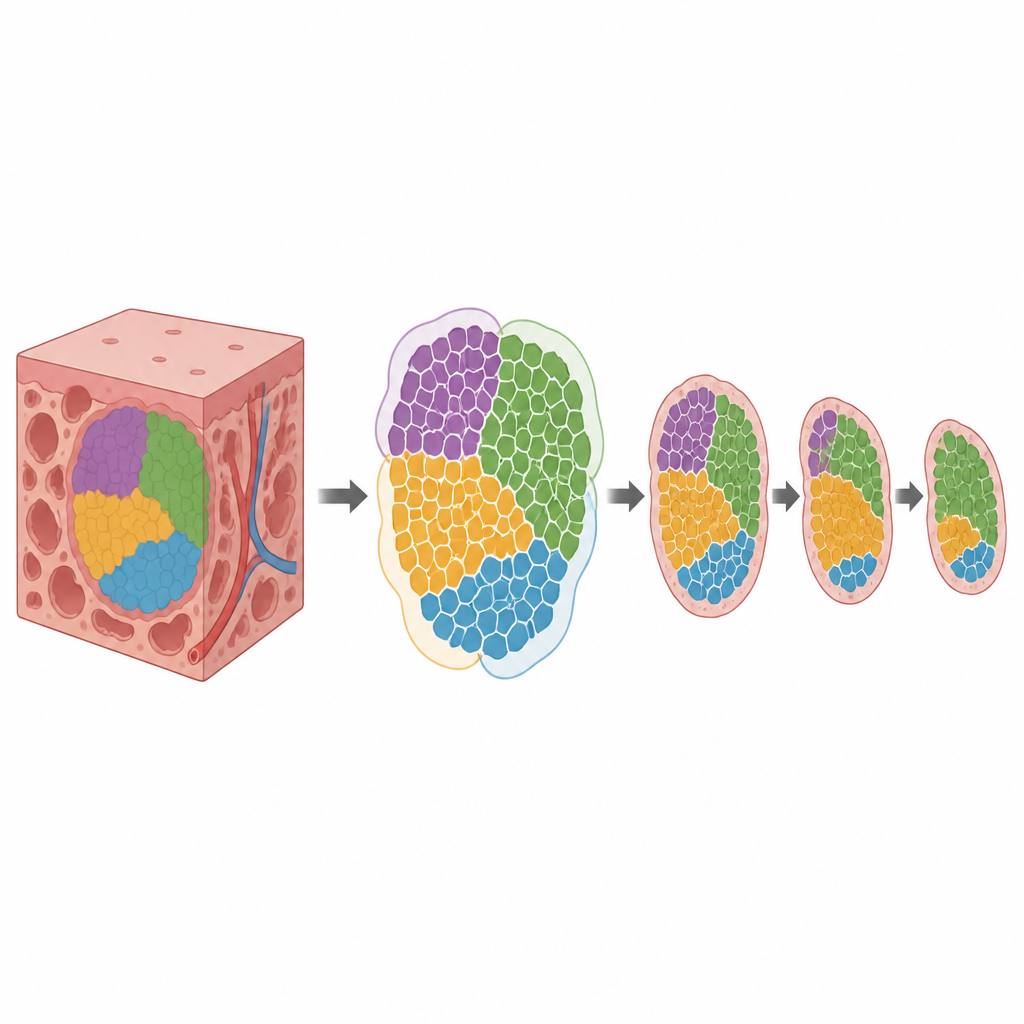
The researchers focused on a concept called tumor habitats, which treats a tumor not as one uniform lump but as a small landscape made of regions with different appearances on CT scans. Instead of measuring only how varied the whole tumor looks overall, they also mapped where these different regions sit relative to one another inside the tumor. By comparing scans taken before and after treatment, they aimed to track both the layout and the change over time of these inner regions, capturing a richer picture of tumor behavior.
Who was studied and what information was used
The team analyzed CT scans from 394 patients with resectable non small cell lung cancer treated at three hospitals in China. All patients received a standard course of chemoimmunotherapy before surgery, and their removed tumors were examined under the microscope to see how much cancer remained. Patients were labeled as major responders when only a small fraction of cancer cells was left, and non responders when much of the tumor was still alive. For each person, researchers collected basic clinical data along with detailed measurements from both their pre treatment and post treatment CT images.
Turning complex images into a prediction score
From each tumor, computers extracted many numerical features that describe brightness, texture, and spatial patterns within the scan. One set of features summarized the whole tumor as a single object, while another set captured how distinct regions, or habitats, were arranged and how strongly they interacted with each other. A third group of features measured how these signals changed between the first and second scan. Machine learning methods then sifted through these measurements to build models that estimate the chance that a tumor would show a strong response to therapy.
How well the imaging approach worked
When these models were tested, both the whole tumor features and the habitat based features alone showed decent ability to separate major responders from non responders. However, the best performance came from an integrated approach that combined information from both views of the tumor. In independent patient groups from different hospitals, this combined model reached accuracy levels that suggest it could be helpful in real clinical decision making. Further analysis showed that the model tended to work particularly well in certain subtypes of lung cancer and in tumors located deeper in the chest, hinting that some anatomical settings may make the imaging patterns more informative.
What this could mean for treatment choices
To a non specialist, the main message is that ordinary CT scans may hold far more information than is visible to the naked eye. By treating tumors as living landscapes made of different neighborhoods, and by watching how these neighborhoods change during therapy, the study shows that doctors may be able to estimate in advance who is likely to benefit from chemoimmunotherapy before surgery. While more work and larger prospective studies are needed, this habitat based imaging framework points toward a future where treatment can be adjusted earlier and more safely, sparing some patients from ineffective therapy while giving others the best chance at long term control.
Citation: Peng, Q., Xu, Y., Shen, L. et al. Habitat-based CT radiomics profiling spatial-temporal heterogeneity in resectable NSCLC predict pathological response to neoadjuvant chemoimmunotherapy: a multi-center study. npj Precis. Onc. 10, 190 (2026). https://doi.org/10.1038/s41698-026-01388-z
Keywords: lung cancer, CT radiomics, chemoimmunotherapy, tumor heterogeneity, treatment response