Clear Sky Science · en
Risk assessment of secondary primary malignancies: results from two large prospective European cohorts
Why second cancers matter to survivors
As more people live longer after cancer treatment, a new worry is coming into focus: the chance of developing a completely new, unrelated cancer later on. These "second" cancers can be deadly and hard to predict. This study asks a simple but vital question for patients and doctors alike: do certain first cancers actually help cause specific second cancers, rather than just happening to occur in the same person?
Looking for patterns across many cancers
The researchers began by casting a wide net. They examined dozens of cancer types drawn from two huge European health projects, the UK Biobank and the FinnGen study in Finland. Instead of following patients one by one, they used genetic data from more than 130,000 people with cancer. By comparing inherited DNA markers across organ systems, they searched for situations where having a genetic tendency toward one cancer also made a person more likely to develop another later in life.
Using genetics to untangle cause from coincidence
To separate real cause from mere coincidence, the team relied on a method called Mendelian randomization, which treats natural genetic differences as a kind of lifelong "trial." Because people are born with their genes and do not choose them, these markers are far less tangled with lifestyle habits such as smoking or diet. If the same genetic variants that raise the risk of one cancer also consistently track with another, it suggests a true causal link rather than an association produced by shared environment or treatment side effects.
Stomach cancer linked to cancers of the food pipe and rectum
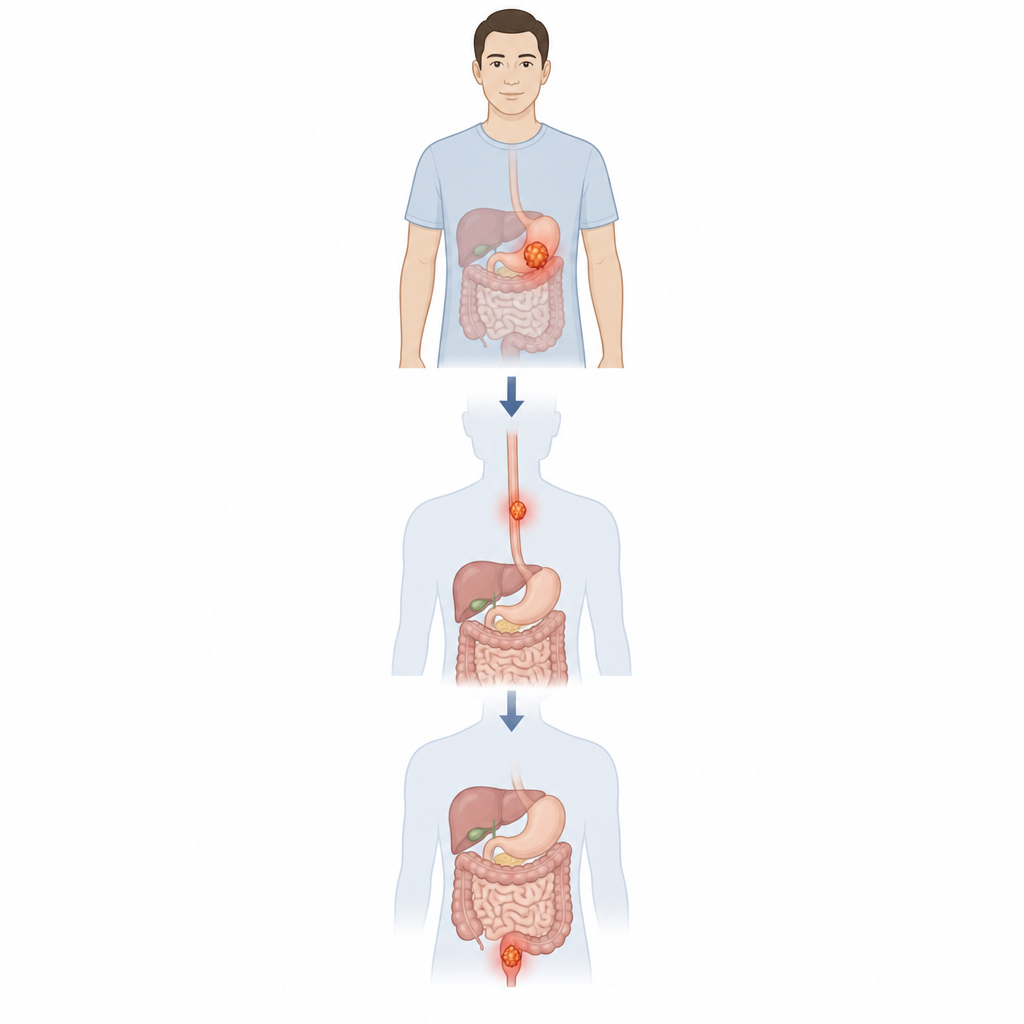
After careful statistical checks and a combined analysis of both cohorts, almost all apparent links between different cancers disappeared. One pattern remained: people with genetic risk for stomach cancer had a clearly higher risk of also developing cancers of the esophagus and the rectum. The size of the effect was modest but consistent, pointing to a real connection within the digestive tract. This finding supports clinical reports that survivors of stomach cancer more often go on to develop new cancers in nearby gut regions, even many years after their first surgery or treatment.
Zooming in on restless cancer stem cells
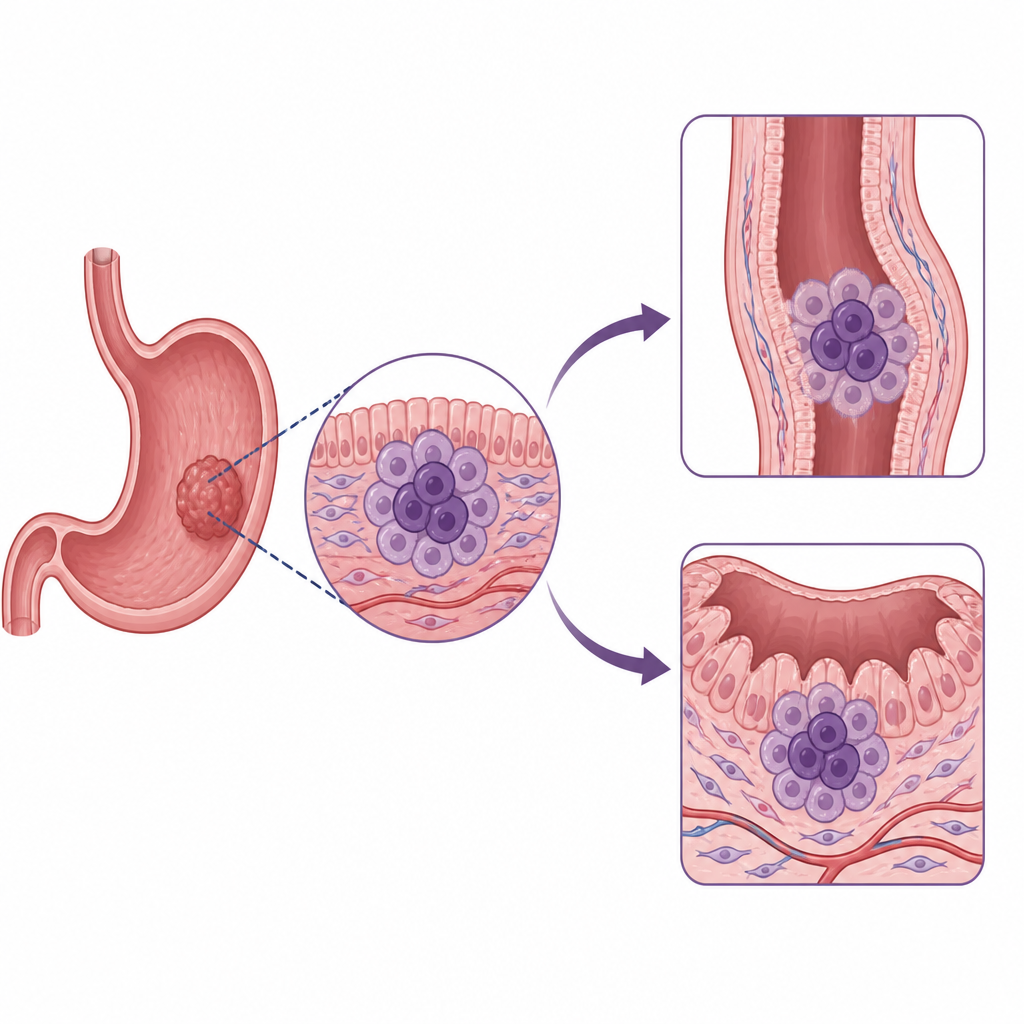
To explore how this connection might work at the cellular level, the scientists turned to single-cell sequencing, which reads the activity of thousands of genes in individual cells. They examined tumors from stomach, esophageal, and rectal cancers and focused on cancer stem cells, a rare group thought to seed tumor growth and spread. Among several subtypes, they identified one shared group of cells marked by a protein called PLK1 that appeared in all three cancers. These PLK1-positive cells were stuck in an early, highly flexible state and strongly geared toward cell division, hinting that they could help drive new tumors in different parts of the digestive system.
What this means for patients and care
The study suggests that for stomach cancer survivors, the risk of a later cancer in the esophagus or rectum is not just bad luck, but tied to shared genetic and cellular roots. While many cancer pairs showed no causal link, this particular trio of gut cancers seems to be connected through inherited risk and aggressive stem-like cells. For patients, this supports longer and more targeted checkups of the upper and lower digestive tract after stomach cancer. For researchers and clinicians, it argues for looking beyond the organ where a tumor first appears and toward the common molecular wiring that may shape cancer risk throughout the body.
Citation: Yin, J., Rixiati, Y., Xu, Y. et al. Risk assessment of secondary primary malignancies: results from two large prospective European cohorts. npj Precis. Onc. 10, 184 (2026). https://doi.org/10.1038/s41698-026-01380-7
Keywords: gastric cancer, secondary cancers, cancer stem cells, Mendelian randomization, gastrointestinal tumors