Clear Sky Science · en
Organ-metastatic landscape delineates overall and site-specific immune-related adverse events of PD-L1 blockade in advanced NSCLC
Why where cancer spreads matters
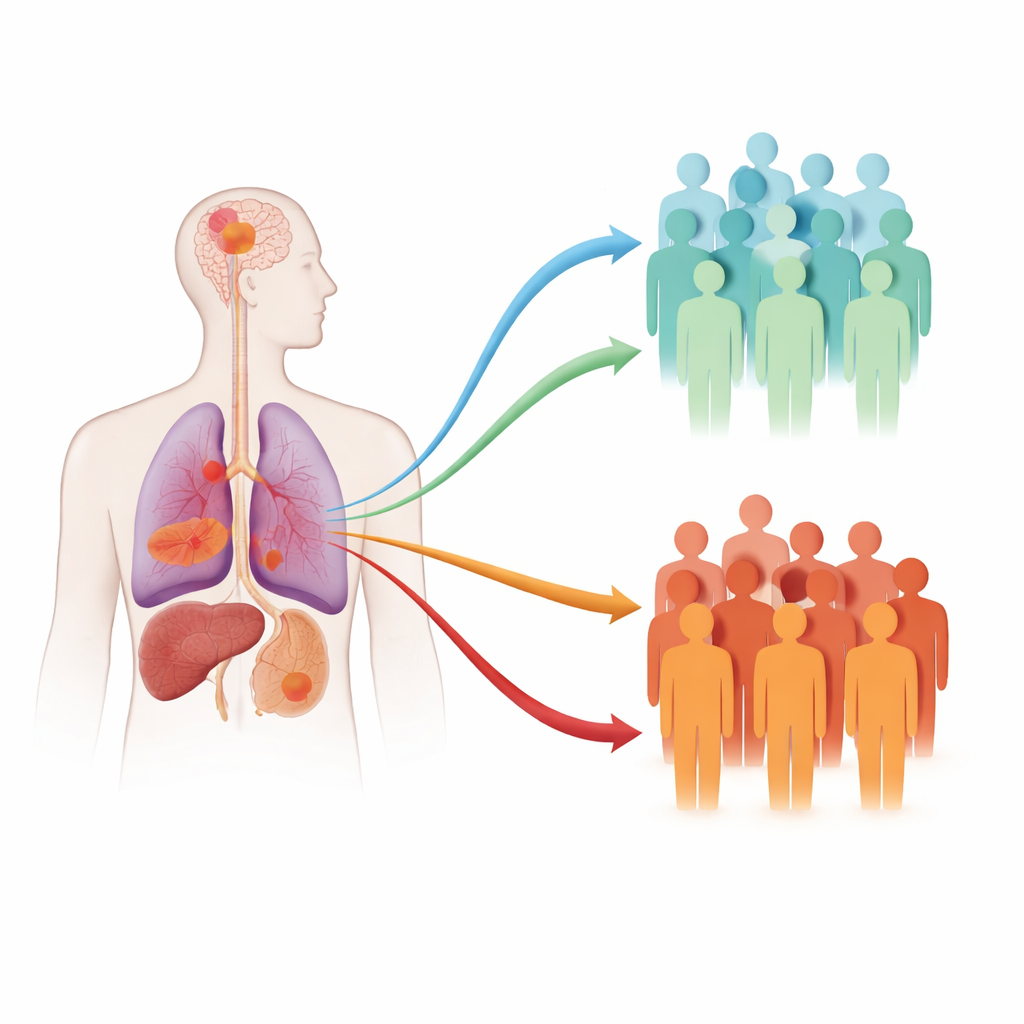
Immunotherapy has changed how doctors treat advanced lung cancer by helping the body’s own defenses attack tumors. But these powerful drugs can also misfire and inflame healthy organs, causing sometimes serious side effects. This study asks a deceptively simple question with big implications for patients: does it matter where in the body the cancer has spread when it comes to who develops these immune-related side effects?
Modern drugs that turn the immune system on
The researchers focused on people with advanced non-small cell lung cancer, the most common form of lung cancer, who were treated with atezolizumab, a drug that blocks a protein called PD-L1. This blockade takes the brakes off immune cells so they can better recognize and attack tumors. While this approach can prolong life, it can also trigger “immune-related adverse events,” or irAEs, in which the immune system turns against normal tissues. These problems can affect almost any organ, from skin and thyroid to lungs, liver, and even the brain. Because serious irAEs may require pausing treatment and giving steroids, being able to predict who is most at risk could help doctors monitor patients more closely and tailor therapy.
Mapping cancer spread and immune side effects
The team analyzed data from 708 patients enrolled in two large clinical trials of atezolizumab. For each person, they recorded where the cancer had spread at the start of treatment—such as lung, bone, liver, brain, adrenal glands, or the tissue around the lungs—and tracked which immune-related side effects developed and when. About one in three patients experienced at least one irAE, typically beginning a few months after starting therapy. By comparing people with and without metastases in specific organs, and using statistical models that accounted for other clinical factors, the scientists built a detailed “metastatic landscape” that linked patterns of spread to patterns of toxicity.
High‑risk and low‑risk organs
The results revealed striking differences. Patients whose cancer had spread to the brain were almost twice as likely to develop any immune-related side effect compared with those without brain metastases, and their problems tended to appear earlier. Brain metastasis was the only organ site that independently predicted higher overall risk. In contrast, spread to the bones or the presence of cancer-related fluid around the lungs were linked to fewer side effects and, for bone metastases, a later onset of problems. When the team compared organs outside the chest, such as brain, liver, adrenal glands and bone, they found clear differences in cumulative risk, whereas spread within the chest, like additional spots in the lungs or nearby lymph nodes, showed little variation in side-effect patterns.
Different organs, different trouble spots
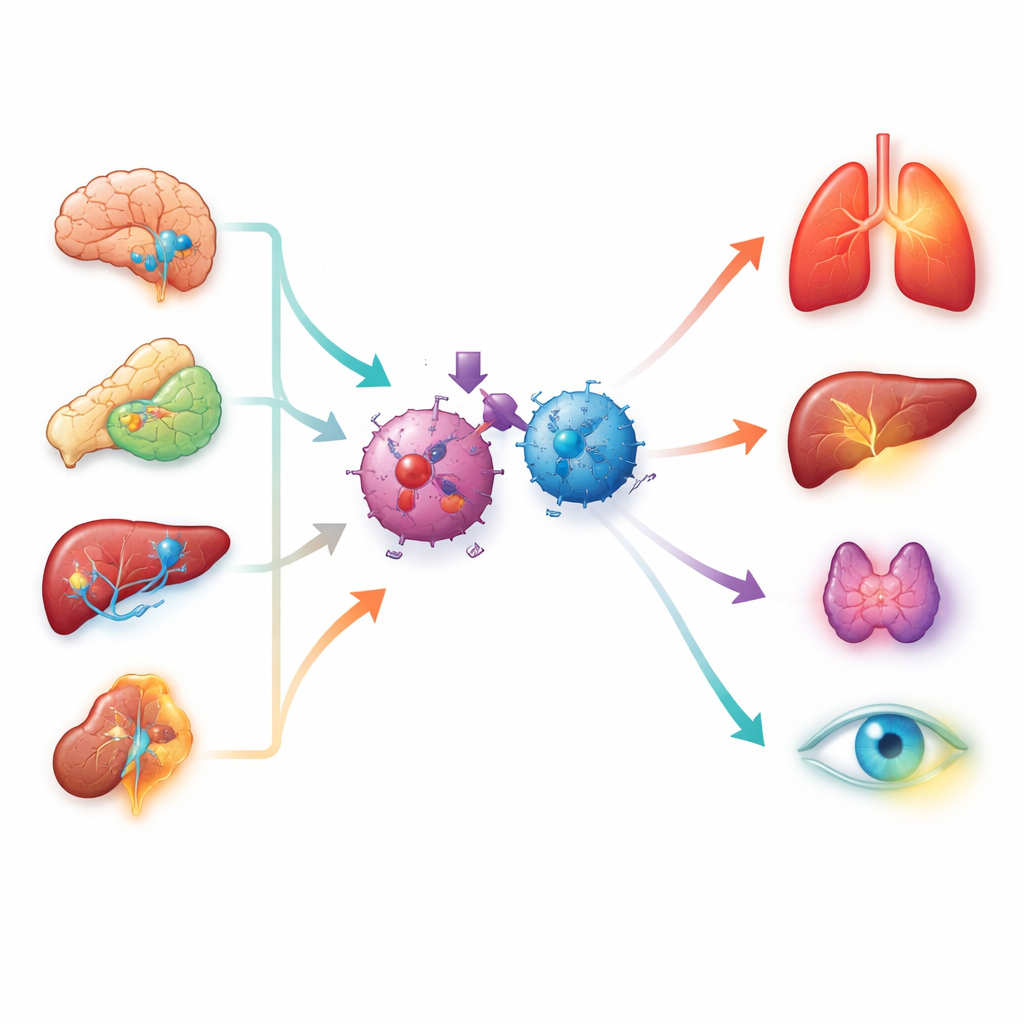
Looking more closely, the study showed that not all side effects are alike. People with bone metastases were less likely to develop hepatitis, rash, or underactive thyroid, and when thyroid problems did occur, they tended to appear later. By contrast, patients with brain metastases were more prone to inflammation of the lungs, adrenal glands, and eyes. Some organs with metastases also seemed to be “magnets” for toxicity themselves: adrenal problems were far more common and earlier in patients whose cancer had reached the adrenal glands, and liver inflammation and bowel problems appeared earlier in those with liver metastases. These patterns support the idea that the local immune environment of each organ, and the similarity between tumor cells and nearby normal tissue, shape where treatment-related inflammation shows up.
A simple score to guide care
To turn these insights into something usable at the bedside, the researchers created a metastasis-based scoring system called METscore-irAEs. Using the trial data, they assigned each metastatic organ a positive or negative point value depending on whether it raised or lowered side-effect risk. Adding up the points for each patient produced an overall score that split people into high- and low-risk groups. Those in the high-risk group developed immune-related side effects more often and sooner than those in the low-risk group, and this pattern held up in a separate set of clinical trials. Importantly, the score relies only on routine imaging scans that patients already undergo, avoiding extra tests or costs.
What this means for patients and doctors
This work suggests that where lung cancer spreads is not just a marker of how advanced the disease is; it also helps forecast which patients are most likely to run into immune-related trouble when treated with PD-L1 blockers. Brain and some other organ metastases point to higher risk, while bone involvement may dampen both benefit and toxicity. By incorporating the metastatic pattern into a simple score, doctors may be able to anticipate side effects earlier, balance the promise and perils of immunotherapy more precisely, and move one step closer to truly personalized cancer care.
Citation: Wang, SH., Gao, N., Wang, YZ. et al. Organ-metastatic landscape delineates overall and site-specific immune-related adverse events of PD-L1 blockade in advanced NSCLC. npj Precis. Onc. 10, 177 (2026). https://doi.org/10.1038/s41698-026-01375-4
Keywords: lung cancer immunotherapy, immune-related side effects, metastasis pattern, PD-L1 blockade, precision oncology