Clear Sky Science · en
TRMT6-directed m1A modification initiates lung squamous cell carcinoma via YTHDF3-stabilized cell cycle genes
Why tweaking cell messages matters in lung cancer
Lung cancer remains one of the deadliest cancers, and for a common subtype called lung squamous cell carcinoma, doctors still lack precise tests and targeted treatments. This study uncovers an unexpected culprit: tiny chemical marks placed on our RNA—the molecules that carry genetic instructions. By showing how one enzyme rewrites these messages to push lung cells into uncontrolled growth, the researchers highlight both a new way to diagnose this cancer and a fresh angle for future drugs. 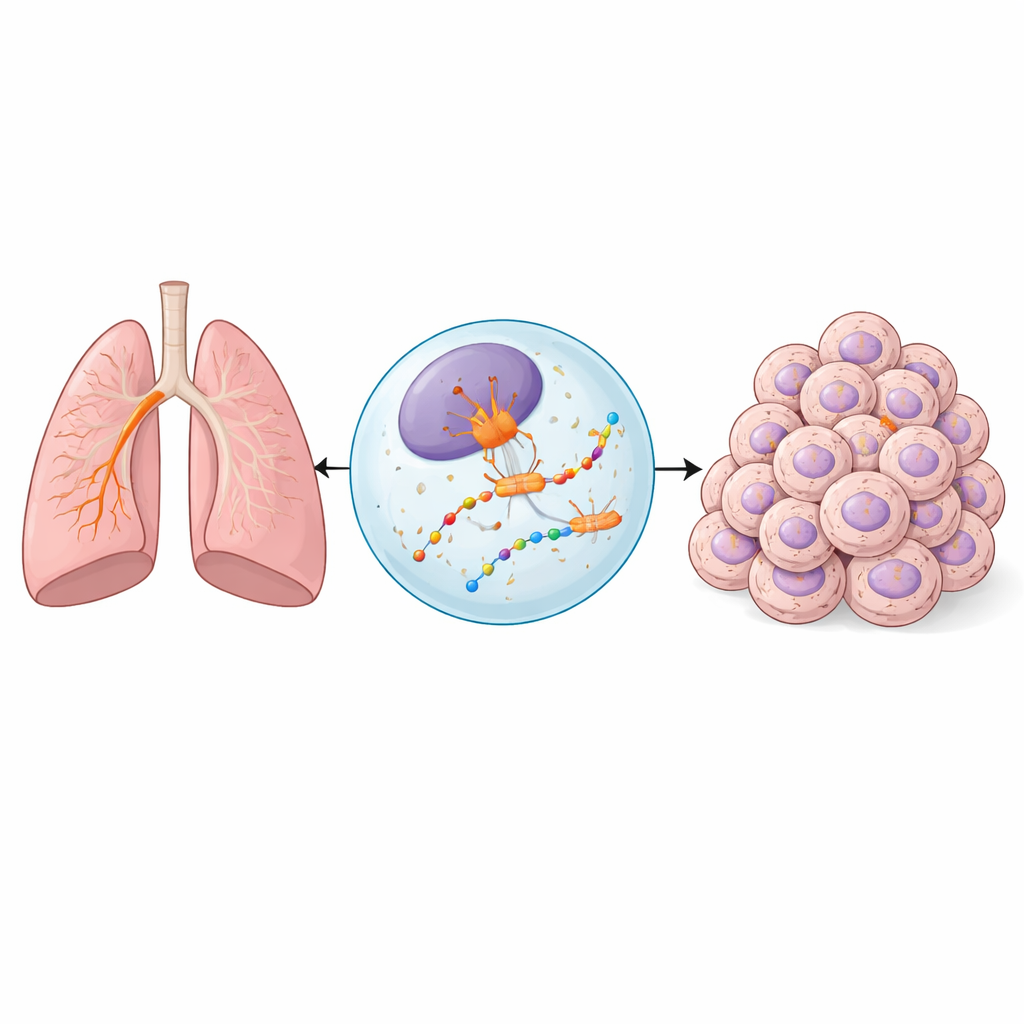
A hidden code on the cell’s RNA
Inside every cell, RNA acts as a working copy of DNA, guiding which proteins get made and when. Beyond the familiar genetic code, RNA can be “decorated” with small chemical tags that change how long messages last or how strongly they are read. One such tag, called m1A, is added and removed by specialized enzymes often referred to as writers, erasers, and readers. Until now, scientists knew that m1A was common but understood little about how it shaped cancer development across different tumor types.
The writer that stands out in lung tumors
The team surveyed many human cancers and found that the main m1A “writer” enzyme, TRMT6, was unusually active in several tumor types, but most dramatically in lung squamous cell carcinoma. In these lung tumors, TRMT6 and several related m1A regulators were consistently higher than in normal lung tissue, across age, sex, tumor size, and disease stage. At the same time, the overall level of m1A marks on RNA rose in step with TRMT6, suggesting that this enzyme is actively reshaping the cells’ RNA landscape rather than merely being a bystander.
From altered RNA marks to faster-growing cells
To see what TRMT6 actually does, the researchers turned to lung cancer cells grown in the lab and to mouse models. When they reduced TRMT6 levels, cells slowed down, formed fewer colonies, and stalled at a checkpoint in the cell cycle—the sequence of steps a cell follows before dividing. Tumors with TRMT6 switched off grew more slowly in mice. Looking more closely, the team discovered that TRMT6 targets key cell cycle genes, especially two called TOPBP1 and DSN1, and installs m1A marks at specific spots near the start of their RNA messages. These marks are then recognized by another protein, YTHDF3, which binds the tagged RNA and stabilizes it, preventing it from being broken down too quickly. As a result, the cell makes more of the proteins that drive division, nudging the cell toward cancerous growth. 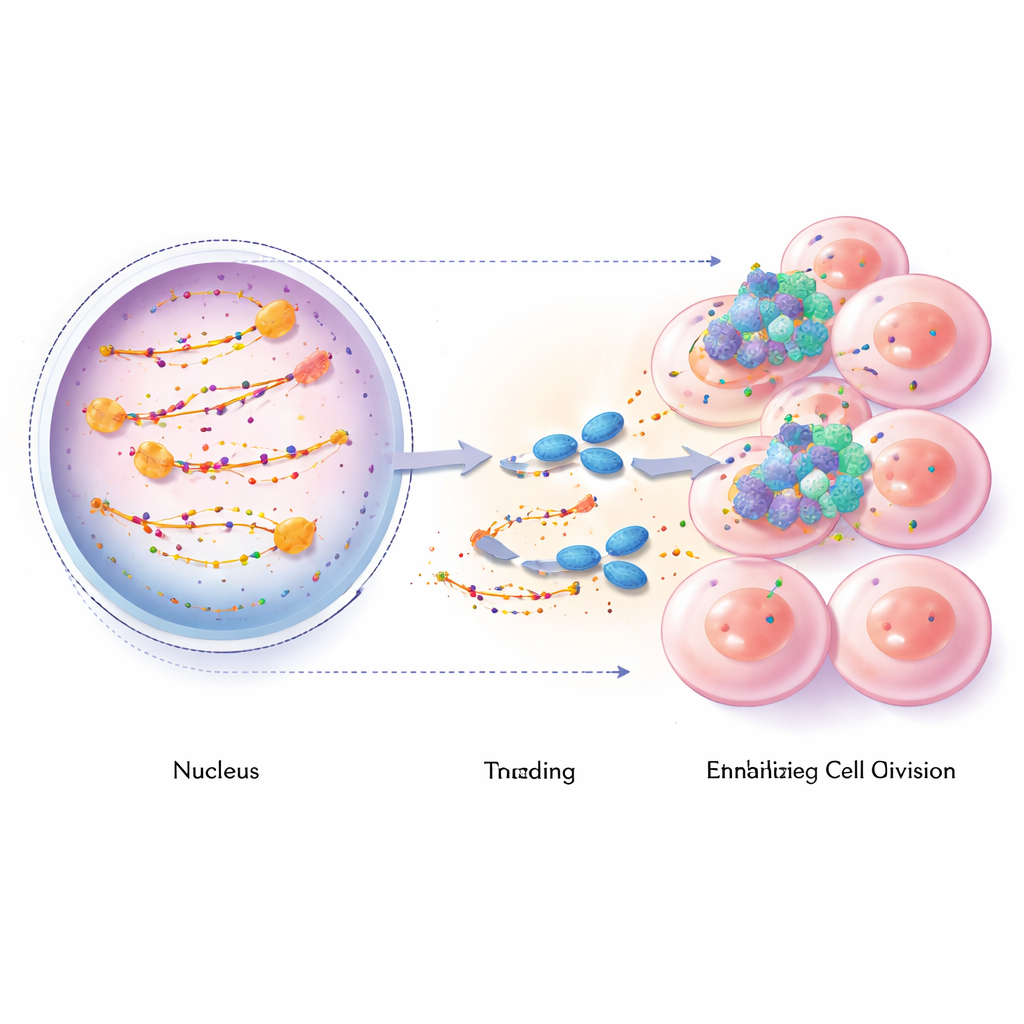
Single hot spots that act like on-switches
Strikingly, the study shows that a single m1A site on each of the TOPBP1 and DSN1 messages can act as a powerful molecular switch. When the researchers mutated just that one adenosine base so that it could no longer be tagged, the activity of these RNAs dropped sharply. They also built a programmable tool by fusing an RNA-targeting protein to TRMT6, allowing them to add m1A at one chosen position on DSN1 RNA. Directing this fused enzyme to the target site increased m1A there, boosted DSN1 levels, and sped up cell growth, proving that pinpoint editing of this chemical mark is enough to reshape cell behavior.
RNA marks as blood-borne warning signs
The influence of TRMT6 was not limited to what happened inside the tumor. Lung squamous cell carcinoma cells with high TRMT6 activity released more m1A-marked RNA fragments into the surrounding fluid and into patients’ blood. In people with this cancer, blood levels of m1A were clearly higher than in healthy volunteers and could distinguish patients even at early stages or with small tumors. Together with the increased TRMT6 activity in tissue, this raises the possibility of blood-based tests that detect the cancer earlier and track how it responds to treatment.
What this means for patients and therapies
For a form of lung cancer that currently lacks many effective targeted drugs, this work spotlights a new vulnerability. The study reveals a simple chain of events: TRMT6 adds m1A marks to a small set of cell cycle RNAs, YTHDF3 reads those marks and shields the messages from decay, and the resulting surge in growth-driving proteins helps transform normal lung cells into tumors. Because both the enzyme and its RNA marks leave a trace in tumor tissue and in blood, they may serve as highly accurate diagnostic markers. In the long run, drugs that block TRMT6 or disrupt its partnership with YTHDF3 could offer a way to slow or stop this aggressive cancer by rewriting the cell’s chemical notes rather than its genetic script.
Citation: Xue, W., Zhu, L., Wei, X. et al. TRMT6-directed m1A modification initiates lung squamous cell carcinoma via YTHDF3-stabilized cell cycle genes. npj Precis. Onc. 10, 165 (2026). https://doi.org/10.1038/s41698-026-01361-w
Keywords: lung squamous cell carcinoma, RNA modification, TRMT6, cell cycle, biomarker