Clear Sky Science · en
The clinical application value of dynamic monitoring of HPV ctDNA in concurrent chemoradiotherapy for locally advanced cervical cancer
Why Watching Cancer Through Blood Matters
Cervical cancer remains a major threat to women worldwide, and many patients are diagnosed only after the disease has become locally advanced. Even with modern combined chemotherapy and radiotherapy, a large fraction still face relapse because doctors cannot easily tell who is truly cured and who still carries hidden disease. This study explores a new way to follow the cancer’s behavior in real time, using traces of virus-related DNA circulating in the blood to see how well treatment is working and who may need extra care.
A Virus Fingerprint in the Blood
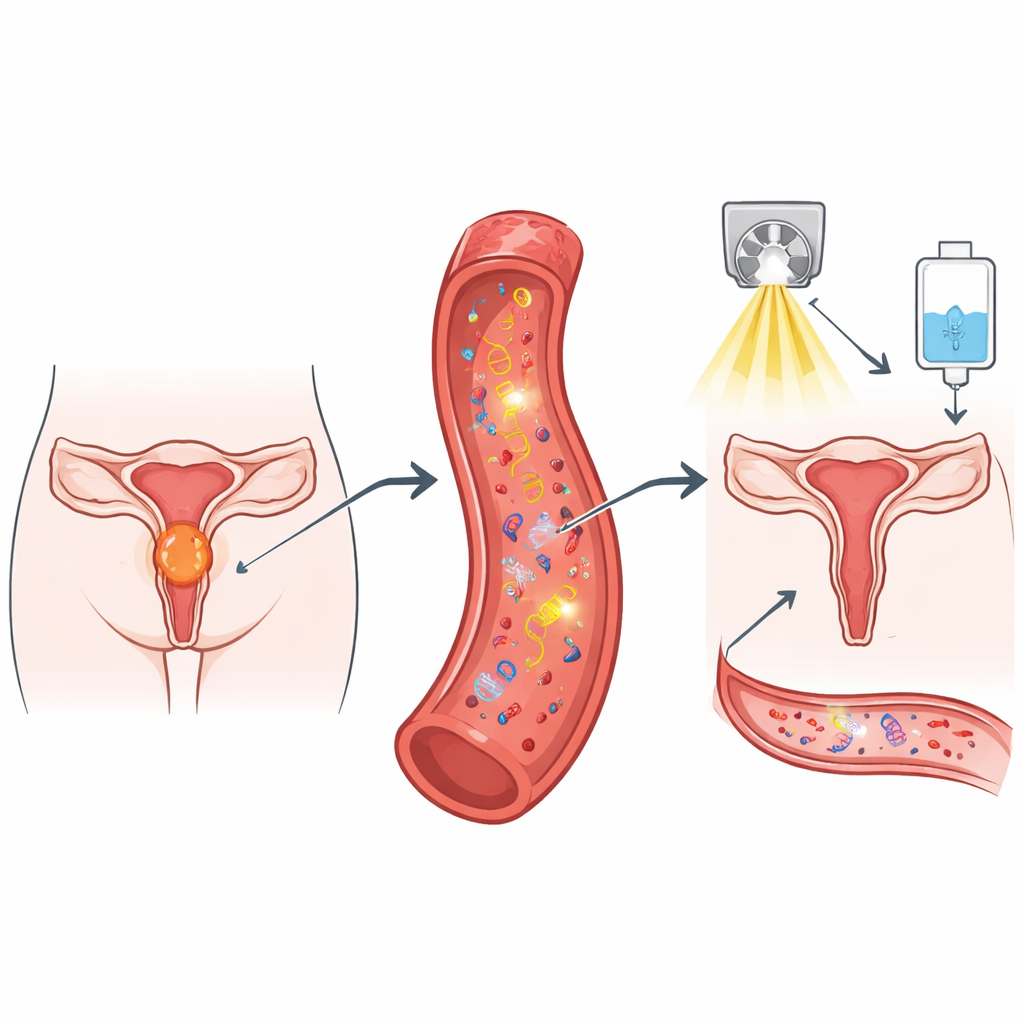
Most cervical cancers are driven by infection with high-risk types of human papillomavirus (HPV). When tumor cells die or shed material, tiny fragments of their DNA, including HPV DNA, enter the bloodstream. These fragments are known as circulating tumor DNA. The researchers reasoned that by measuring HPV-related DNA in blood repeatedly during treatment, they could obtain a kind of molecular "thermometer" of tumor burden. Unlike scans or traditional blood markers, this approach—sometimes called a liquid biopsy—requires only a simple blood draw and can be repeated often.
Following Patients Through Treatment
The team followed 27 women with locally advanced cervical cancer who all received standard chemoradiotherapy plus internal radiation. They collected tumor tissue and blood before treatment, drew blood again during treatment, and once more four weeks after therapy ended. Using high-depth DNA sequencing, they looked for mutations in cancer-related genes, overall mutation burden, and, crucially, the amount and type of HPV DNA in both tissue and plasma. They then compared these molecular readouts with how the tumors shrank on imaging and how well each patient responded.
What the Blood Signals Revealed
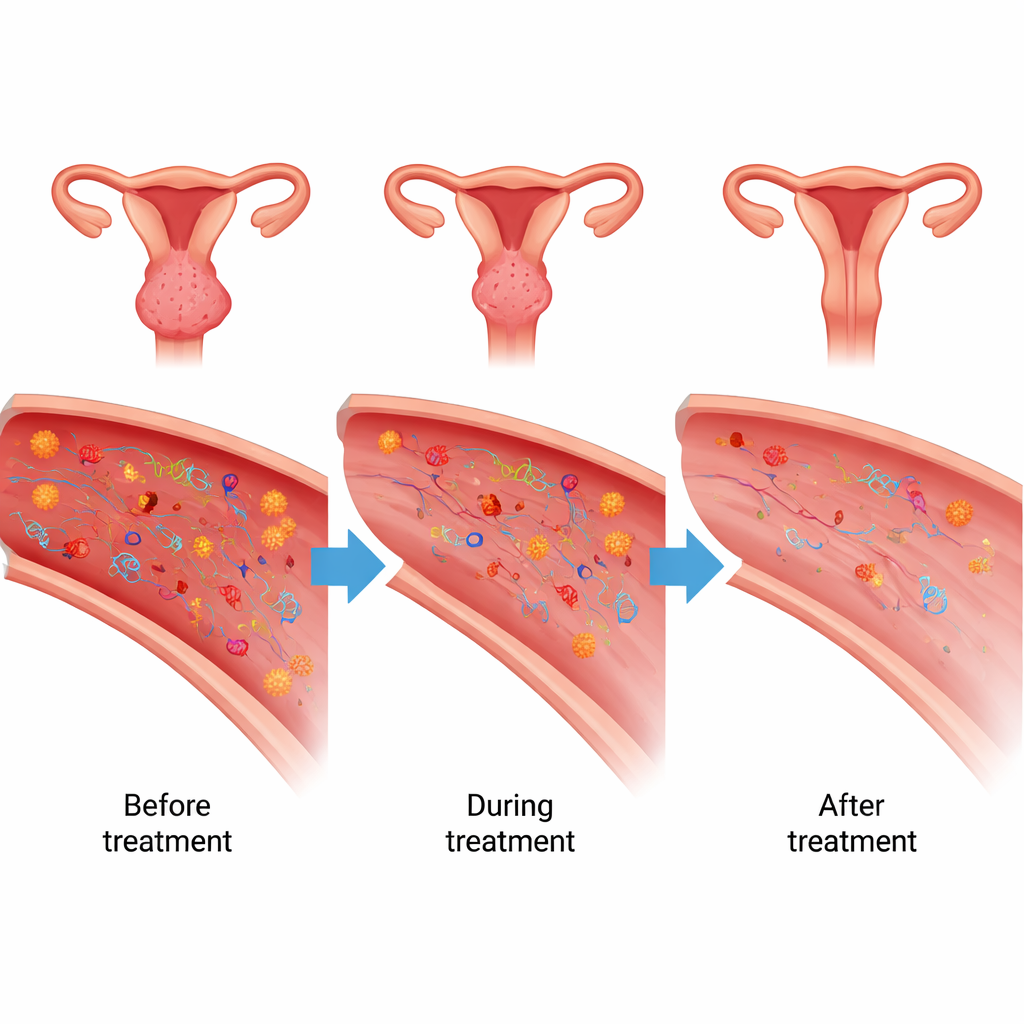
Across most patients, tumor content in tissue, general tumor DNA in blood, and HPV DNA levels all fell sharply during treatment, matching the visible shrinkage of tumors. A handful of women, however, showed rising or persistently high HPV DNA levels in tissue or blood. These women tended to have poorer responses, with tumors that shrank slowly or remained stable. HPV DNA in blood proved more sensitive than general tumor DNA: it was detected in the vast majority of patients before treatment and remained detectable in some cases even when overall tumor DNA had already dropped to undetectable levels. Patients whose HPV DNA turned negative during treatment were far more likely to achieve partial or complete remission than those who stayed positive.
Genes That Shape Treatment Success
The study also linked the blood signals to deeper genetic features of the tumors. Many cancers carried changes in genes tied to reduced sensitivity to radiation, such as PIK3CA, BRCA2 and ERBB2. Patients with these "radioresistance" genes tended to have higher HPV levels and slower HPV clearance. By contrast, certain inherited differences in drug-processing and DNA-repair genes were associated with faster HPV disappearance from the blood, hinting at better chemotherapy effectiveness. One HPV type, HPV16, stood out: it was the most common, associated with higher starting viral loads and slower clearance, suggesting more aggressive or treatment-resistant disease. Together, these patterns allowed the researchers to define risk groups, including a low-risk group with rapid HPV clearance and a high-risk group with lingering HPV and less favorable responses.
Toward More Tailored Treatment
For a layperson, the key message is that the virus-related DNA floating in a patient’s blood can act like a real-time meter of how well cervical cancer therapy is working. In this small study, women whose HPV DNA levels fell quickly during chemoradiotherapy generally did well, while those with persistent or rising levels were more likely to have trouble. Because this blood test is minimally invasive and more sensitive than many existing markers, it could help doctors spot patients who still harbor dangerous residual disease and might benefit from intensified or additional treatments, such as targeted drugs or immunotherapy. Although larger and longer-term studies are needed, dynamic monitoring of HPV DNA in blood points toward a future where cervical cancer care is more precisely tailored to each woman’s individual risk and response.
Citation: Zhang, H., Luo, X., Jiang, J. et al. The clinical application value of dynamic monitoring of HPV ctDNA in concurrent chemoradiotherapy for locally advanced cervical cancer. npj Precis. Onc. 10, 150 (2026). https://doi.org/10.1038/s41698-026-01348-7
Keywords: cervical cancer, HPV DNA, liquid biopsy, chemoradiotherapy, treatment monitoring