Clear Sky Science · en
Assessing the warming biases in CMIP6 models: the roles of fast response and cumulative effects to external forcings
Why climate model “hotness” matters to everyone
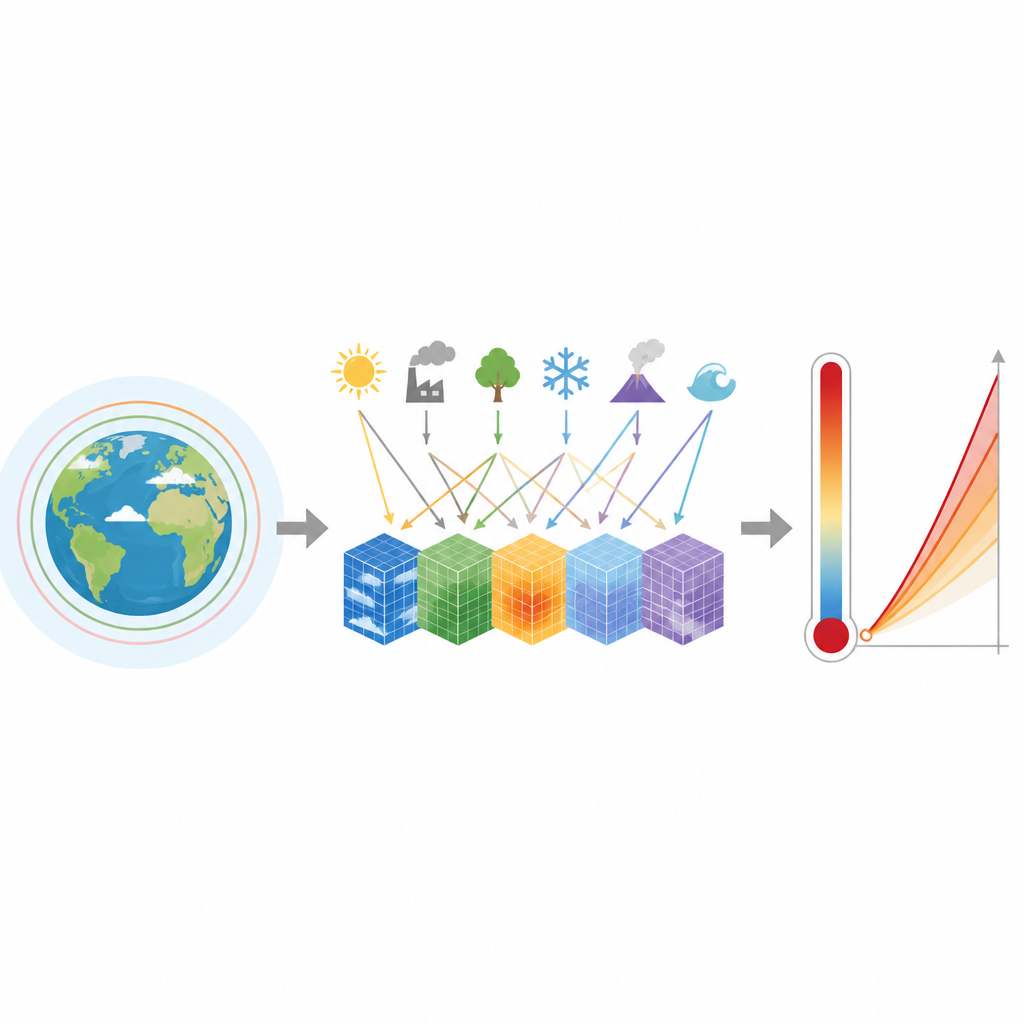
As the world edges closer to 1.5 degrees Celsius of warming, governments and communities rely on climate models to plan for floods, droughts, heat waves and sea level rise. But some of the latest models run hotter than others, projecting stronger future warming than observations seem to support. This study introduces a new, simpler way to check whether a model tends to be too warm or too cool, using how Earth’s temperature reacts quickly and slowly to human influence.
Looking for a better thermometer for models
Until now, scientists have mainly judged model “hotness” using two measures called transient climate response and equilibrium climate sensitivity. These describe how much the planet warms when carbon dioxide rises, but they are hard to calculate and come with large uncertainties. They also do not say much about regional changes that matter for local planning. The authors instead turn to how global temperature varies over time, treating the climate as a complex system that remembers its past and reacts at different speeds.
Fast reactions and lingering memories
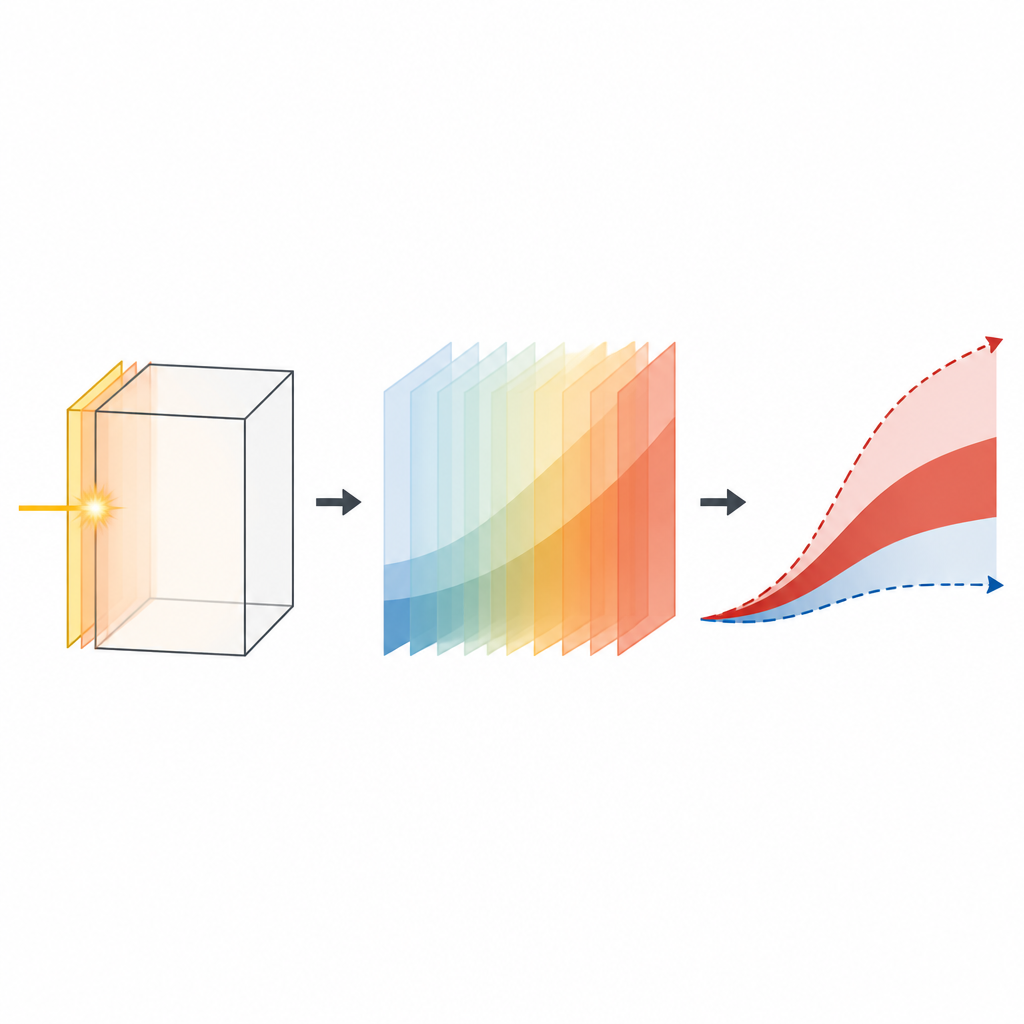
The study breaks global surface temperature into two pieces. One part is the fast response, capturing how quickly temperature jumps within about a month when human-made greenhouse gases or other external forces change. The other part is a long memory, which represents how the oceans, sea ice and other slow parts of the climate system store and release heat over many years. Two simple numbers summarize these behaviors: a measures the strength of the fast response, and H captures how strongly the climate remembers its past, that is, how long earlier conditions keep influencing today’s temperature.
Testing today’s leading climate models
Using global temperature records from the HadCRUT5 dataset, the authors estimated real-world values of a and H, then compared them with results from 21 widely used CMIP6 climate models. Many models show a stronger long-term memory than observations, meaning they exaggerate how much past changes continue to push temperatures up. At the same time, most models show a weaker fast response than the real climate. Interestingly, each model seems to trade off between these two tendencies: those that remember more tend to react more slowly, and those that remember less react more quickly, yet many still reproduce the overall historical warming trend.
A simple map of warmer and colder biases
The researchers next asked whether the pair of numbers (a and H) could flag models that are likely too warm or too cool. They built a reference curve from observations that shows all combinations of a and H that match the historical temperature record. Models that fall to one side of this curve tend to produce less warming than observed, while those on the other side tend to warm more. When they compared these positions with the actual warming trends simulated between 1970 and 2000, the match was striking: the distance from the reference curve closely tracked how much each model under- or overestimated past warming.
What controls model hotness
To see which ingredient matters most, the team ran sensitivity tests that varied the fast response and the memory strength. They found that both a stronger fast response and a stronger memory raise long-term warming, but not in the same way. Changes in the fast response lead to roughly linear changes in warming, while changes in long-term memory can have a sharply increasing effect once H becomes large. Because many CMIP6 models overstate this memory, the study concludes that exaggerated cumulative effects of past forcing are a key driver of their warm bias. Models classed as “warmer” by this method also tend to have higher traditional sensitivity measures, linking the new indices back to familiar climate science concepts.
How this helps future projections
For non-specialists, the main message is that the reliability of climate projections can be checked using simple fingerprints from past data. By focusing on how quickly the climate reacts and how long it remembers, scientists gain an efficient tool to sort models that are likely too hot or too cold without running expensive extra simulations. The same approach can be applied not only to global temperature but also to specific regions, helping refine the tools that guide adaptation decisions in a warming world.
Citation: Yan, J., Yuan, N. & Franzke, C.L.E. Assessing the warming biases in CMIP6 models: the roles of fast response and cumulative effects to external forcings. npj Clim Atmos Sci 9, 117 (2026). https://doi.org/10.1038/s41612-026-01390-z
Keywords: climate models, global warming, climate sensitivity, temperature trends, CMIP6