Clear Sky Science · en
Physical activity and anthropometric factors as predictors for postural stability in children
Why children’s balance matters
Watching a child learn to ride a bike or climb a playground frame, we rarely think about the invisible systems that keep them upright. This study looks at how body size and everyday movement habits are linked to balance in school‑aged children, using careful lab tests to see which factors help kids stay steady and which might put them at risk for falls and sports injuries.
How the study was set up
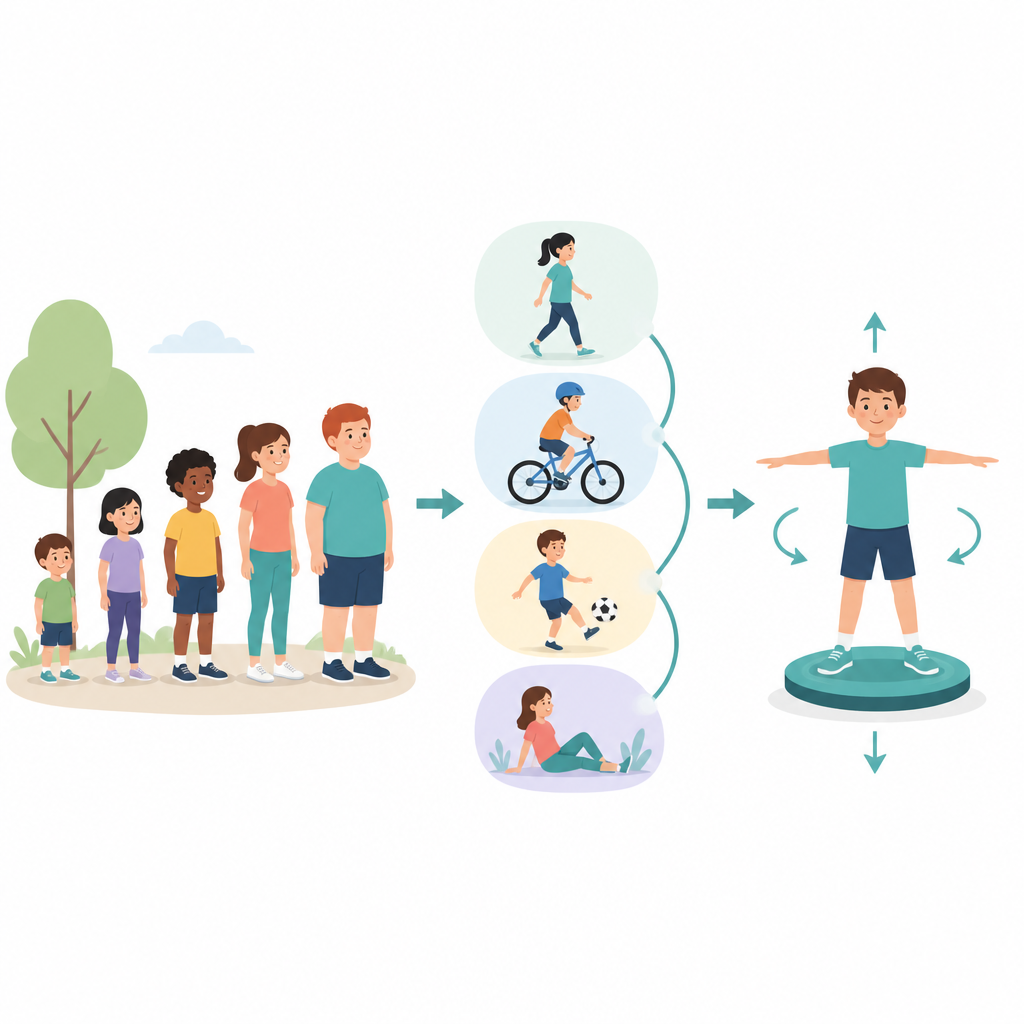
Researchers in Germany invited 95 children and teenagers between 7 and 17 years to a hospital lab. The group included youngsters with body weight in the typical range as well as those who were overweight or had obesity, based on national growth charts. The children answered a detailed questionnaire about their physical activity in daily life, such as walking and cycling, organized sports, and how active they were in their free time. They also reported their most recent school grade in physical education, which in Germany reflects performance in strength, endurance, coordination, and sports skills.
Measuring balance in the lab
To test balance, the team used a computerized platform that looks a bit like a force‑sensing floor. Children stood on this platform without shoes while it quietly recorded how they swayed during still standing, how far and how safely they could lean toward different directions, and how quickly and effectively they reacted when the surface suddenly moved. These tasks produced several scores that together paint a picture of postural stability, from basic steadiness to fast automatic reactions that help prevent a fall.
What body size and age had to do with balance
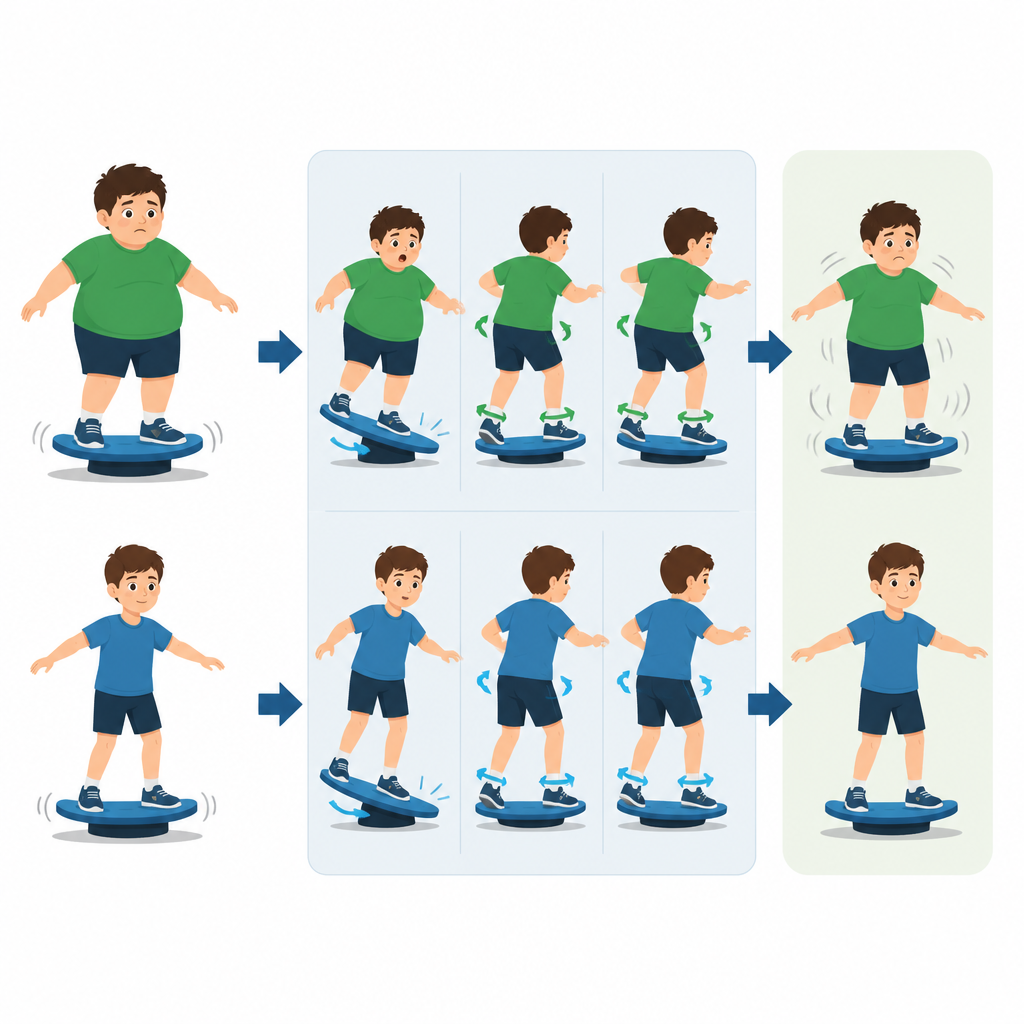
The results showed that age mattered: older children tended to have better control over the direction of their movements and higher overall balance scores, reflecting the natural maturing of their nervous and muscular systems. Body weight also played a role. Children with overweight had a reduced ability to move safely toward the limits of their base of support, and those with obesity more often relied on larger, hip‑driven movements instead of smaller ankle adjustments to stay upright. This pattern suggests that carrying more weight can make fine balance control harder, especially in taller youngsters.
Why school sports grades and activity type mattered
School physical education grades turned out to be one of the most consistent clues to balance ability. Children with poorer grades generally showed weaker balance across several tests, slower or less controlled movements, and less efficient strategies. This hints that the grade may capture aspects of motor skill and coordination that simple activity counts miss. The study also found that not all activity was equal. Five broad activity types emerged from the questionnaire: daily movement, cycling, walking, sports club participation, and leisure‑time activity. Some patterns were surprising. High amounts of general daily movement were linked to smaller safe leaning ranges, and the effects of daily and leisure activities differed between normal‑weight children and those with obesity. At the same time, taking part in sports clubs seemed to help children with obesity react faster when the platform suddenly shifted, suggesting that structured practice can partly offset the challenges of higher body weight.
What this means for children and caregivers
For parents, teachers, and coaches, the study’s message is that children’s balance depends on a mix of biology and behavior. Extra body weight is linked to less stable posture, but school sports performance and the kind of activities children do can either add to or ease those difficulties. Because the research was a snapshot in time and explained only a modest share of the differences between children, it cannot prove cause and effect. Still, it supports the idea that kids with higher body weight or weaker performance in physical education may especially benefit from gentle, structured, balance‑focused exercise, while all children can use gradually more demanding practice to build the steady footing they need for play, school, and sport.
Citation: Brummer, S., Flock, S., Berelsmann, AM. et al. Physical activity and anthropometric factors as predictors for postural stability in children. Sci Rep 16, 16425 (2026). https://doi.org/10.1038/s41598-026-55265-7
Keywords: children’s balance, postural stability, childhood obesity, physical activity, sports participation