Clear Sky Science · en
Genomic characterization of Enterotoxigenic Escherichia coli lineage 2 (CS2 + CS3) by long-read sequencing reveals distinct lineage-specific genome organization
Why this gut bug matters
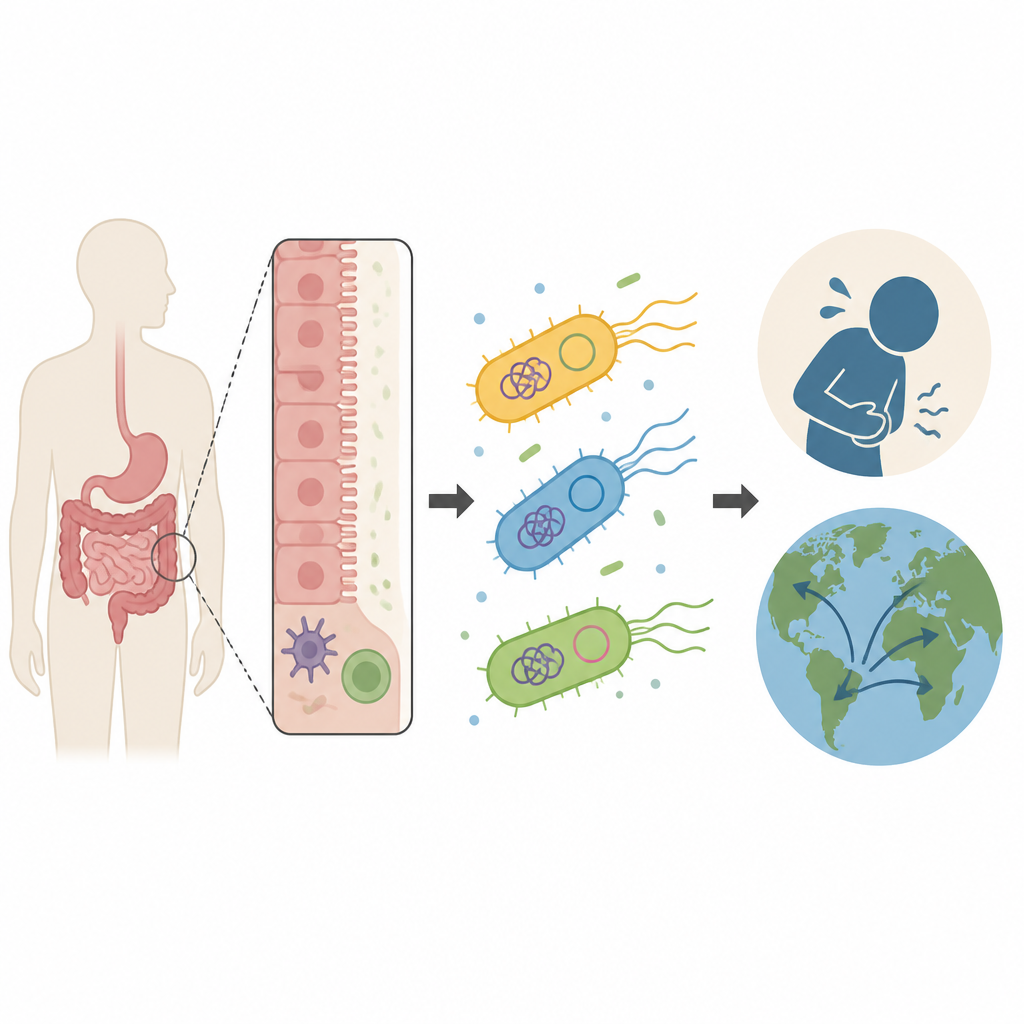
Diarrhea that strikes young children and travelers is often blamed on contaminated food or water, but one particular type of Escherichia coli, called enterotoxigenic E. coli, is a frequent and underappreciated culprit. This study focuses on one rising family of these bacteria, known as lineage 2, that is now turning up more often around the world. By reading its DNA in great detail, the researchers reveal how this germ stores the genes that allow it to cling to our intestines, cause disease, and sometimes resist antibiotics. Understanding that genetic layout can help explain why this lineage spreads so successfully and how it might be controlled.
A closer look at a common traveler’s enemy
Enterotoxigenic E. coli is best known for causing watery diarrhea in children in low income regions and in people visiting those areas. It does this using a combination of toxins and hair like surface structures that help it attach to the gut lining. These traits are often carried on small DNA circles called plasmids, which bacteria can swap with one another. Recent surveillance has shown a sharp rise in infections caused by strains that carry a specific pair of attachment tools, named CS2 and CS3, which define what scientists call lineage 2. Many of these strains are also resistant to several antibiotics, raising public health concerns.
Reading the full genetic story
To understand what makes lineage 2 special, the researchers fully decoded the genomes of five lineage 2 strains using long read DNA sequencing and combined them with seven similar genomes from public databases. This technology lets them assemble the bacteria’s main chromosome and multiple plasmids as complete circles, rather than fragmented pieces. Across all twelve strains they found a strikingly stable backbone: each had a single chromosome of similar size and two large recurring plasmids, suggesting a shared and long lasting genetic framework that has persisted across decades and continents.
A mixed strategy for causing disease
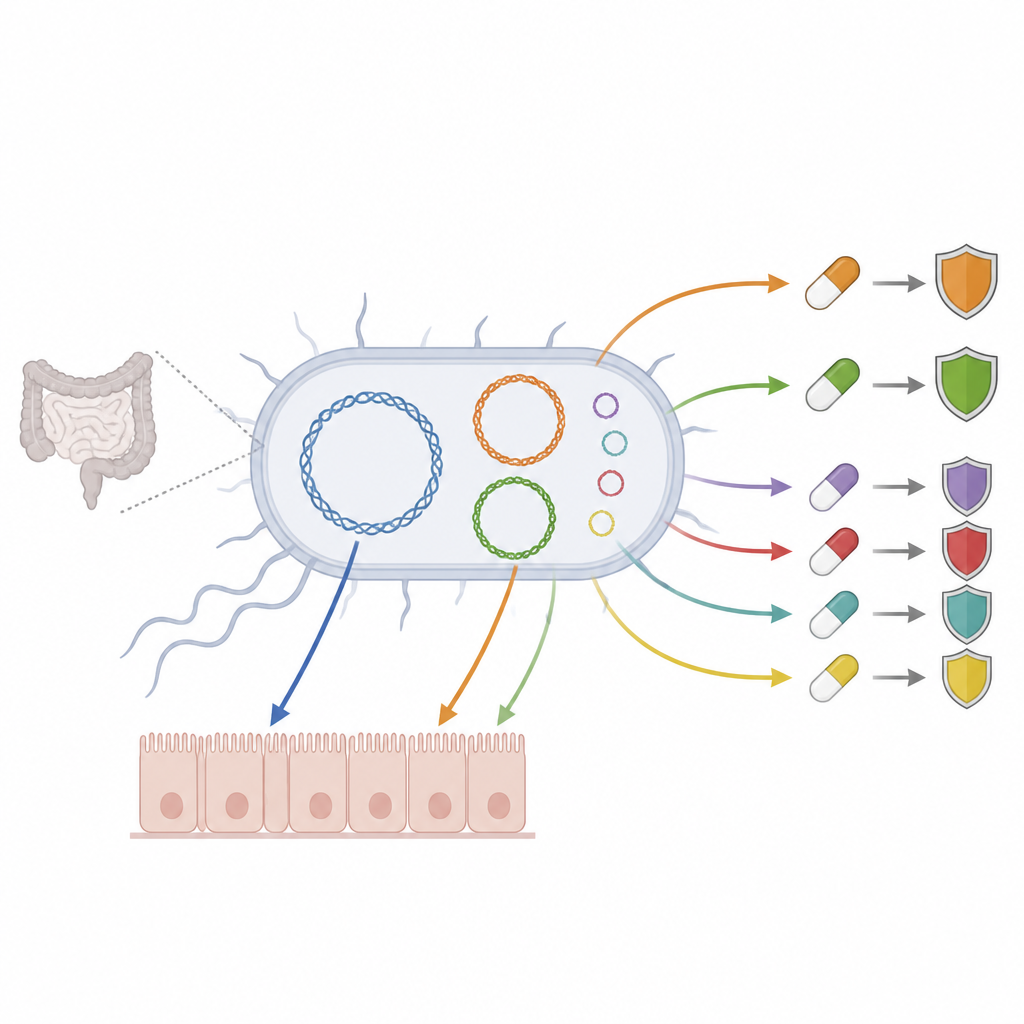
One of the most surprising findings was where key attachment genes are located. In many related E. coli lineages, all known attachment factors sit on plasmids. In lineage 2, however, the CS2 attachment system is built into the chromosome at the same spot in every strain, marked by traces of mobile DNA that likely carried it there in the past. In contrast, other important factors such as the heat labile and heat stable toxins, the CS3 and CS21 attachment systems, and the mucus cutting protein EatA remain on plasmids. One core plasmid appears to have formed by fusing two plasmids seen in a sister lineage, bringing toxins, CS3, and EatA together on a single stable DNA circle.
Hidden pockets of drug resistance and viral DNA
Beyond the two core plasmids, some strains carried extra plasmids that did not host the classic diarrheal tools but did hold antibiotic resistance genes. These resistance genes, including those that help the bacteria withstand common drugs like tetracyclines, were always carried on plasmids and were often flanked by mobile DNA, a pattern consistent with recent gene pickup from other microbes. In a few isolates, the team also discovered plasmids that resembled bacteriophages, the viruses that infect bacteria. These phage like plasmids did not carry resistance genes in this dataset but are closely related to elements in other E. coli strains that do, pointing to a potential future route for resistance to spread.
What this means for health and surveillance
Taken together, the findings show that this successful diarrheal lineage relies on a hybrid setup: a crucial attachment factor is locked into the chromosome, while other disease related traits and drug resistance ride on plasmids that can move and rearrange. This mix likely gives lineage 2 both stability, by ensuring its core disease traits are hard to lose, and flexibility, by allowing resistance and other extras to be gained or dropped from plasmids. As CS2+CS3 strains continue to appear more often in both patients and travelers, tracking how their plasmids change with modern sequencing tools will be important for anticipating shifts in virulence and antibiotic resistance, and for informing vaccine and treatment strategies.
Citation: Taheri, N., Sjöling, Å. Genomic characterization of Enterotoxigenic Escherichia coli lineage 2 (CS2 + CS3) by long-read sequencing reveals distinct lineage-specific genome organization. Sci Rep 16, 16289 (2026). https://doi.org/10.1038/s41598-026-55068-w
Keywords: enterotoxigenic Escherichia coli, diarrheal disease, plasmids, antibiotic resistance, bacterial genomics