Clear Sky Science · en
Long-term cognitive outcomes after mild COVID-19, critical COVID-19, and non-COVID critical illness: a prospective cohort comparison
Why lingering COVID fog matters
Many people who caught COVID-19 expected to bounce back once the fever and cough were gone. Yet months later, some still struggle with brain fog, poor memory, and crushing tiredness, even if their initial illness was mild. Others survived life threatening stays in intensive care and now face similar problems. This study asks a simple but important question for patients, families, and employers: how do long term thinking and mental health problems compare between people with mild COVID-19 at home, those with severe COVID-19 in intensive care, and patients who were critically ill for other reasons?
Three different paths after serious illness
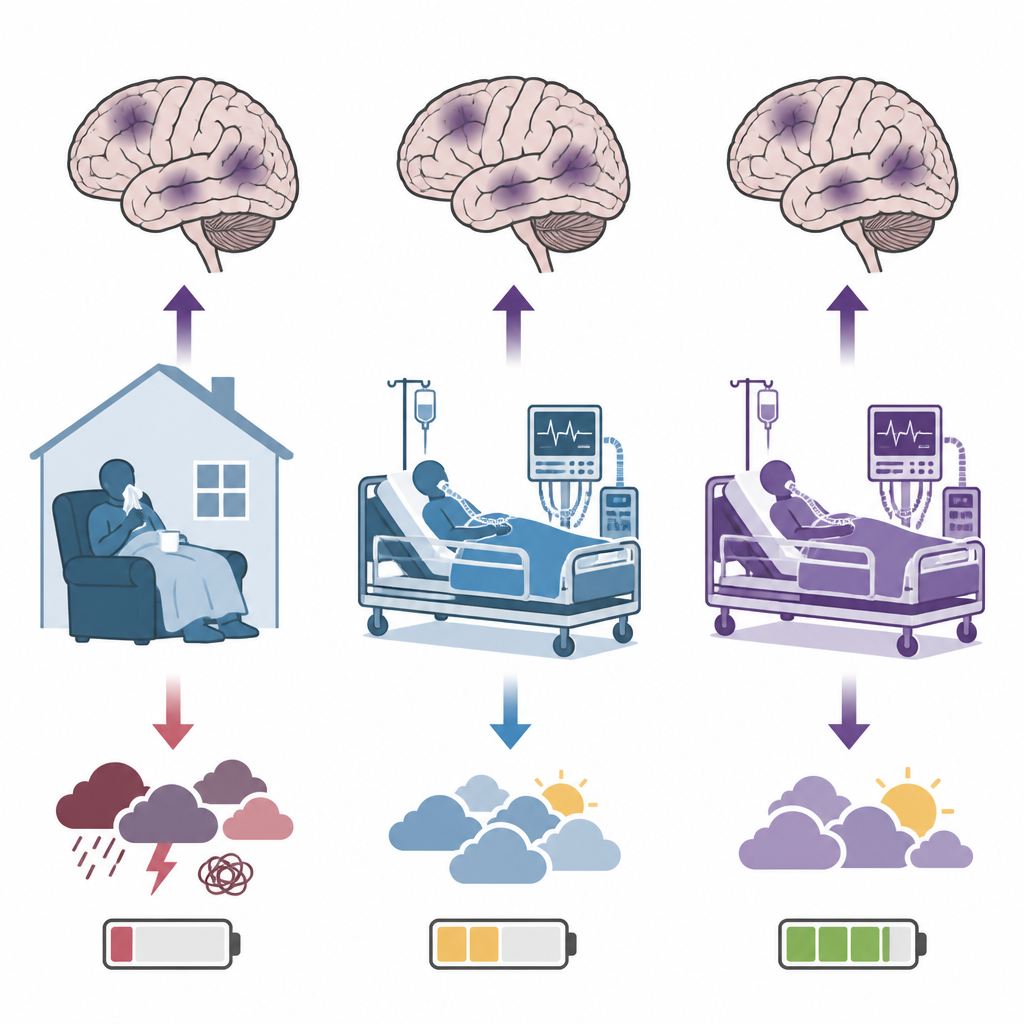
The researchers followed three groups of adults at least 12 weeks after their illness. One group had post COVID-19 condition after a mild infection managed at home. The second group had COVID-19 so severe that they needed intensive care treatment, including long stays on a ventilator. The third group had prolonged intensive care stays for other serious conditions, such as lung disease, but did not have COVID-19. All participants completed a broad set of thinking tests and questionnaires covering mood, fatigue, sleep, and quality of life, and their medical history and physical functioning were carefully documented.
Testing memory, attention, and everyday thinking
To probe brain function, the team used established tests of memory, attention, and higher order skills like planning and mental flexibility. They also used a short screening test often employed in clinics to detect mild cognitive problems. Scores were compared with healthy people of the same age, sex, and education level. In addition, participants rated how satisfied they were with their own memory, how tired they felt, and whether they had symptoms of anxiety or depression. Standard tools captured how much their health limited daily activities and work.
Similar thinking scores, different lived experience
Surprisingly, overall cognitive performance was broadly similar across all three groups. About one third to one half of participants in each group scored below the usual cut off on the brief screening test, and detailed testing showed frequent but comparable problems with attention and processing speed. Patients who had been in intensive care for non COVID illnesses tended to have somewhat worse visual and verbal memory than those with mild COVID-19, echoing what is known about long lasting cognitive effects after critical illness in general. In all groups, attention was the most fragile domain, with many people still slower or less alert than expected months after leaving hospital or recovering at home.
Hidden burden in those with mild initial illness
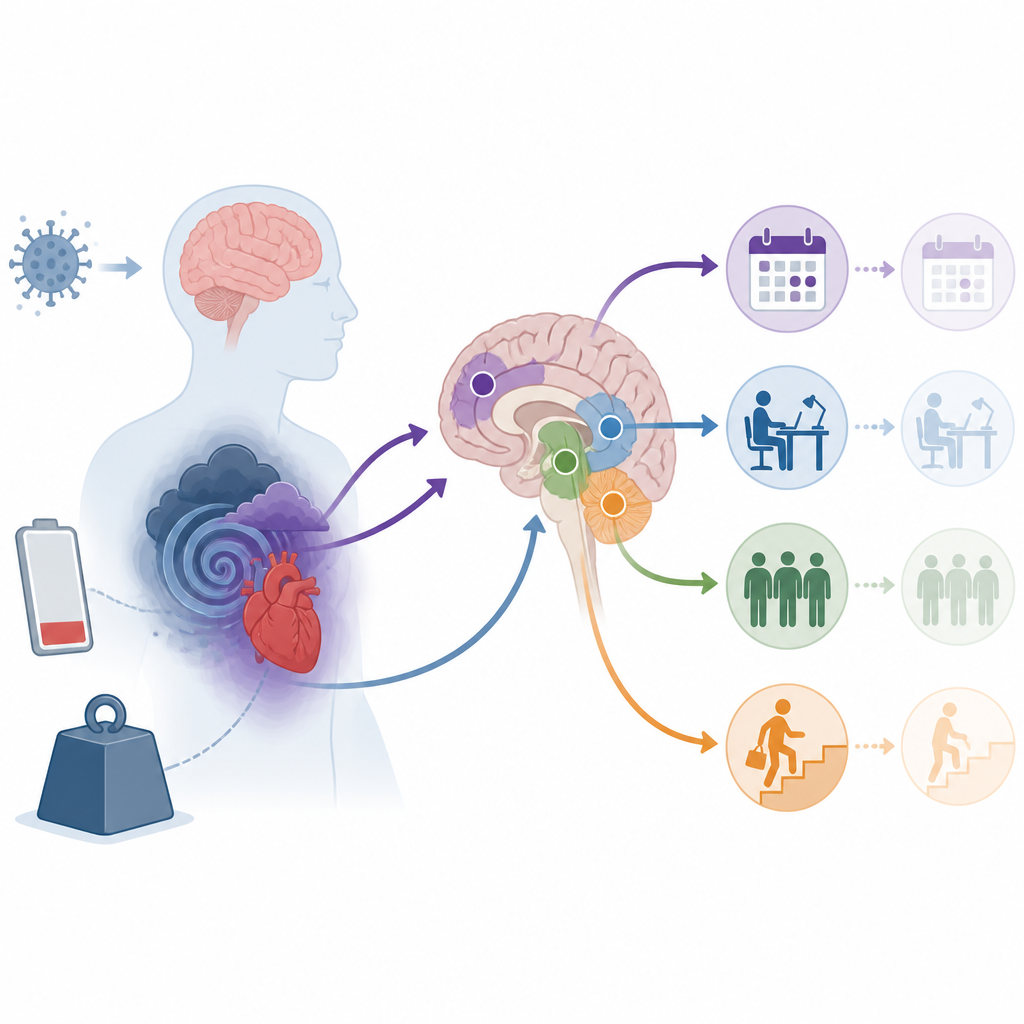
The sharpest contrasts emerged not in test scores but in how people felt. Patients with post COVID-19 condition after a mild initial infection reported far greater mental strain than either intensive care group. They were less satisfied with their memory, described stronger cognitive fatigue, and had higher rates of anxiety and depression symptoms. Their mental quality of life scores were clearly lower, and many were unable to work or had to cut back their hours long after infection. In this group, poorer performance on executive functions such as planning and mental flexibility was linked with higher levels of depression and fatigue, suggesting an interplay between mood, energy, and thinking abilities that was not seen in the intensive care survivors.
What this means for patients and care
To a layperson, the key message is that long lasting brain related problems are not limited to those who almost died of COVID-19. People who had a mild infection can end up with similar results on formal thinking tests yet feel much worse in their daily lives, especially when fatigue and low mood are present and work demands remain high. The authors conclude that clinics should not look only at memory and attention scores when assessing post COVID-19 condition. Care should also include screening and support for anxiety, depression, and fatigue, along with targeted cognitive training, to help people regain both mental clarity and the ability to participate fully in work and social life.
Citation: Raeder, V., Quitschau, A., Gorsler, A. et al. Long-term cognitive outcomes after mild COVID-19, critical COVID-19, and non-COVID critical illness: a prospective cohort comparison. Sci Rep 16, 16453 (2026). https://doi.org/10.1038/s41598-026-54890-6
Keywords: post COVID brain fog, cognitive impairment, fatigue, intensive care recovery, mental health