Clear Sky Science · en
Impact of a structured case report on self-reported responses to simulated emergency scenarios: a randomized survey-based study
Why this study matters for real emergencies
When a person is badly injured, doctors must make rapid choices about breathing support, scans, and where to send the patient. Many of these skills are taught through dramatic case stories in journals and lectures. This study asked a simple but important question: does reading a single, well structured case story actually change how doctors say they would act in a tough emergency scenario, and does this depend on how experienced they are?
How doctors learn from real life stories
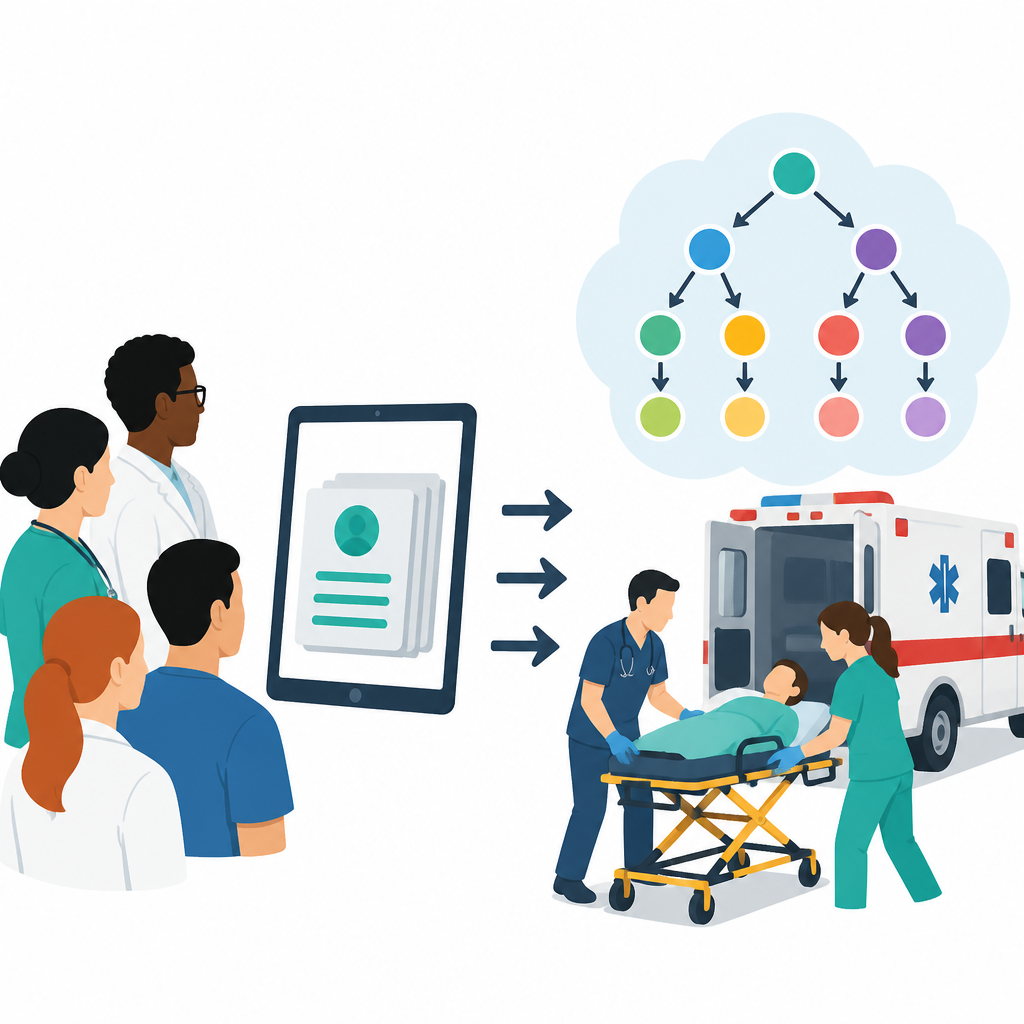
Case reports are detailed write ups of real patients that highlight unusual injuries, tricky decisions, and what worked or failed. They are widely used in teaching because they feel concrete and memorable. Yet their actual impact on decision making has rarely been measured. The authors focused on emergency care, where controlled experiments are hard to run, and case stories are often used to fill knowledge gaps. They designed a survey to test whether one such story about a severe neck injury could shift doctors’ choices in a similar simulated situation.
What the researchers did
Sixty three licensed physicians working in emergency settings completed an online survey. Half were randomly assigned to read a structured case report describing a teenage motorcyclist with a catastrophic tear of the windpipe after hitting a wire fence. The story described failed attempts at placing a breathing tube through the mouth, eventual success with a device that sits above the voice box, helicopter transport, emergency surgery, and the patient’s recovery. Afterward, both groups answered the same short scenario questions about a similar neck trauma case. They rated, on a five point scale, how likely certain injuries were, which tests they would use, how they would manage the airway, and what type of hospital they would choose.
How the case story changed reported decisions
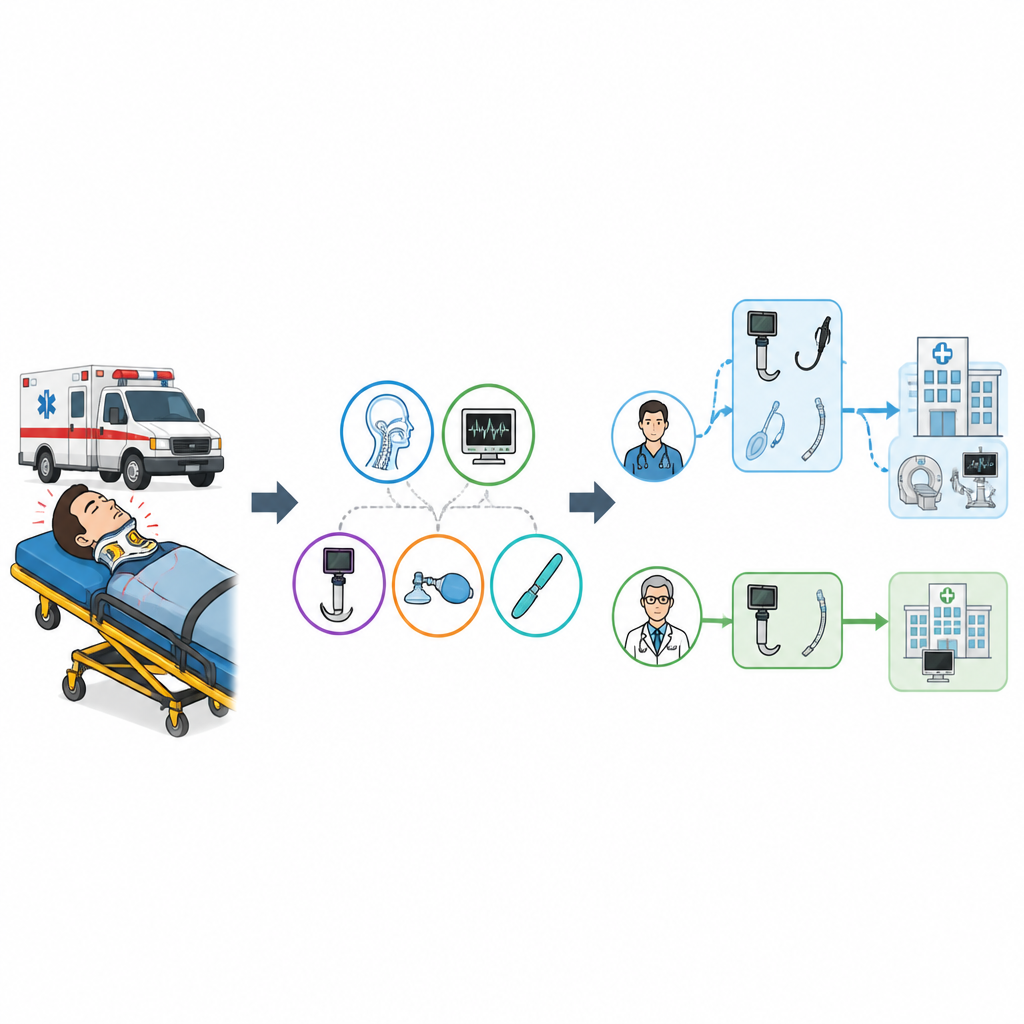
The clearest differences appeared in airway choices. Doctors who had read the case report placed more value on keeping the patient breathing on their own and using a supraglottic airway device that seals above the windpipe opening. They were more cautious about standard breathing tubes placed through the mouth and about cutting directly into the neck as an emergency last resort. They also rated some findings, such as abnormal breath sounds, as more important, and gave more weight to sending the patient to a hospital that can provide advanced lung support with heart lung machines. Views on which exact neck injuries and other accompanying injuries to expect changed less overall, although those who read the report did rate tracheal rupture and collapsed lung as more likely.
Experience level makes a difference
When the team looked at years in practice, a pattern emerged. Junior doctors with up to five years of experience showed the largest shifts across several decision areas after reading the case, especially around airway strategy. Physicians with six to fifteen years in practice showed smaller and less frequent changes. For the most experienced doctors, with more than fifteen years in practice, no clear differences between those who had and had not read the case could be detected in this small sample. The authors suggest that newer doctors may lean more heavily on vivid case stories, while seasoned clinicians blend such stories into a broader base of experience and guidelines.
What this means and what we still do not know
The study indicates that a single, carefully written medical case story can nudge how less experienced emergency doctors say they would handle a life threatening airway injury in a simulated setting. It also hints that teaching tools based on real patients might work best when tailored to the learner’s stage, with richer narratives for juniors and more focused summaries for seniors. However, the survey measured only short term, self reported choices in a fictional scenario with a modest number of participants. It does not show whether case reports change what doctors actually do at the bedside or how patients fare. Future research will need to test longer lasting effects, compare case stories with other learning formats, and examine how to shape case reports so they support safe, thoughtful decisions in real emergencies.
Citation: Porschen, C., Hellenthal, K.E.M., Zarbock, A. et al. Impact of a structured case report on self-reported responses to simulated emergency scenarios: a randomized survey-based study. Sci Rep 16, 16144 (2026). https://doi.org/10.1038/s41598-026-54854-w
Keywords: case report education, emergency medicine, airway management, clinical decision making, trauma care