Clear Sky Science · en
Gene deletion of Klotho in the dentate gyrus does not affect the number of adult-born granule cells
Why brain aging and memory matter
As people grow older, many notice that learning new information or recalling details becomes harder. Scientists are searching for biological clues that explain this decline and might one day help protect memory. One promising lead is a hormone called Klotho, which has been linked to longer life and sharper thinking. This study asks a focused question: does Klotho made inside a specific memory hub in the brain directly control how many new nerve cells are added in adulthood?
A closer look at a memory gateway
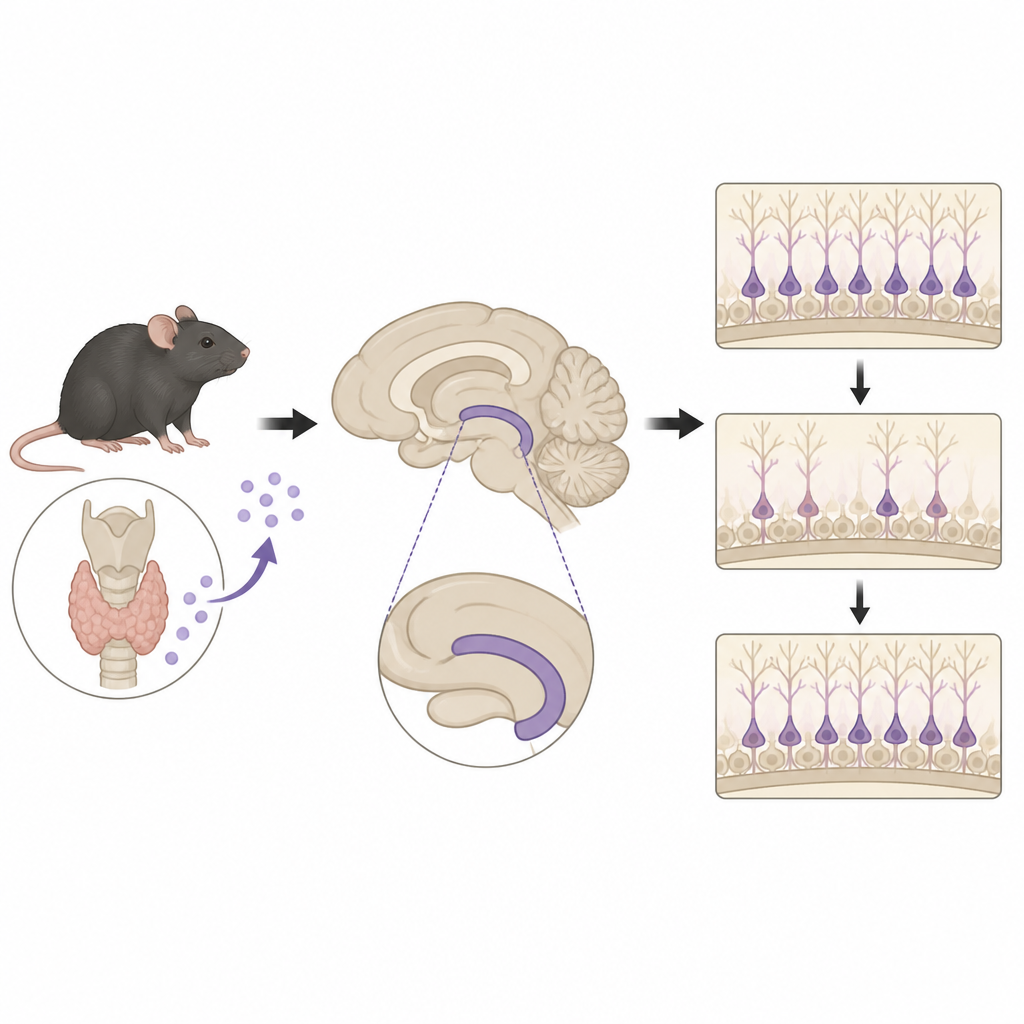
Deep inside the brain lies the hippocampus, a structure important for forming memories of places and events. Within it, the dentate gyrus is special because it continues to produce new nerve cells throughout life. These adult-born cells are thought to help distinguish similar experiences, such as telling two similar streets apart. Earlier work showed that raising Klotho levels in the body can boost the birth of new hippocampal cells and improve memory in animals, and that lower Klotho levels are linked to aging and mental decline. But it was unclear whether Klotho produced locally by cells in the dentate gyrus itself is necessary for this process, or whether Klotho from elsewhere in the body is doing most of the work.
Switching off Klotho in one brain area
To tease apart these possibilities, the researchers engineered mice in which the Klotho gene could be switched off only in the granule cells of the dentate gyrus, sparing the rest of the body. They used a genetic switch that turns on in newly formed nerve cells at a specific stage, ensuring that Klotho disappears from these cells as they move from a newborn to a more mature state. To track new cells, the team injected a chemical label that is built into DNA when cells divide. Mice were then examined at several time points, from one day to four weeks after labeling, to count how many new cells appeared, survived, and matured in the dentate gyrus.
Early setback, later catch up
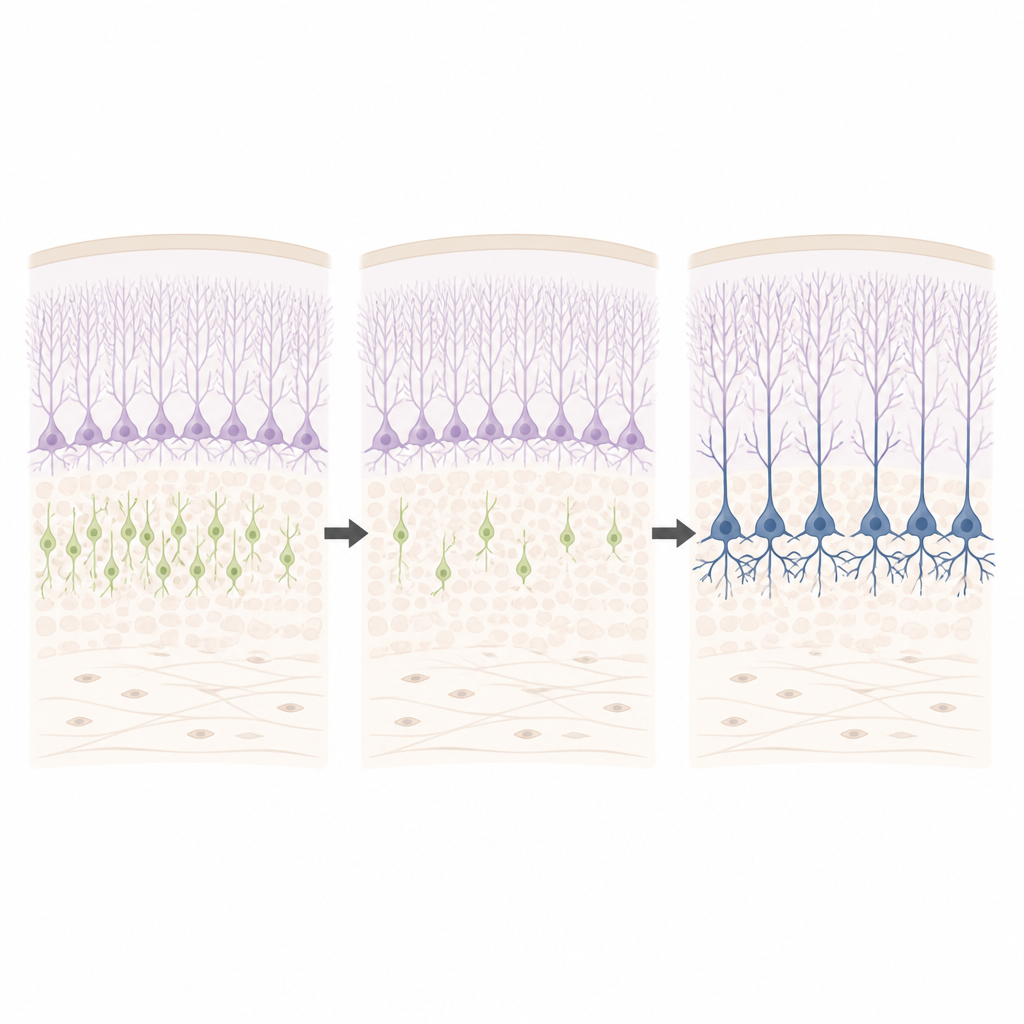
The counts revealed a subtle but important pattern. When Klotho was removed only from dentate gyrus cells, there was a temporary drop in the number of young, immature nerve cells around one to two weeks after they were born. These cells showed different shapes that mark early growth stages, and all of these immature groups were reduced to a similar degree. However, the number of stem cells that give rise to new neurons, and the rate at which these precursors divided, did not change. The birth of new support cells called glia was also unaffected. By three to four weeks after labeling, when the surviving new cells had matured and integrated into the existing network, the total number of new mature neurons in mice without local Klotho was back to normal compared with control animals.
Balancing act in a crowded network
These findings suggest that Klotho made by dentate gyrus cells fine tunes an early, vulnerable phase in the life of new neurons, helping a fraction of them survive the first one to two weeks. When this local support is missing, more of these young cells die. Yet the brain appears to compensate later: with fewer competitors for space and connections, the remaining cells are more likely to secure the inputs and signals they need to survive. As a result, by the time the cells are fully mature, their overall numbers match those in normal mice. Meanwhile, Klotho in other parts of the body or brain seems sufficient to keep the stem cell pool and long term neuron production intact.
What this means for healthy memory
For non specialists, the key message is that Klotho acts less like an on off switch for making new brain cells and more like a local coach guiding them through a brief, crucial training period. Losing Klotho in one memory region does not stop new neurons from eventually joining the circuit, but it does increase early losses along the way. This work refines our understanding of how different sources of Klotho shape brain plasticity during aging. It hints that future therapies might need to consider both the timing and location of Klotho action if the goal is to support healthy memory in later life.
Citation: Kraus, P., Marunde, M., Ryzynski, A. et al. Gene deletion of Klotho in the dentate gyrus does not affect the number of adult-born granule cells. Sci Rep 16, 16415 (2026). https://doi.org/10.1038/s41598-026-54703-w
Keywords: Klotho, adult neurogenesis, hippocampus, dentate gyrus, brain aging