Clear Sky Science · en
Integrative taxonomy and mitogenome characterization of the root-knot nematode Meloidogyne silvestris
Hidden pests beneath our feet
Most of us rarely think about the microscopic life in soil, yet some of these tiny creatures can quietly damage crops, garden plants, and trees. This study focuses on one such culprit, a root-knot nematode called Meloidogyne silvestris, which lives in plant roots and can threaten both natural vegetation and horticulture. By carefully tracking where this nematode occurs and how to recognize it, the researchers provide tools that can help protect plants and, indirectly, our food and green spaces.
Unseen worms that harm roots
Root-knot nematodes are microscopic roundworms that invade plant roots, causing swellings or “knots” that interfere with water and nutrient uptake. They are already known as some of the most destructive plant parasites worldwide, affecting many crops and woody plants. Meloidogyne silvestris was first reported from holly trees in northern Spain. In this study, scientists document its presence for the first time in the Netherlands, where they found it on holly and other woody hosts such as elm and wintercreeper. This wider host range and new geographic record suggest that the species may be more widespread in European landscapes than previously recognized.
Looking at bodies and behavior
To confirm the identity of the Dutch populations, the team began with traditional tools: careful observation of the nematode’s body form and measurements under the microscope, along with biochemical tests. They examined both juvenile and male worms, recording dozens of size and shape traits and comparing them with the original description from Spain. Overall, the Dutch and Spanish populations matched closely, differing only slightly in features such as body length and stylet size, differences that fall within normal variation for a species. Biochemical tests that separate enzymes on gels showed the same distinctive patterns in all M. silvestris samples, clearly separating them from a closely related and widespread species, M. javanica. 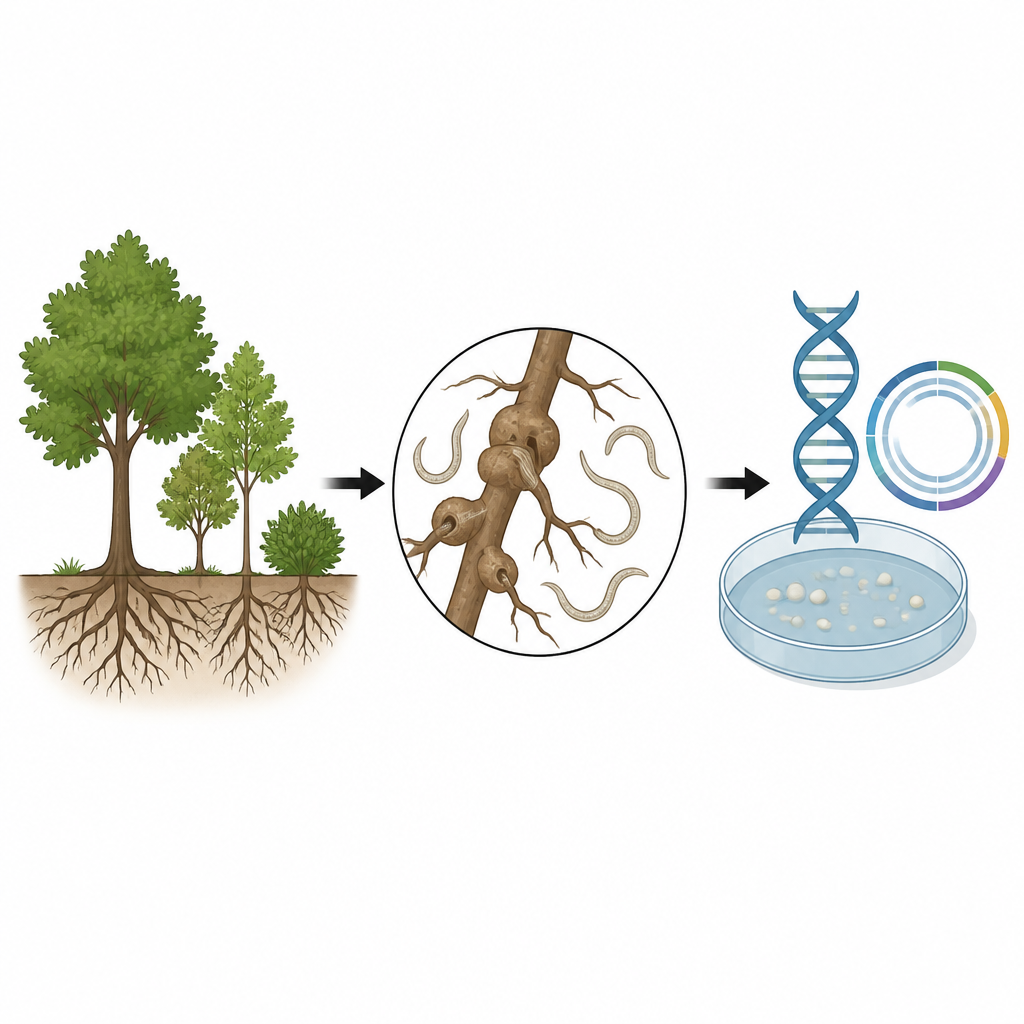
Reading the nematode’s genetic fingerprints
Because body form and enzyme patterns can sometimes be misleading on their own, the researchers added several layers of DNA evidence. Using high-throughput sequencing, they assembled key stretches of nuclear ribosomal DNA and mitochondrial genes used worldwide as barcodes for species recognition. Nematodes from both Dutch sites shared nearly identical sequences with each other and very high similarity to those from Spain in the 18S and 28S ribosomal regions, and they had identical barcodes in two mitochondrial genes, cox1 and cox2. When these sequences were placed into family trees with many other root-knot nematodes, all M. silvestris samples fell together in a well-supported cluster, alongside a small group of related species that prefer temperate climates and woody hosts.
Inside the tiny energy factory
The team went further by reconstructing almost the entire mitochondrial genome of M. silvestris. This small circular DNA molecule, about 15,000 base pairs long, lies in the cell’s energy-producing structures and is often especially informative for tracing evolutionary history. The genome contained the expected set of 12 protein-coding genes, ribosomal genes, and most transfer RNAs found in other root-knot nematodes, but it was somewhat shorter than many of its relatives, mainly because of a compact non-coding region. The order of genes closely matched that of other Meloidogyne species and showed particular similarity to another plant-parasitic nematode, Pratylenchus vulnus. These patterns support the idea that this group of nematodes shares a common evolutionary path and that mitochondrial gene order itself can serve as an additional clue to relationships. 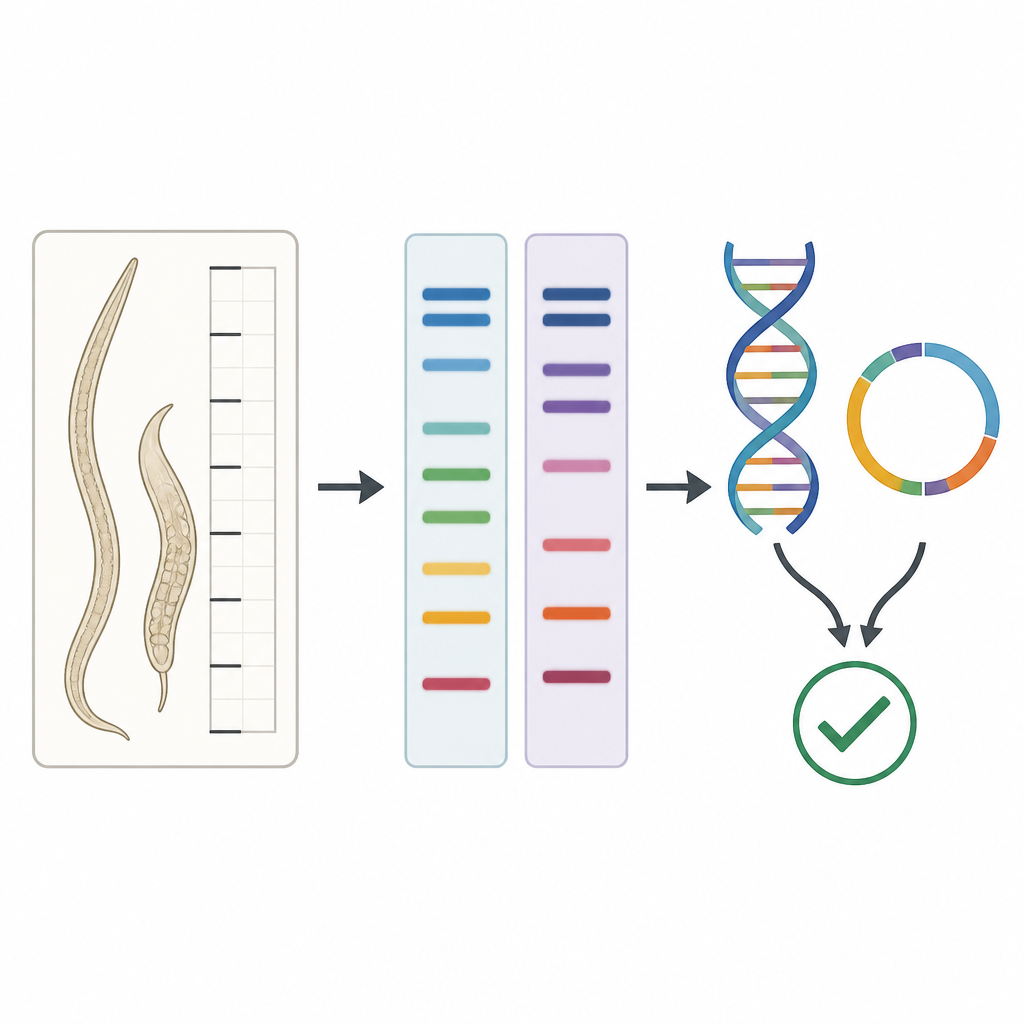
Why this tiny worm matters
By bringing together body form, enzyme chemistry, DNA barcodes, and a full view of the mitochondrial genome, the researchers show that Dutch and Spanish populations all belong to the same species, Meloidogyne silvestris. Their work confirms the distinct status of this root-knot nematode and extends knowledge of its range, hosts, and genetic makeup. For non-specialists, the key message is that multiple independent lines of evidence are needed to correctly recognize such cryptic pests. The newly described mitochondrial genome and barcodes will help plant health labs spot this species more reliably in the future, improving diagnostics and laying the groundwork for studies on how it spreads, evolves, and might eventually be managed.
Citation: Aisu, J., Karssen, G. & De Oliveira, D.A.S. Integrative taxonomy and mitogenome characterization of the root-knot nematode Meloidogyne silvestris. Sci Rep 16, 16439 (2026). https://doi.org/10.1038/s41598-026-54669-9
Keywords: root-knot nematode, Meloidogyne silvestris, mitochondrial genome, plant parasites, integrative taxonomy