Clear Sky Science · en
Impact of nurse-led postoperative education on health outcomes following endovascular aortic repair: a randomized trial
Why this study matters for patients and families
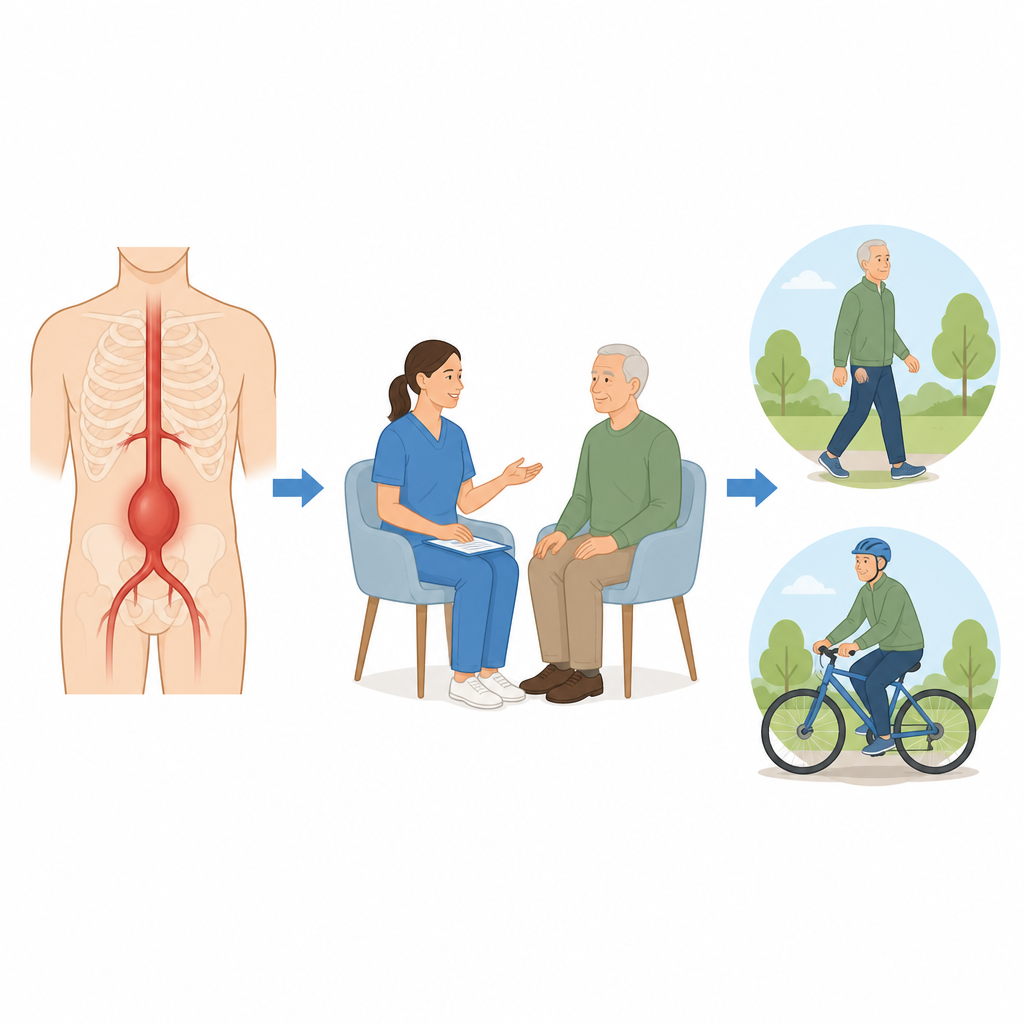
Many older adults live with a hidden bulge in the main artery of the belly, called an abdominal aortic aneurysm, which can be life threatening if it bursts. Today, a less invasive procedure known as endovascular aortic repair helps many of these patients recover faster. This study asked a simple but important question: after surgery, does extra education and support from specialist nurses actually improve how patients feel and manage their health, beyond the standard hospital follow up they already receive?
The condition and the modern repair
Abdominal aortic aneurysm usually causes no warning signs, yet it can rupture suddenly with fatal consequences. It is found through scans, often in older men, and doctors may recommend endovascular repair, where a stent graft is placed inside the weakened vessel using narrow tubes rather than large incisions. Compared with open surgery, this approach typically leads to shorter hospital stays and quicker physical recovery, and many patients report good quality of life soon after the operation. Standard follow up includes checkups with surgeons and routine scans to make sure the repair holds and no leaks or shifts appear in the implanted device.
The idea behind extra nurse visits
Because lifestyle risks such as smoking, high blood pressure, and high blood fats can affect long term heart and vessel health, education and coaching are often seen as key parts of modern care. In other fields, such as heart failure and cancer, specialist nurse clinics have helped patients understand their illness, stick to treatments, and sometimes live longer. The researchers wondered if setting up a nurse led clinic for people who had undergone endovascular repair could further boost recovery, confidence, and daily wellbeing compared with usual surgeon led follow up alone. Their hope was that tailored conversations and clear information would empower patients to take charge of their health.
How the trial was carried out
The team in a Swedish university hospital invited adults scheduled for planned endovascular repair to join a randomized trial. Everyone had to be able to read Swedish and have a type of aneurysm suitable for the less invasive procedure. Fifty four patients agreed and were randomly placed into two groups. Both groups received standard care, including discharge information from a doctor, clinic visits with a vascular surgeon at one month and one year, and regular scans of the repaired artery. On top of this, the intervention group also met a specialist surgical nurse about two weeks and six months after surgery. During these meetings, nurses asked open questions about the patient’s experience, discussed smoking, exercise, food, alcohol, and weight, used models and images to explain the repair, and helped patients write down personal goals and reflections.
What the researchers measured
To see whether the extra support made a difference, the researchers used well tested questionnaires before surgery and then at one, six, and twelve months afterward. These tools asked about everyday activities, mood, pain, social support, confidence in managing health, and overall sense of wellbeing. Additional rating scales captured how well patients felt they understood their diagnosis and follow up scans, how much more information they wanted, and how worried they felt about the treated aneurysm. The team compared scores between the nurse intervention group and the standard care group, and also tracked how each group changed over time.
Surprising results and emotional effects
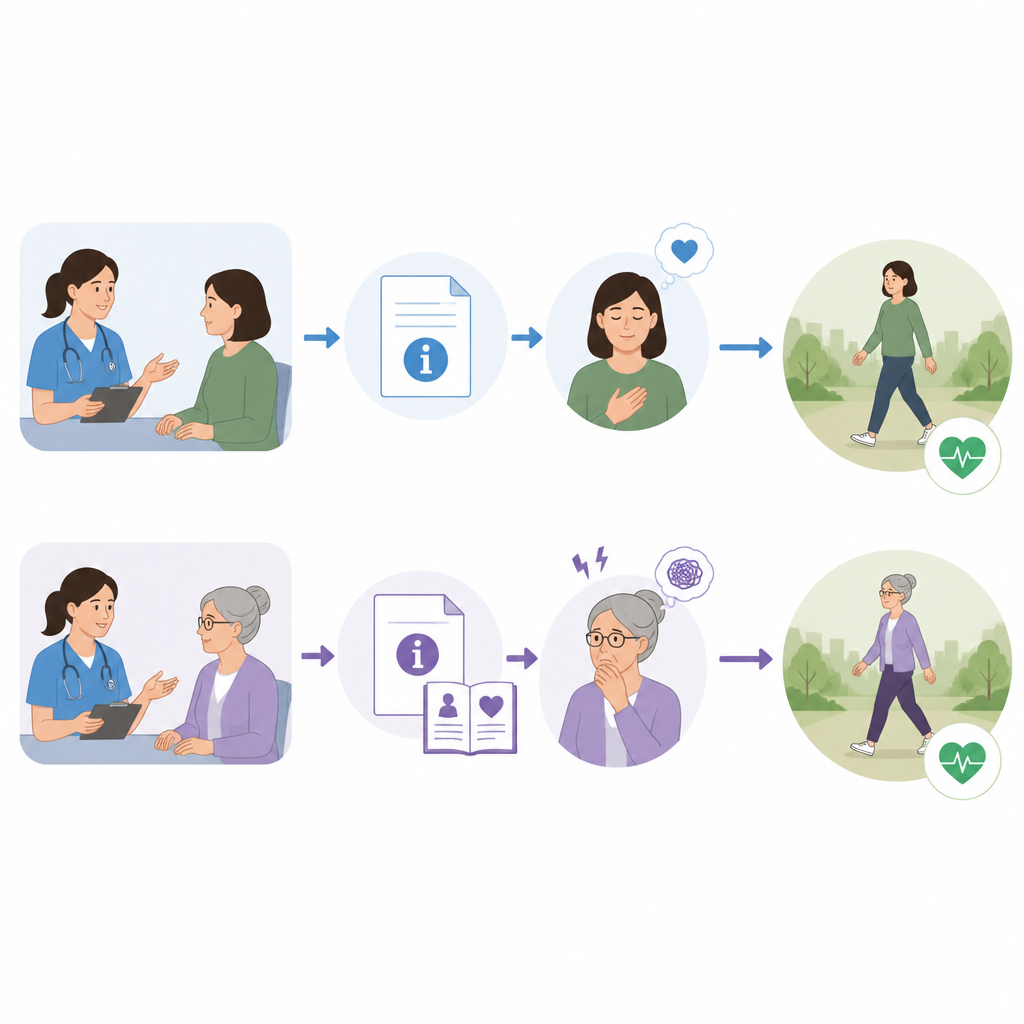
Both groups rated their health and self management skills quite highly from the start, leaving little room for big gains. Over the year, most patients in both groups continued to report good overall health and less worry about the repaired aneurysm. The researchers did not find clear, lasting differences between the nurse intervention group and the standard care group on the main measures of quality of life or health related behavior. There were hints that patients who saw nurses became slightly better at monitoring their own condition and understanding their disease, but the small number of participants made these trends uncertain. At the same time, those receiving extra education showed higher levels of emotional distress at some points, suggesting that repeated focus on risks may have unintentionally increased anxiety rather than easing it.
What this means for future care
For patients and families, the main takeaway is that the usual follow up after endovascular repair in this setting already appears to support good recovery and understanding for many people. Adding a structured nurse led education program, at least in the form tested here, did not clearly improve health or wellbeing and might even raise emotional strain in some patients. The study suggests that more information is not always better; how and when it is delivered, and how it fits each person’s needs and readiness, matters greatly. Future work will need to design more flexible, patient centered support that balances helpful knowledge with emotional comfort, so that education after major vascular procedures helps patients feel both informed and at ease.
Citation: Nilsson, J., Nordanstig, J., Ringdal, M. et al. Impact of nurse-led postoperative education on health outcomes following endovascular aortic repair: a randomized trial. Sci Rep 16, 16009 (2026). https://doi.org/10.1038/s41598-026-54460-w
Keywords: abdominal aortic aneurysm, endovascular repair, nurse-led clinic, patient education, quality of life