Clear Sky Science · en
Antitumor efficacy of cobalt–zinc ferrite nanoparticles on MCF-7 cell line and Ehrlich ascites carcinoma bearing mice
Why tiny particles matter in cancer care
Cancer drugs can save lives, but they often harm healthy organs along the way. This study explores whether tiny magnetic particles made of common metals could help attack tumors while being easier on the rest of the body. By testing these particles in human breast cancer cells and in tumor-bearing mice, the researchers ask a simple question: can a grain-of-dust sized helper make cancer treatment smarter and gentler?
Building tiny metal helpers
The team first created cobalt–zinc ferrite nanoparticles, which are minuscule grains made from cobalt, zinc, and iron. Using a rapid “flash” heating method, they turned metal salts into a fine powder. They then used techniques that probe how molecules vibrate and how surfaces look under powerful microscopes to confirm that the particles had the right structure and shape. The particles were mostly round, evenly distributed, and showed the expected patterns of metal–oxygen bonds, indicating that zinc had successfully been blended into the cobalt–iron framework.
Testing cancer cells in a dish
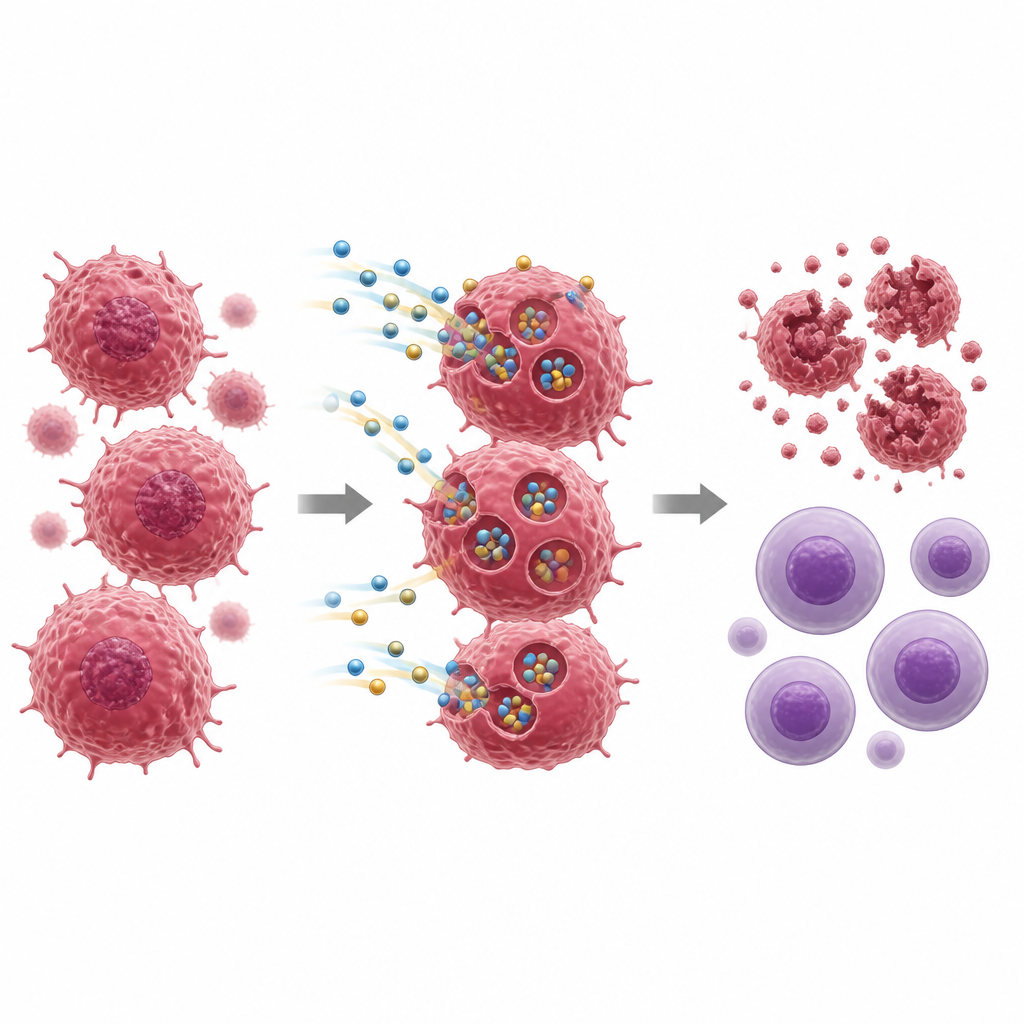
Next, the researchers exposed human breast cancer cells (the MCF-7 cell line) to the new particles and to the well-known chemotherapy drug cisplatin. Cisplatin was more potent overall, needing a much lower dose to cut cell growth in half. Still, the nanoparticles clearly damaged the cancer cells. Even at one-tenth of the dose that cuts cell growth by half, the particles pushed many cells into different forms of programmed death, including early and late stages of apoptosis and necrosis. They also disrupted the normal rhythm of cell growth, causing cells to pile up in phases linked to DNA damage and failed division, a hallmark of treatments that stop tumors from expanding.
Trying the particles in living mice
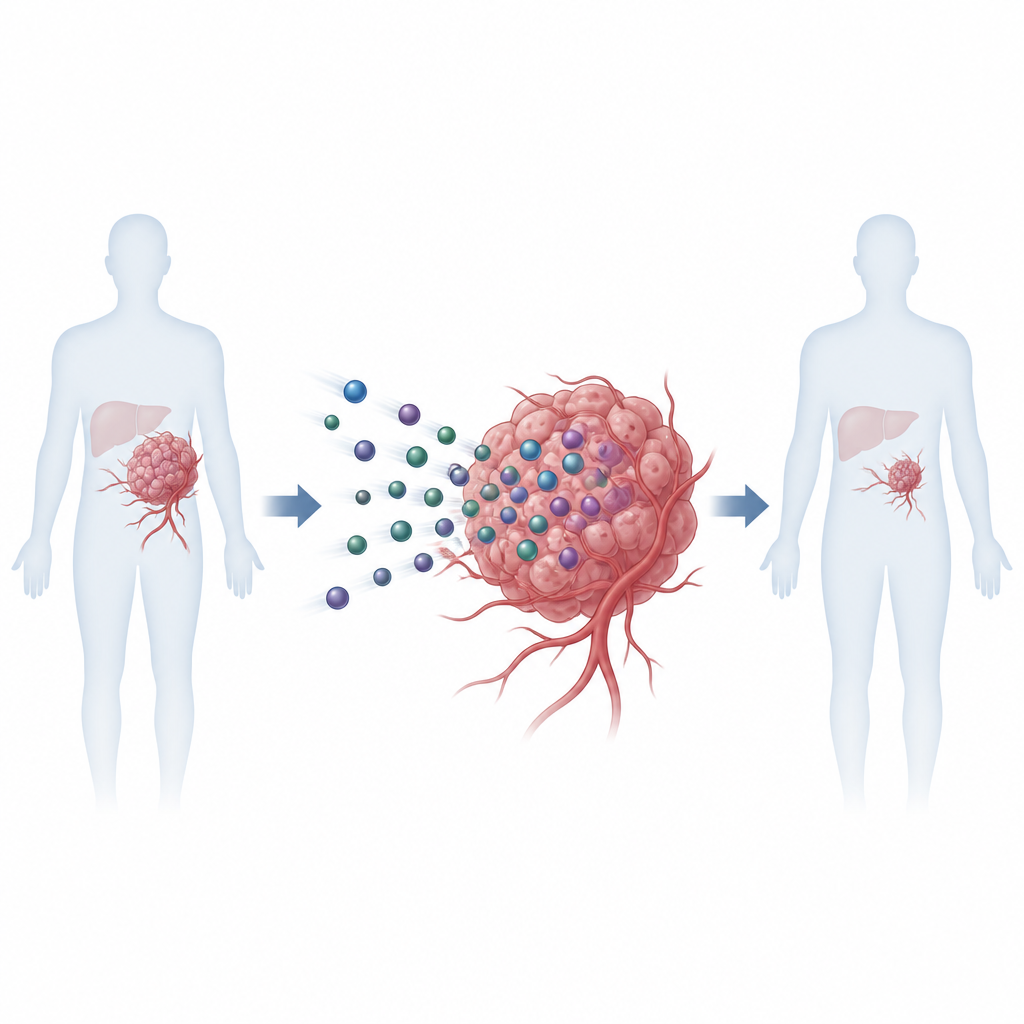
To see how the particles behaved in a living body, the team used mice carrying a fast-growing tumor known as Ehrlich ascites carcinoma. After seeding the tumors, some mice received cisplatin and others received the cobalt ferrite nanoparticles at a safe fraction of their lethal dose. Over two weeks, both treatments slowed disease. Mice given the particles showed smaller gains in body weight, lower tumor volume, and fewer total and live tumor cells compared with untreated tumor-bearing mice. This suggested that the particles could stunt tumor growth inside the body, not just in lab dishes.
Checking blood, liver, and kidneys
Cancer and strong drugs can throw blood counts and organ function badly off balance. In untreated tumor-bearing mice, red blood cells and platelets dropped, white blood cells surged, and markers of liver and kidney strain rose sharply. Treatment with either cisplatin or the nanoparticles nudged these measures back toward normal levels. When the researchers examined thin slices of liver and kidney tissue under the microscope, untreated tumor-bearing mice showed clear damage and distorted architecture. In contrast, mice treated with the nanoparticles displayed much more orderly tissue structure, with liver and kidney cells closer to the healthy pattern seen in control animals.
What this means for future cancer tools
Taken together, the work shows that cobalt ferrite nanoparticles can push breast cancer cells toward death in the lab and slow tumor growth in mice, while also easing some of the blood and organ damage linked to cancer. These particles are not ready to replace standard drugs, and their long-term safety and behavior in the human body still need careful study. But the findings suggest that carefully designed metal-based nanoparticles could serve as useful partners to existing treatments in future cancer nanotherapy, helping to target tumors more precisely while better protecting healthy tissues.
Citation: Elwan, M.M., El-Nahass, E.E., El-Naggar, S.A. et al. Antitumor efficacy of cobalt–zinc ferrite nanoparticles on MCF-7 cell line and Ehrlich ascites carcinoma bearing mice. Sci Rep 16, 16564 (2026). https://doi.org/10.1038/s41598-026-54344-z
Keywords: cancer nanotherapy, cobalt ferrite nanoparticles, breast cancer cells, tumor-bearing mice, organ protection