Clear Sky Science · en
Synthesis of di- and tri-cellulose acetate from rice husk cellulose and commercial microcrystalline by copper perchlorate catalyst
Turning Crop Waste into Useful Materials
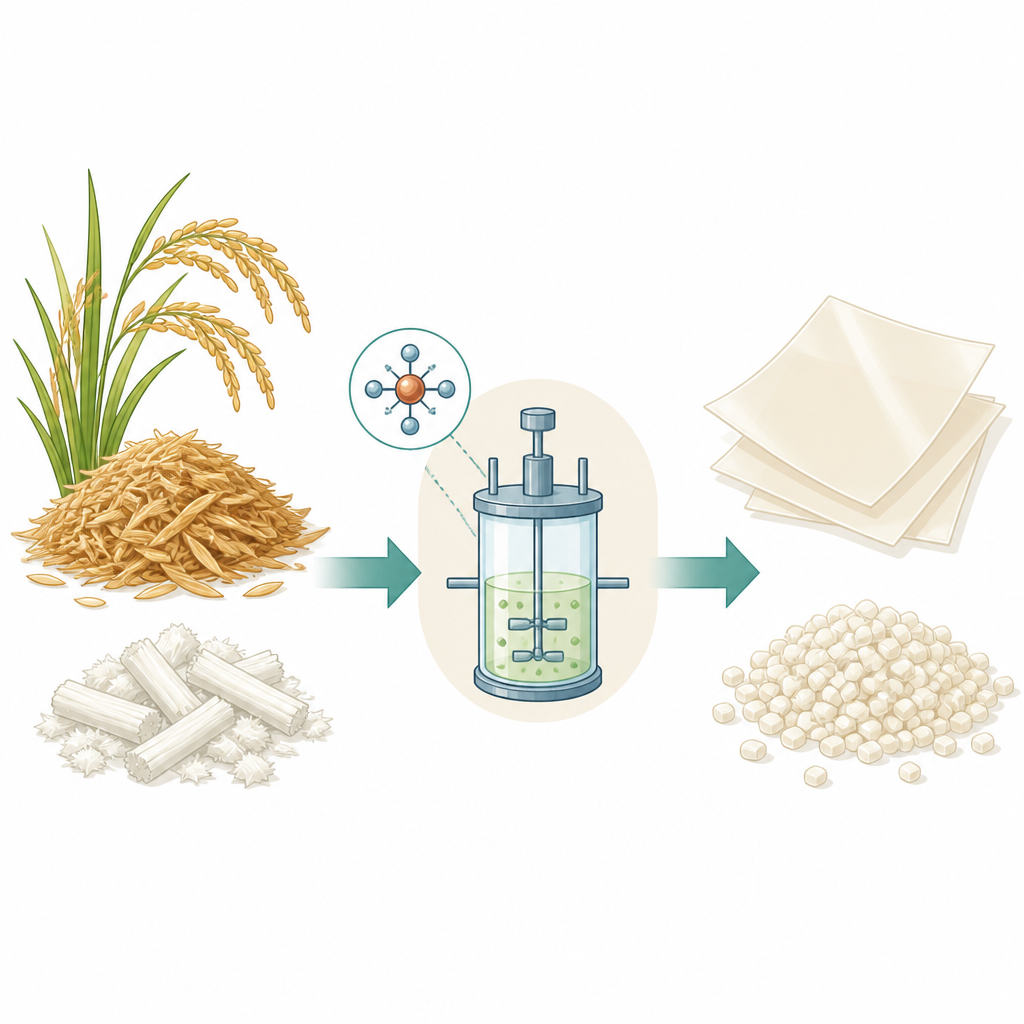
Every year, mountains of rice husks from milling are burned or discarded, even though they contain valuable natural fibers. At the same time, many everyday products rely on plastics made from fossil fuels. This study explores how to turn both rice husk waste and a common refined form of plant fiber into a versatile material called cellulose acetate using a simple, more environmentally friendly process. The work shows how a copper based catalyst can help convert plant leftovers into high quality polymers that may serve in filters, packaging, and other products.
From Rice Fields and Fiber Powders to Building Blocks
The researchers began with two sources of cellulose, the main structural substance in plants. One source was commercial microcrystalline cellulose, a purified powder already used in tablets and food products. The other was cellulose carefully extracted from rice husks, an abundant agricultural byproduct that contains cellulose mixed with hemicellulose, lignin, and silica. Through a series of alkaline and bleaching steps, they removed unwanted components from the husks and confirmed the purity and crystal structure of the resulting cellulose using infrared spectroscopy and X ray diffraction. These tests showed that the extracted rice husk cellulose had a crystallinity suitable for further chemical modification.
A Gentle Recipe for Making Cellulose Acetate
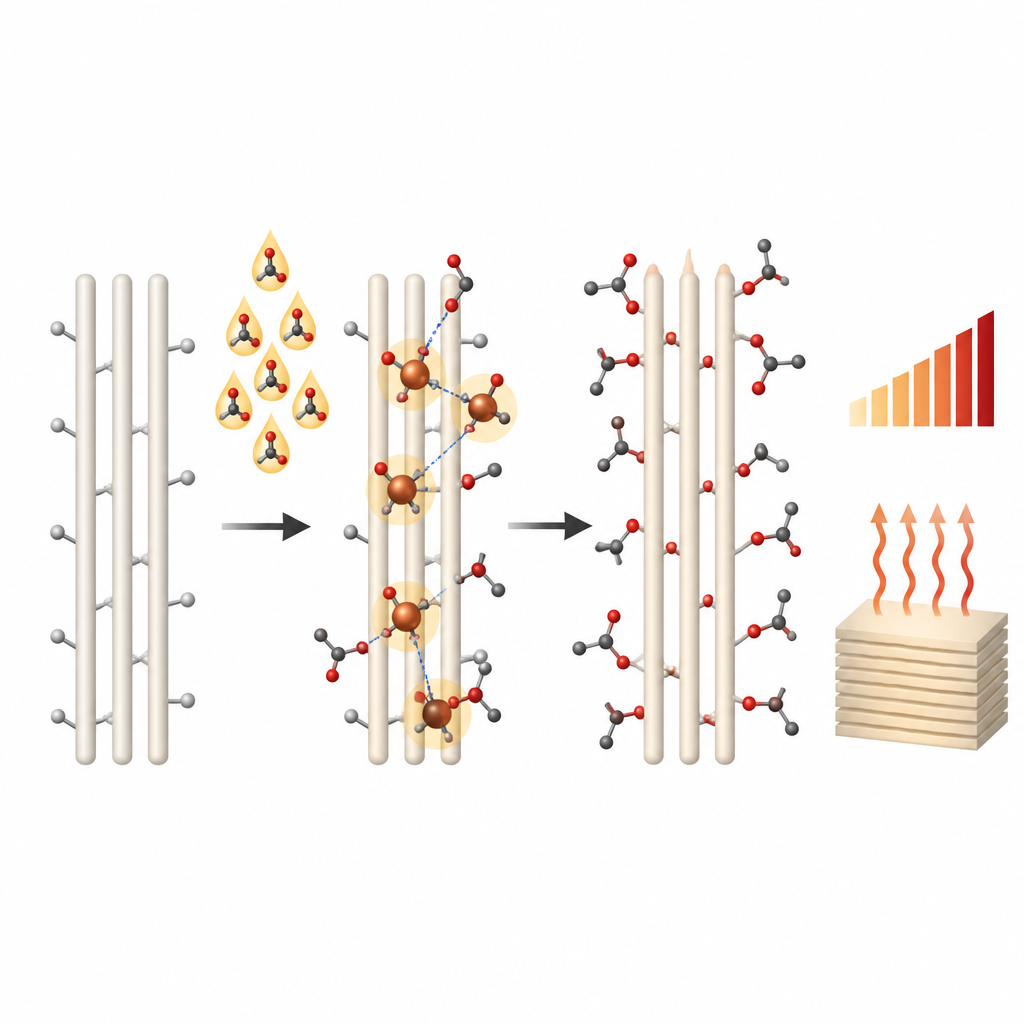
To transform the two celluloses into cellulose acetate, the team used acetic anhydride, a common ingredient in making acetylated polymers, together with a copper perchlorate catalyst. Unlike many traditional methods, their approach did not rely on added solvents and used only modest temperatures, either around room temperature or 50 degrees Celsius. They systematically varied three key knobs in the process: how much catalyst they added, how long they let the reaction run, and which temperature they used. For each combination, they measured how much product was obtained, how many of the cellulose sites were converted to acetate groups, and how these changes affected material properties.
Finding the Sweet Spot in Conditions
The experiments revealed clear patterns. For commercial microcrystalline cellulose at room temperature, increasing both catalyst amount and reaction time boosted the yield and level of acetylation, leading to cellulose acetate with very high substitution close to the theoretical maximum. At 50 degrees, however, too much catalyst or too long a reaction began to reduce yields, likely because the product started to break down once fully formed. For rice husk cellulose, raising the temperature from room level to 50 degrees and using higher catalyst loads helped shift the material from partly modified forms to more fully acetylated cellulose acetate. Across all runs, the degree of substitution tracked closely with the percentage of acetyl groups, confirming that the copper perchlorate catalyst efficiently activated the acetic anhydride for reaction with the cellulose surface.
How Structure and Heat Resistance Change
Once the cellulose had been converted, the team used several techniques to see how the structure and thermal behavior changed. Infrared spectra of the new materials showed strong signals from ester groups and a loss of the original hydroxyl bands, clear signs of successful acetylation and removal of leftover reagents. X ray diffraction patterns indicated that the acetylated samples had lower crystallinity than the starting rice husk cellulose, reflecting how bulky acetate groups disrupt the tightly packed cellulose chains. Thermal analysis up to 1000 degrees Celsius showed that cellulose acetate from both sources decomposed in a narrower, higher temperature range than the raw rice husk cellulose, pointing to improved thermal stability under heat.
Why This Matters for Greener Materials
In simple terms, this study demonstrates that a copper based catalyst can help turn both refined cellulose and rice husk waste into highly modified cellulose acetate under mild, solvent free conditions using limited amounts of reagent. By adjusting temperature, catalyst loading, and time, producers can tune whether they obtain more lightly or more heavily acetylated materials, which affects flexibility, processability, and stability. Although the work did not yet address recovering and reusing the catalyst, the method offers a promising route for adding value to agricultural residues and reducing reliance on petroleum based plastics, while keeping the chemistry relatively simple and energy efficient.
Citation: Ragab, S., Sikaily, A.E. & El Nemr, A. Synthesis of di- and tri-cellulose acetate from rice husk cellulose and commercial microcrystalline by copper perchlorate catalyst. Sci Rep 16, 16422 (2026). https://doi.org/10.1038/s41598-026-53816-6
Keywords: cellulose acetate, rice husk, green chemistry, copper catalyst, biodegradable polymers