Clear Sky Science · en
Combating multidrug-resistant bacteria and associated virulence factors using Cichorium intybus extract: integrated microbiological characterization, phytochemical profiling, cytotoxicity assessment, and mechanistic insights
Why a common salad plant matters for superbugs
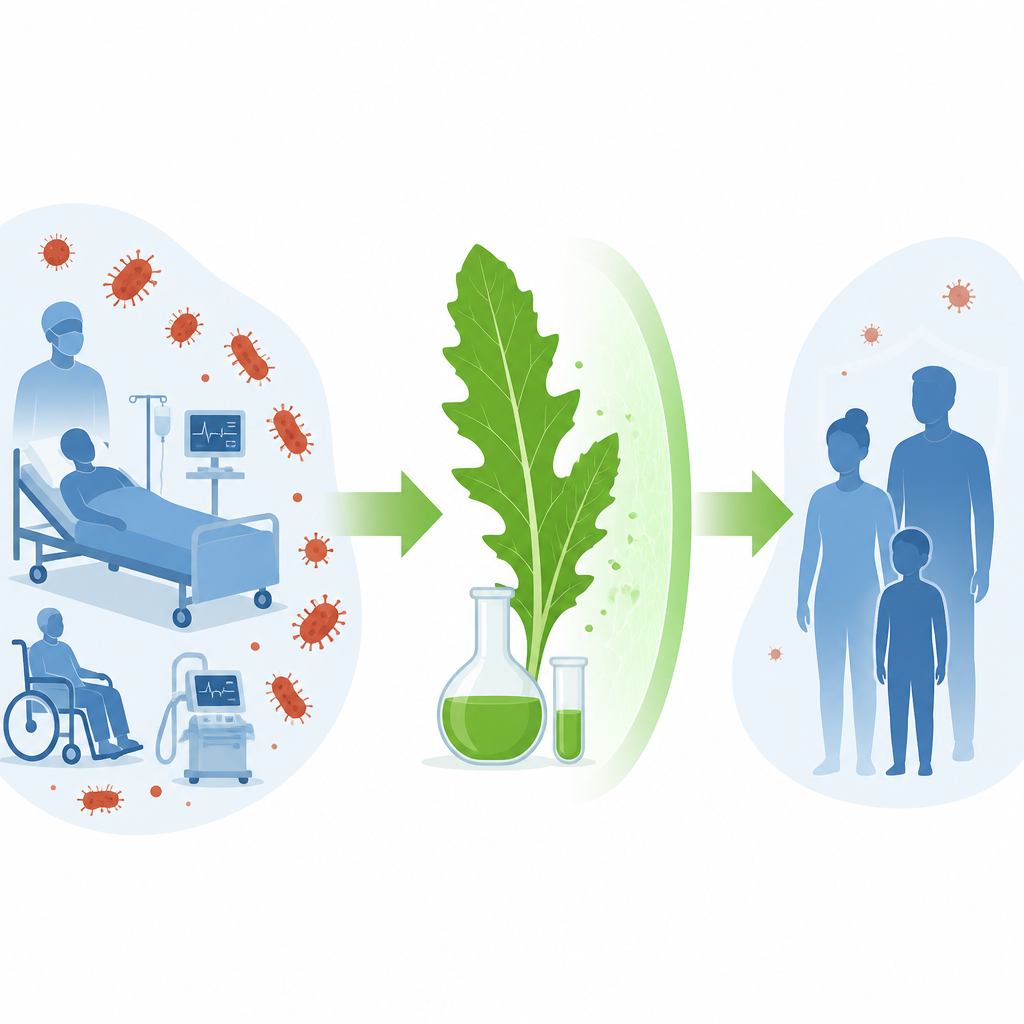
Drug resistant infections are rising worldwide and many antibiotics are losing their power. This study looks at an everyday plant, chicory (Cichorium intybus), to see whether its leaves can help fight tough hospital germs, weaken their ability to cause disease, and even harm cancer cells in the lab. The work explores how a simple plant extract acts on bacteria, their protective slime layers, and human cells, and links these effects to natural chemicals inside the plant.
The threat from hard to treat infections
The researchers began by examining 75 medical samples from patients in Egyptian hospitals, including blood, urine, sputum, pus, and catheter tips. They found that three types of Gram negative bacteria dominated: Klebsiella pneumoniae, Escherichia coli, and Acinetobacter baumannii. These microbes often cause pneumonia, blood infections, urinary tract infections, and device related problems. Testing showed that many isolates could resist several common antibiotic families, especially older beta lactam drugs. Only a few medicines, such as imipenem and amikacin, still worked well, underlining the shrinking treatment options doctors face.
Testing chicory leaves against hospital germs
Chicory leaves bought from a local market were dried and extracted with a solvent to pull out medium polarity plant compounds. This leaf extract was then tested against selected multidrug resistant strains of Klebsiella, E. coli, and Acinetobacter. In petri dish tests, the extract created clear zones where bacteria could not grow, with Klebsiella showing the largest blocked areas. Further work measured how much extract was needed to stop growth (MIC) and to kill cells (MBC). These values fell in ranges that point to real antibacterial strength, although not as low as many synthetic drugs. The results confirm that chicory contains molecules able to slow or kill dangerous bacteria that already resist several antibiotics.
Blocking sticky films and scavenging harmful molecules
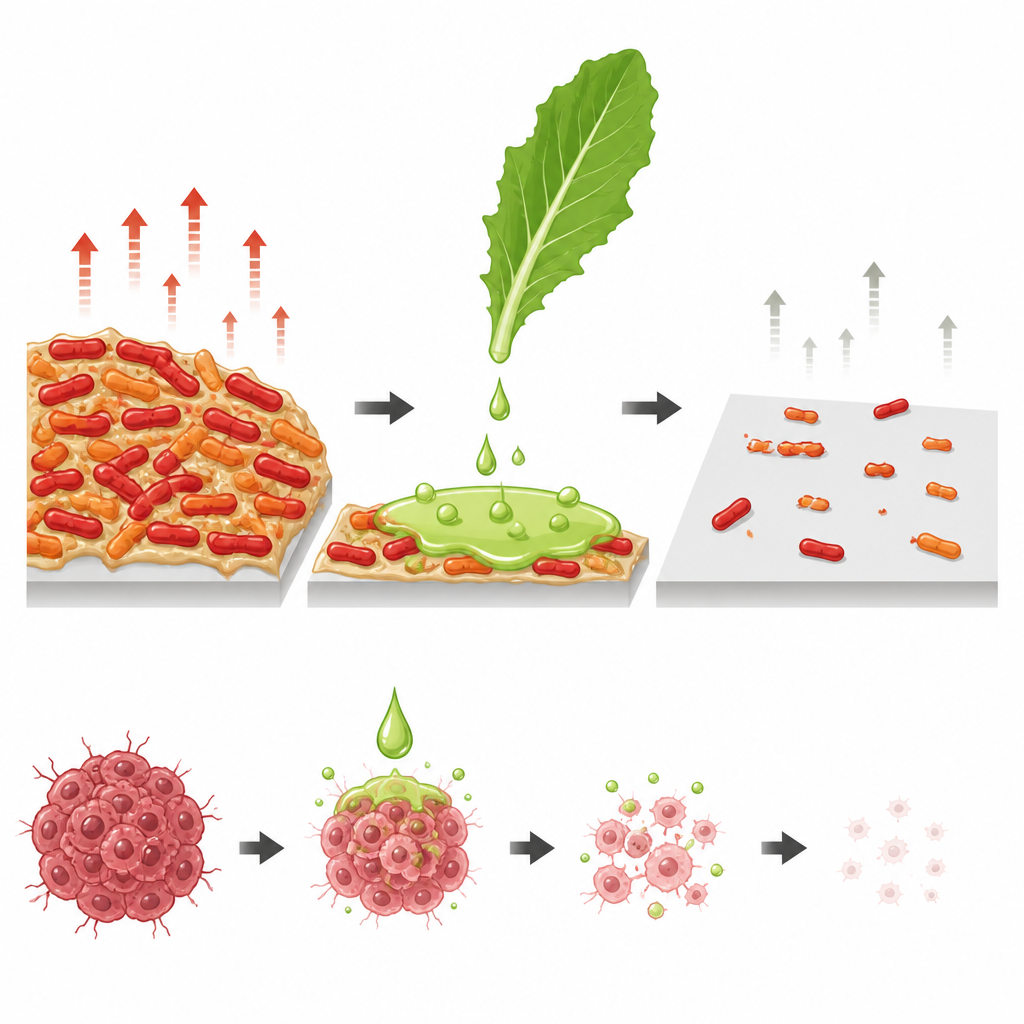
A key survival trick of hospital germs is to build biofilms, slimy communities that coat catheters and tissue and make drugs less effective. The team grew biofilms of the three bacteria in tiny plastic wells and added low, non lethal amounts of chicory extract. Across all species, biofilm mass dropped in a clear dose dependent way, with the strongest effect at the highest tested concentration. This suggests the extract disturbs early sticking steps or later mound building, rather than simply killing cells. In parallel, two standard tests showed the extract strongly neutralizes free radicals, unstable molecules linked to cell damage. At higher doses its antioxidant power came close to that of vitamin C, hinting that chicory’s protective effects extend beyond killing microbes.
Effects on cancer and normal cells
The scientists next exposed two human cancer cell lines, from prostate (PC3) and liver (HepG2), and one normal skin cell line (HFB4) to increasing extract doses. Cancer cells lost viability more quickly than normal cells, with half their number dying at around 22–25 micrograms per milliliter, compared with nearly 60 micrograms for healthy cells. Flow cytometry, a technique that labels cells in different stages of death, showed that the main mode of killing was apoptosis, a tidy form of programmed cell death, with only small amounts of messy necrosis at lower doses. This selective impact hints that chicory compounds may one day serve as leads for anticancer agents, though they have not been tested in animals or people.
Natural chemicals behind the activity
To connect these biological effects to specific plant molecules, the team analyzed the extract using gas chromatography–mass spectrometry and high performance liquid chromatography. They detected a mix of fatty acids, such as hexadecanoic, octadecanoic, and linoleic acids, along with phenolic acids including chlorogenic, caffeic, caftaric, and cichoric acids, plus the terpene alcohol phytol. These compounds are known from other studies to show antimicrobial, antibiofilm, antioxidant, and anticancer actions. The authors suggest that, rather than one magic ingredient, a blend of these chemicals likely works together to weaken bacteria, disrupt biofilms, mop up free radicals, and trigger cancer cell death.
What this means for everyday health
In simple terms, this study shows that an extract from common chicory leaves can bother drug resistant hospital bacteria, stop them from forming protective slime layers, neutralize harmful reactive molecules, and push cancer cells toward orderly self destruction in lab dishes, while being milder on normal cells. It does not mean eating chicory will treat infections or cancer, but it highlights this plant as a promising source of natural molecules that may be refined into future therapies or used to support existing antibiotics. Further work in animals, careful testing of purified compounds, and safety studies will be needed before any real world medical use is possible.
Citation: Ramadan, M.I.M., El-Sherbiny, G.M., El-Hawary, A.S. et al. Combating multidrug-resistant bacteria and associated virulence factors using Cichorium intybus extract: integrated microbiological characterization, phytochemical profiling, cytotoxicity assessment, and mechanistic insights. Sci Rep 16, 16286 (2026). https://doi.org/10.1038/s41598-026-53690-2
Keywords: multidrug resistant bacteria, Cichorium intybus, antibiofilm activity, natural antioxidants, anticancer potential