Clear Sky Science · en
Unlocking high-intensity performance thresholds through ventilatory signatures in the ECG
Why your hard workouts need a clear limit
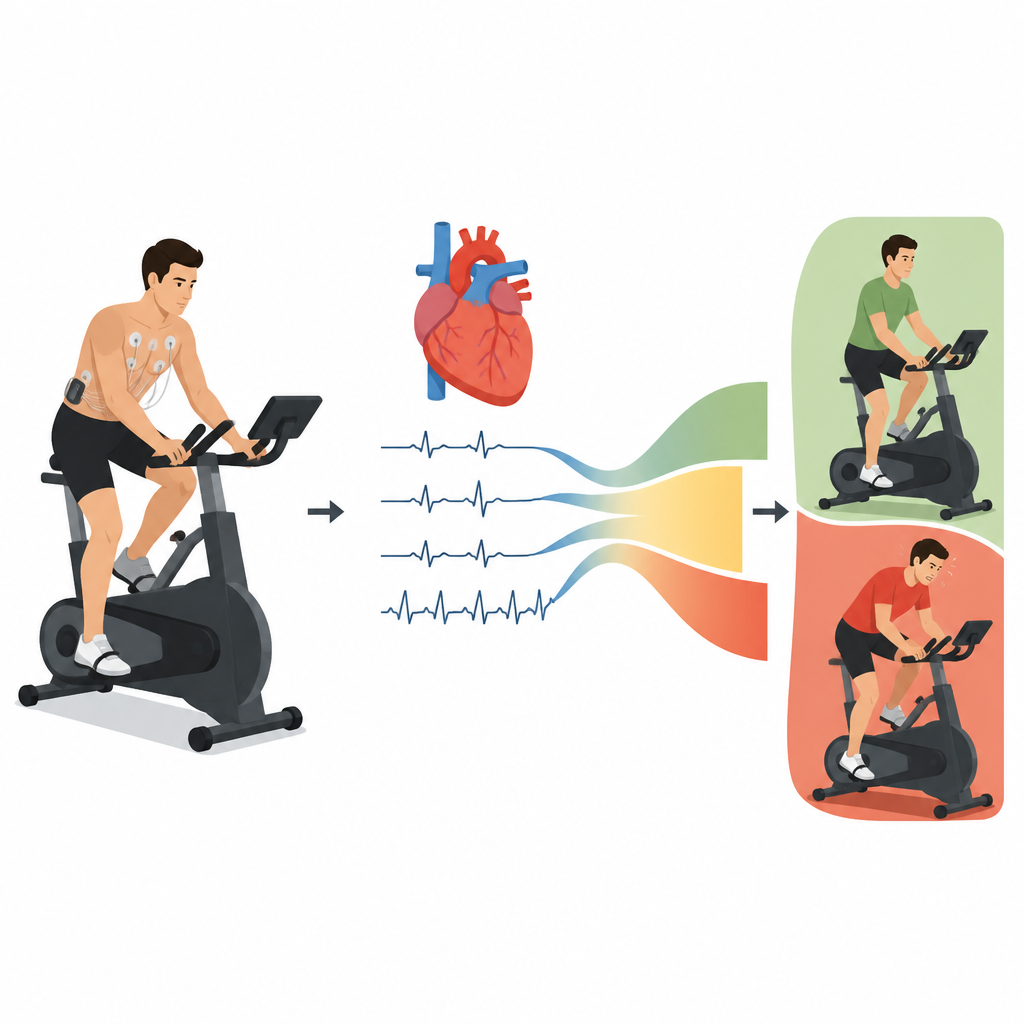
Anyone who trains for fitness, from cardiac rehab patients to weekend cyclists, faces the same puzzle: how hard can you safely push before effort turns from helpful to harmful? This study explores a way to read that tipping point directly from a simple heart tracing, offering a practical tool to guide high-intensity training without masks, blood tests, or lab time.
The body’s turning point during effort
As exercise intensity climbs, the body reaches a stage where it can no longer clear waste products, such as lactate, as fast as they are produced. Beyond this point, breathing speeds up, effort feels much harder, and fatigue comes on quickly. This “second ventilatory threshold” marks the upper boundary of sustainable hard work. It is central for planning endurance training and for judging fitness in clinical tests, because staying just below it helps build capacity while going too far above it raises the risk of overtraining, injury, and unpleasant symptoms.
Why current testing is hard to bring into the real world
The gold standard methods for finding this threshold rely on measuring breath-by-breath gas exchange with bulky lab equipment or drawing repeated blood samples to track lactate. Both require controlled settings, skilled staff, and time, which makes frequent retesting unrealistic outside elite centers. A simpler option, estimating training zones from age-based heart rate formulas, is widely built into consumer wearables. However, those formulas can be off by a meaningful margin for many people and do not reliably match each individual’s true breathing threshold.
Listening to breathing hidden in the heart signal
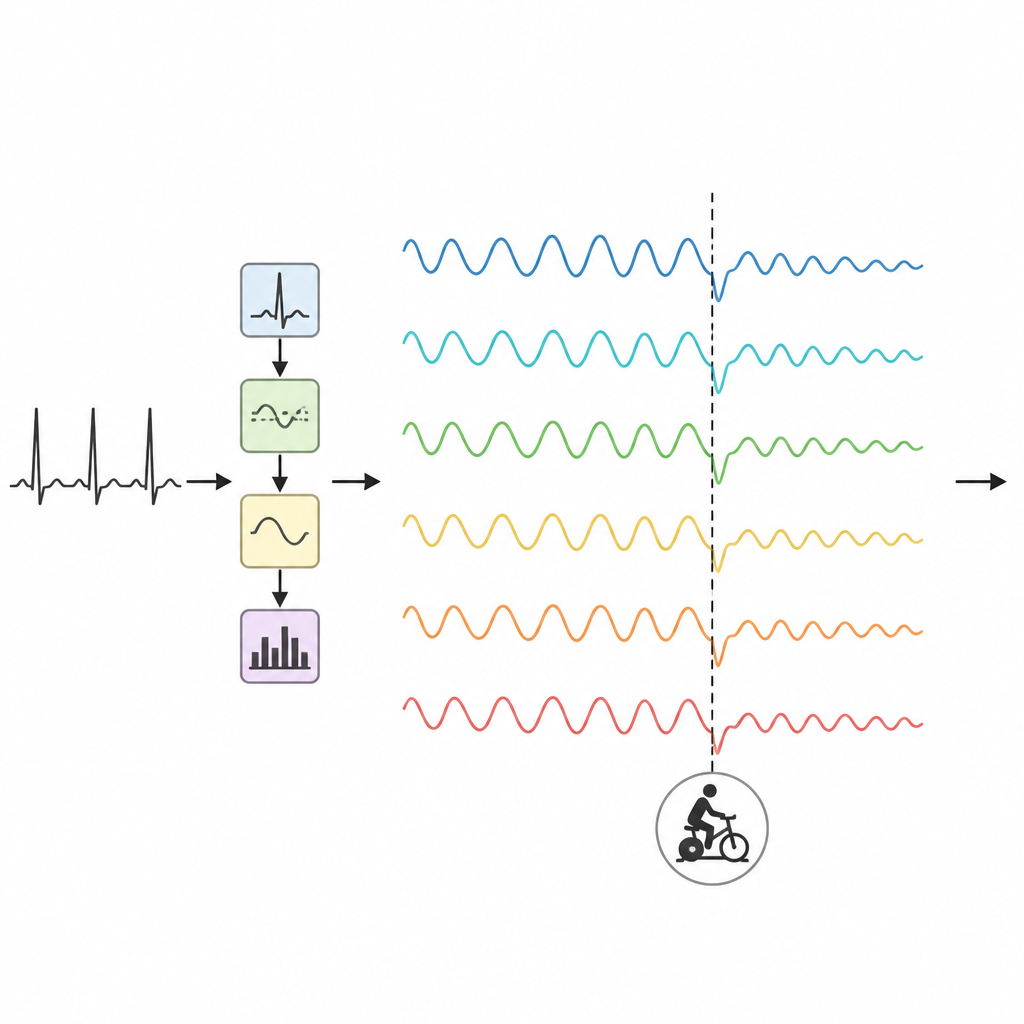
The researchers tested a new non-invasive ventilatory assessment, called NIVA, that works during a standard step-by-step cycling test with a small ECG device. As you breathe, tiny rhythm changes appear in the intervals between heartbeats. NIVA processes these signals to track the phase of breathing and looks for a distinct change in pattern that marks the high-intensity threshold. Behind the scenes, the system uses advanced signal filtering and sequence models to clean the raw ECG, extract beat-to-beat timing, convert it into a smooth breathing phase curve, and then identify a single time point where the breathing behavior shifts.
How well the new method matched lab standards
Seventy-four healthy adults, ranging from recreational to professional athletes, completed an incremental cycling test with full gas analysis, blood lactate samples, and ECG recording. After excluding a few cases with noisy signals or uncertain lab readings, the team compared NIVA’s threshold to the standard ventilatory threshold and to the points suggested by lactate curves and age-based heart rate rules. NIVA’s estimates for both heart rate and workload closely matched the lab ventilatory threshold, staying within a narrow margin that the authors judged acceptable for practical training decisions. In contrast, age-based heart rate estimates systematically overshot the true threshold, and lactate-based thresholds showed noticeable differences as well as more scatter.
What this could mean for athletes and patients
To a layperson, the key message is that the body’s “red line” for hard but sustainable effort can be read with surprising precision from signals already available in simple heart monitors. This approach could someday help coaches, clinicians, and everyday exercisers track high-intensity limits often and cheaply, without mouthpieces or finger pricks. The authors stress that more work is needed to test the method in older, less healthy, and very highly trained groups and to see how well it performs with consumer wearables and outdoor workouts. Still, if future studies confirm these findings, NIVA could turn routine ECG recordings into a practical guide for setting and adjusting safe, effective training zones.
Citation: Heinz, V., Pilz, N., Fesseler, L. et al. Unlocking high-intensity performance thresholds through ventilatory signatures in the ECG. Sci Rep 16, 15604 (2026). https://doi.org/10.1038/s41598-026-53483-7
Keywords: ventilatory threshold, ECG breathing, exercise intensity, cardiopulmonary testing, endurance training