Clear Sky Science · en
Dynamic performance enhancement of adjustable blade pitch angle for wind generation system applications based on artificial neural network control techniques
Smarter wind power for everyday life
As more of our electricity comes from wind, keeping the lights on during gusts and lulls becomes a delicate balancing act. This study explores how teaching computers to adjust the tilt of turbine blades in real time can help wind farms deliver steadier, more efficient power to the grid, even when the weather is unpredictable.
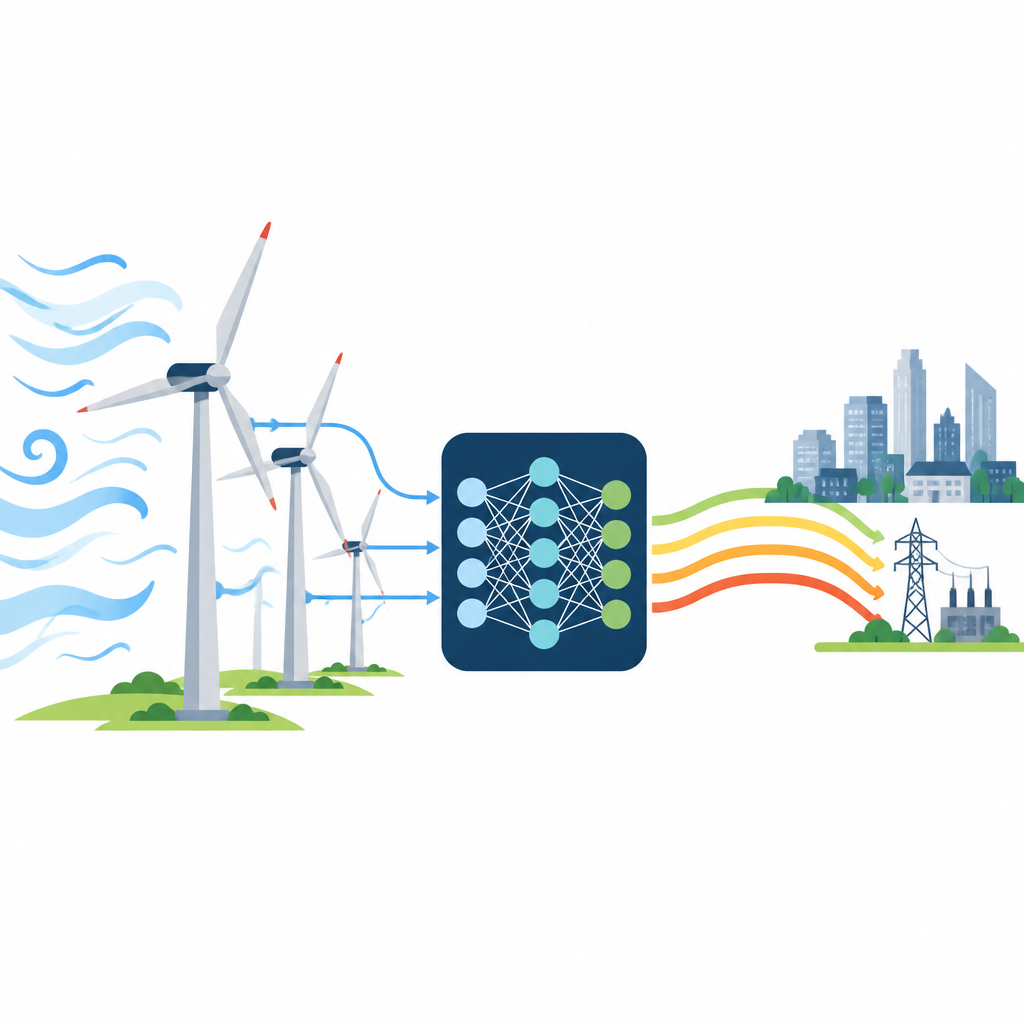
Why steady wind power is hard
Wind energy is clean and abundant, but the wind itself is never constant. When wind speeds rise too high, turbines must be protected from mechanical stress; when they fall, every bit of motion needs to be captured. Modern turbines tackle this by changing the angle of their blades, a motion known as pitch control, so that the rotor speed and electrical output stay near their ideal values. Traditional control methods use simple rules tuned to a mathematical model of the turbine. These methods work, but they can struggle with the messy, nonlinear behavior of real wind, sometimes reacting too slowly or overshooting their targets.
Teaching a turbine to read the wind
The researchers focused on a common large turbine design that uses a doubly fed induction generator rated at 1.5 megawatts. They compared three kinds of controllers for the blade angle. The first was the familiar proportional–integral–derivative controller, which responds to the difference between desired and actual power or speed. The second was a more flexible fractional version of this controller. The third family used artificial neural networks that learn from data how best to respond. Within this family the team tested three network designs: a multilayer feedforward network, a cascade forward network, and an Elman recurrent network that can remember past behavior over time.
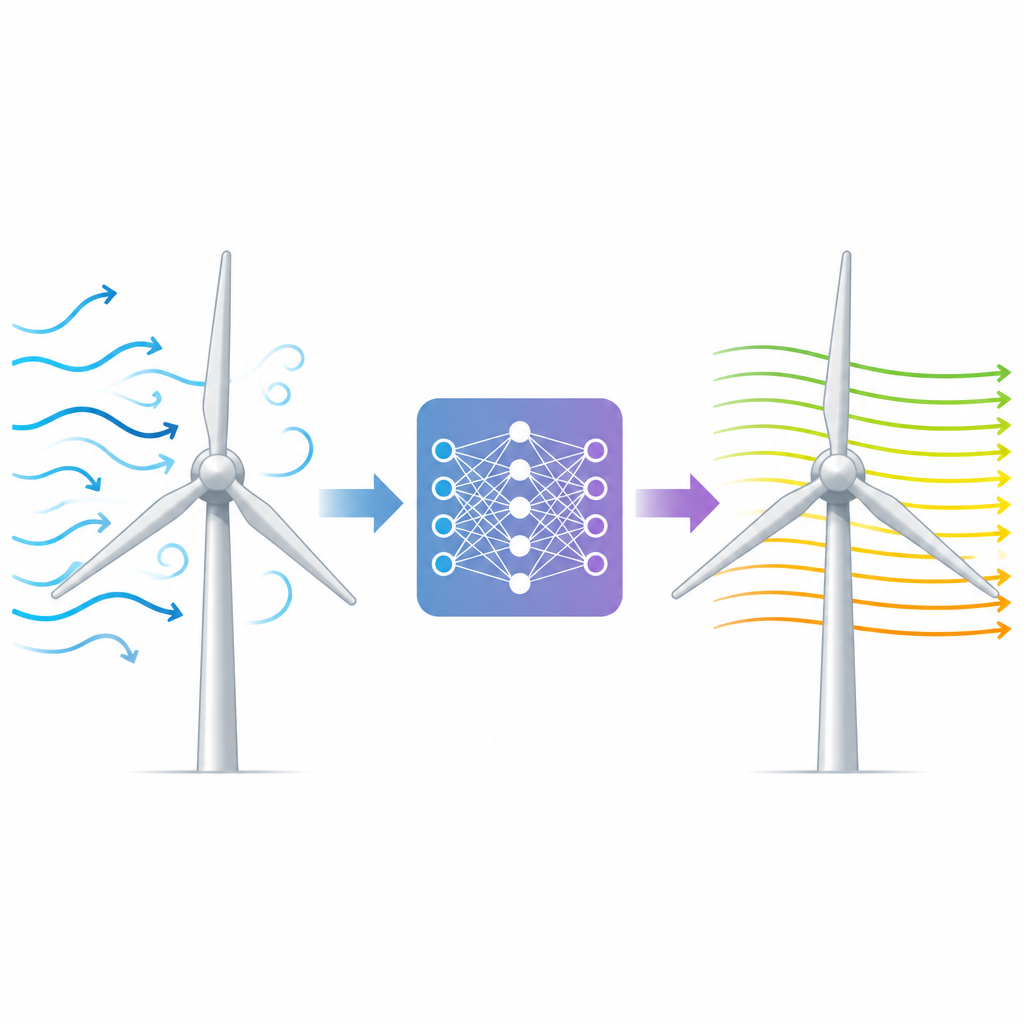
Putting smart control to the test
To see how these approaches behaved under realistic conditions, the team ran detailed simulations in MATLAB and Simulink using real wind speed records. They examined three kinds of wind changes: sudden steps, smooth ramps, and highly irregular random patterns. In each case they watched how well the controllers kept the turbine’s mechanical power close to its rated value while limiting rapid changes in blade angle. All neural network controllers reduced error compared with the traditional methods, but the multilayer feedforward design stood out. It reached the desired power level faster, with smaller steady differences, and achieved the lowest average squared error across all test cases.
Gains in efficiency and protection
Under sudden wind jumps, the neural network controller kept the turbine operating at about 98.9 percent of its rated power, noticeably higher than either of the standard controllers. During ramped and random wind variations it also delivered higher efficiency and smaller power deviations. By adjusting blade angle more smoothly, it helped maintain the best combination of blade speed and wind capture while also reducing mechanical stress that can shorten turbine life. Although other neural network designs also performed well, they required more computational effort without matching the same balance of speed and accuracy.
What this means for future wind farms
In plain terms, the study shows that a well trained neural network can act like a skilled operator watching the sky and constantly fine tuning turbine blades for both safety and output. Among the tested options, the multilayer feedforward network provided the most accurate and adaptable control, keeping power close to its target and easing wear on the hardware. As these smart controllers move from simulation to real turbines, they could help wind farms deliver more reliable clean energy without major new equipment, simply by making better use of every gust.
Citation: Ameen, A.G., Mohamed, S., Abdel-Jaber, G.T. et al. Dynamic performance enhancement of adjustable blade pitch angle for wind generation system applications based on artificial neural network control techniques. Sci Rep 16, 16294 (2026). https://doi.org/10.1038/s41598-026-53411-9
Keywords: wind turbine control, blade pitch angle, neural network, renewable energy, doubly fed induction generator