Clear Sky Science · en
Herbosomal nanocarriers using natural-origin surfactants: a quercetin-based strategy for Alzheimer’s disease and oxidative-stress–driven neurodegeneration
Why this research matters for brain health
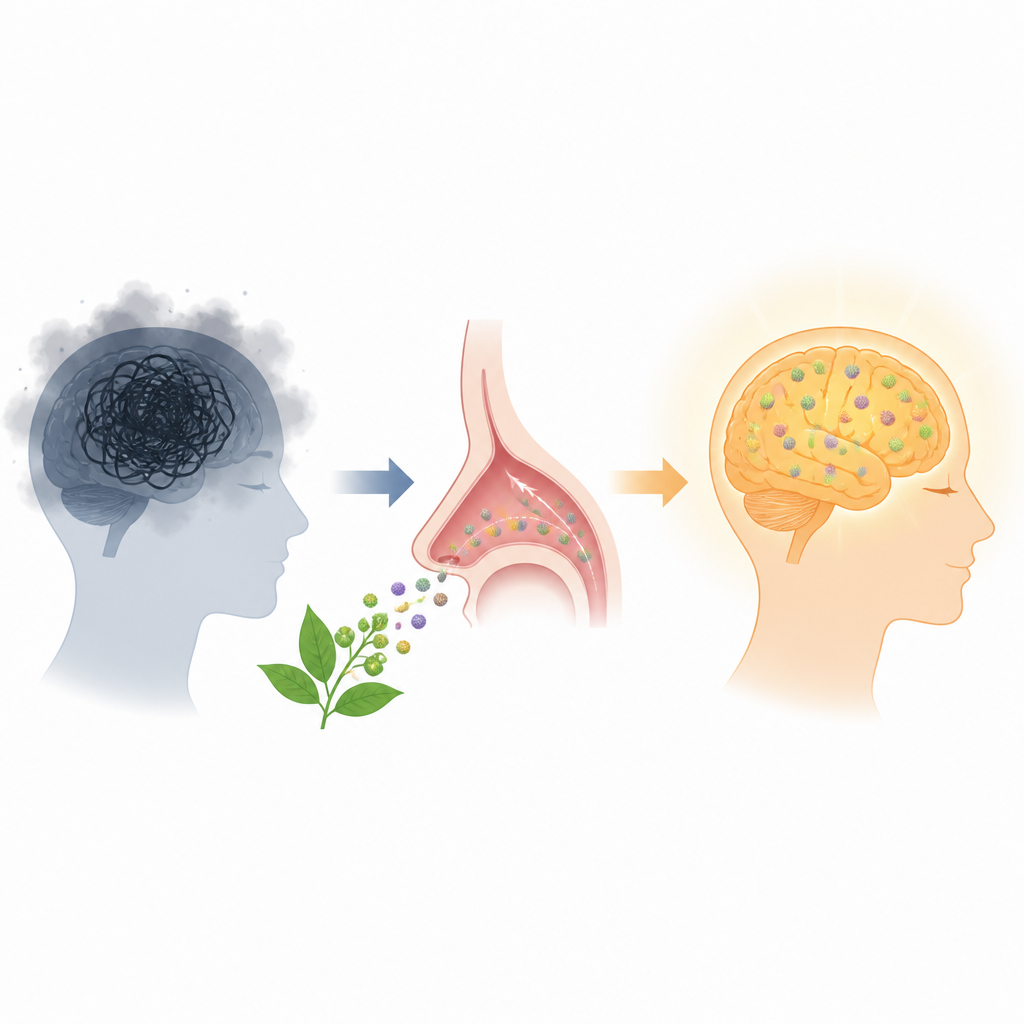
As people live longer, more families are touched by Alzheimer’s disease, a condition that slowly erodes memory and thinking. Many promising natural compounds cannot reach the brain in useful amounts because they dissolve poorly and are blocked by the brain’s protective barrier. This study explores a way to package quercetin, a plant antioxidant found in foods like onions and apples, into tiny carriers that travel from the nose directly to the brain, while also swapping a common synthetic additive for a gentler, plant-derived alternative.
A plant compound with untapped potential
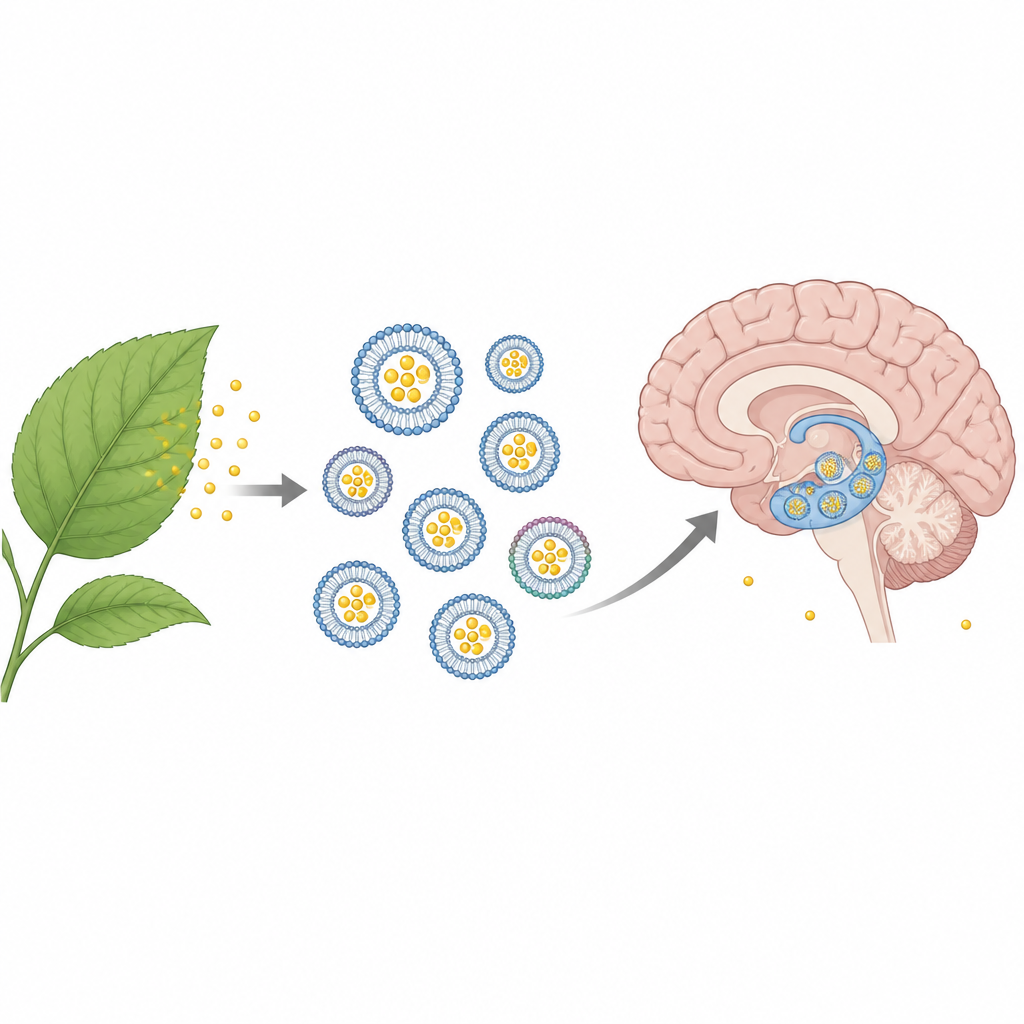
Quercetin has long intrigued scientists because it can calm inflammation, mop up harmful free radicals, and shield nerve cells in lab studies. These traits make it a candidate for slowing processes linked to Alzheimer’s, such as protein clumps, oxidative stress, and chronic brain irritation. Yet when quercetin is taken in its usual form, very little dissolves in body fluids, it is quickly broken down, and it struggles to cross into the brain. The result is a gap between what quercetin can do in theory and what it delivers in real patients or animal models.
Tiny carriers built from familiar fats
To bridge this gap, the researchers built “herbosomes,” tiny bubbles made from phospholipids, the same kind of fat molecules that form our cell membranes. Quercetin nestles into these bubbles, which helps it stay stable and slip through biological barriers more easily. The team adjusted the amounts of quercetin, phospholipids, and cholesterol, and added different helpers known as surfactants to keep the bubbles uniform and prevent them from clumping. They then checked bubble size, charge, how much quercetin was trapped inside, and how steadily it was released into a liquid resembling body fluid. The optimized bubbles were around 200 nanometers across, carried most of the quercetin, and released it slowly over 24 hours.
Swapping a synthetic helper for a gentler one
Many brain-targeted formulations rely on Tween 80, a widely used synthetic surfactant that can help particles cross into the brain but is linked to rare but serious side effects, including allergic-like reactions. In this work, the scientists compared Tween 80 with cocamidopropyl betaine, a surfactant derived from coconut oil that is biodegradable and known for its mildness. They created two lead formulations: one using Tween 80 and one using cocamidopropyl betaine. Both versions formed stable, smooth, spherical bubbles and showed very similar quercetin loading and release profiles, suggesting that the natural-origin surfactant could match the performance of the synthetic one.
From nose to brain in an animal model
The team then tested these quercetin-loaded bubbles in rats given aluminum chloride to induce changes resembling early Alzheimer’s, including memory loss and damage in a key memory area of the brain called the hippocampus. After this induction phase, animals received daily drops into one nostril, delivering either plain salt solution, simple quercetin, empty bubbles, or quercetin-filled bubbles. Rats treated with the quercetin herbosomes, whether made with Tween 80 or cocamidopropyl betaine, performed far better on two standard memory tasks than untreated rats or those given quercetin alone. Their brain tissue showed higher antioxidant capacity, lower levels of damaging proteins such as beta-amyloid and tau, and reduced markers of inflammation and enzyme activity that break down a key memory-related chemical.
What this could mean for future treatments
In simple terms, packaging a plant antioxidant into nanoscopic fat bubbles and delivering it through the nose allowed more of it to reach and protect vulnerable brain regions in an animal model of Alzheimer’s-like damage. Importantly, a natural, coconut-derived helper worked just as well as the conventional synthetic one, but with a more favorable safety profile on paper. While this does not yet translate into a treatment for people, it points to a strategy in which gentle, plant-based ingredients guide protective molecules into the brain more effectively, potentially helping to slow diseases linked to aging and oxidative stress.
Citation: Okda, M., El-Masry, S.M., Helmy, M.W. et al. Herbosomal nanocarriers using natural-origin surfactants: a quercetin-based strategy for Alzheimer’s disease and oxidative-stress–driven neurodegeneration. Sci Rep 16, 16283 (2026). https://doi.org/10.1038/s41598-026-53290-0
Keywords: Alzheimer’s disease, quercetin, nanocarriers, intranasal delivery, neuroprotection