Clear Sky Science · en
Identification of chemical and physical key water quality drivers in the urban Grunewald Chain of Lakes, Berlin
City lakes under pressure
Across many cities, small lakes double as cooling oases, wildlife refuges and storm water basins. This study looks at ten connected lakes in Berlin’s Grunewald forest to understand why their water has remained murky and algae prone despite years of clean up efforts, and which levers actually matter most for bringing back clearer, healthier water.
A chain of lakes with many jobs
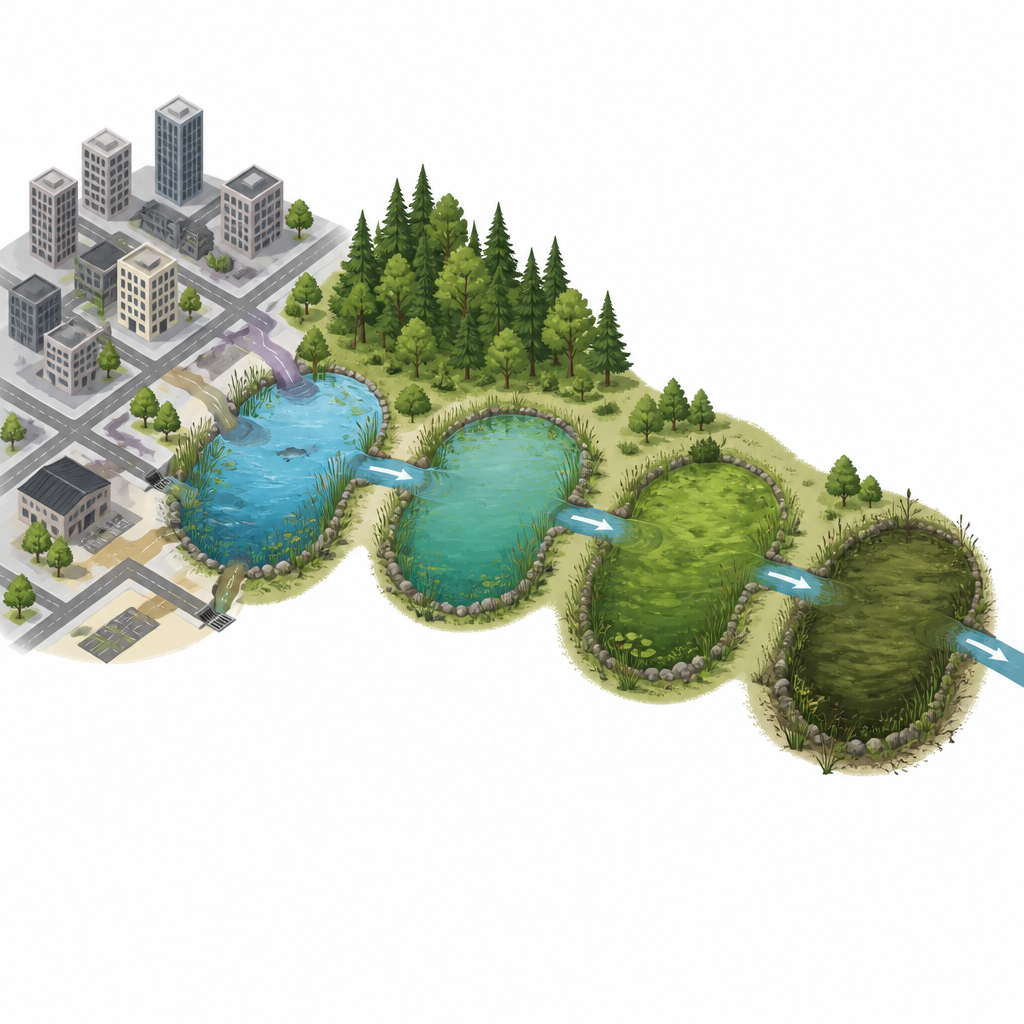
The Grunewald chain of lakes stretches from forested shores to dense city streets in southwest Berlin. The upstream lakes receive treated, low phosphorus water from the nearby Havel River and are surrounded mainly by woods. Downstream, however, several shallow lakes sit beside roads and motorways, catching runoff that carries nutrients, road salt and other pollutants. Because water flows from one lake to the next through creeks, wetlands, channels and pumps, anything entering an upstream lake can travel downstream, creating a cascade of water quality problems.
A year of careful watching
To untangle how these lakes influence each other, the researchers sampled water every month for 13 months at 17 points where water flows in, out and between lakes. In the field they measured temperature, oxygen, salt content, acidity and algae pigment, while laboratory tests tracked total nitrogen, total phosphorus and phosphate. By comparing inlets and outlets, they could see whether individual lakes tended to retain or pass on nutrients. They also calculated the balance between nitrogen and phosphorus, a ratio that signals which nutrient is more likely to limit algae growth.
From clear forest water to green city ponds
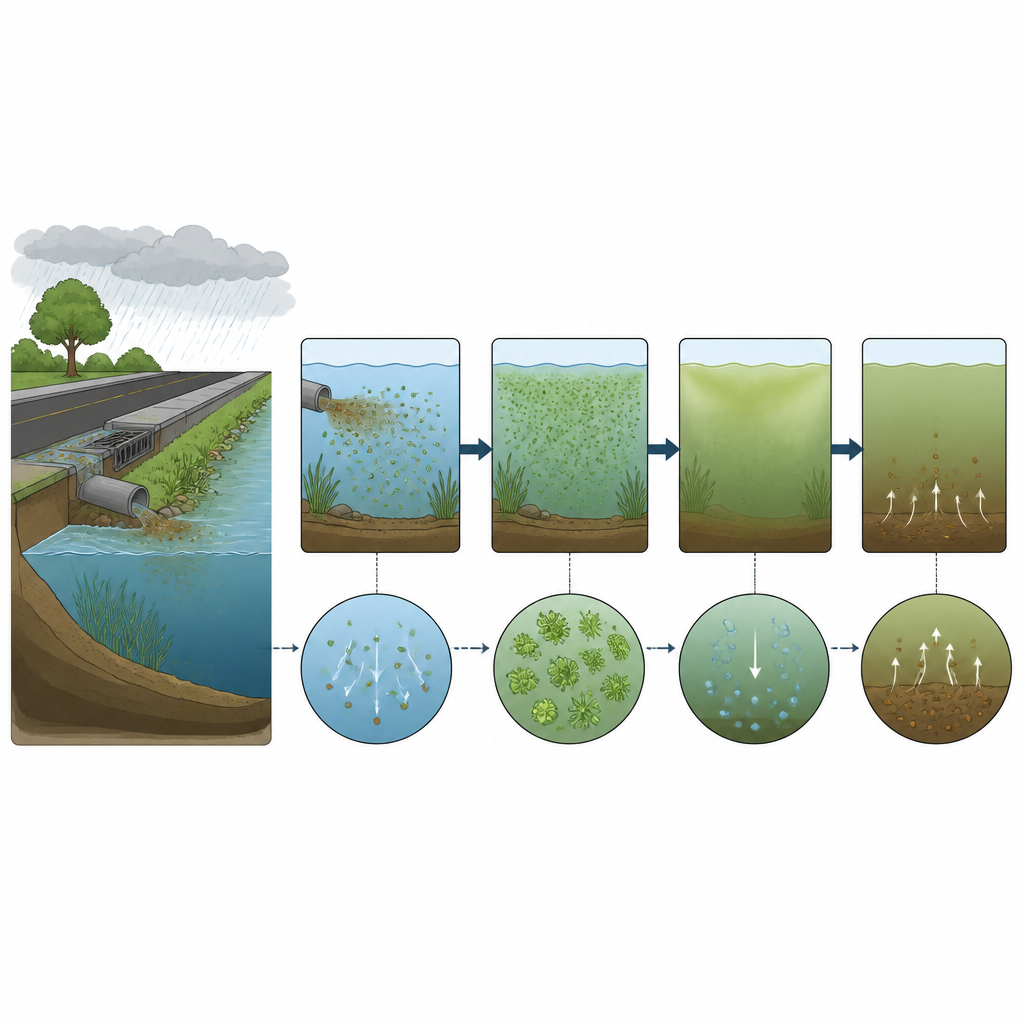
The upstream forest lakes were relatively cool, deep and clear. There, phosphorus levels stayed low and the nitrogen to phosphorus ratio pointed to phosphorus as the main limiting nutrient. In contrast, the small urban lakes downstream were shallow, received heavy storm water inflows and showed higher and more variable salt and nutrient levels. Along the chain, phosphorus and algae concentrations rose, while oxygen tended to drop, especially in summer and autumn. The final lake in the sequence showed the highest nutrient loads, frequent dense algae growth and low oxygen conditions that can stress or kill fish.
Finding the key drivers
Using a statistical tool designed to pick out the most influential factors from many candidates, the team asked which features best explained shifts in the nitrogen to phosphorus ratio. Phosphorus concentration stood out as the single most important driver, followed by phosphate, water temperature, algae levels and the “volume ratio” that describes how much lake water is available relative to the size of its urban catchment. Lake depth also mattered: deeper upstream lakes tended to remain phosphorus limited and less algae ridden, while shallow downstream lakes were more often in a state where both nitrogen and phosphorus could fuel blooms. The exact way lakes were connected by channels or pumps turned out to be less important than the nutrient loads themselves.
What this means for lake care
The study shows that connected urban lakes can pass nutrient problems along like falling dominos, but that the details of each lake still matter. Simply cleaning the water that enters the first lake in a chain is not enough when downstream lakes are shallow and receive large amounts of polluted storm water from roads. For the Grunewald lakes, reducing phosphorus remains crucial, but in the most nutrient rich, shallow urban basins, cutting both nitrogen and phosphorus inputs and improving in lake processes that bind or remove nutrients will be needed. In plain terms, protecting these city lakes means treating what runs off the streets and tailoring measures to each lake’s shape, depth and role in the chain.
Citation: Radtke, C.F., Heinemann, N., Höring, A. et al. Identification of chemical and physical key water quality drivers in the urban Grunewald Chain of Lakes, Berlin. Sci Rep 16, 15222 (2026). https://doi.org/10.1038/s41598-026-53251-7
Keywords: urban lakes, water quality, nutrient pollution, algae blooms, stormwater runoff