Clear Sky Science · en
Eco-friendly synthesis of coumarins using lemon juice as a natural catalyst and application as disperse dyes on polyester fabric
Color from the Fruit Bowl
Most of the colors in our clothes come from synthetic chemicals that can be hard on the environment. This study explores a surprisingly simple idea: can an everyday ingredient like lemon juice help chemists make vivid dyes for polyester fabric in a cleaner, safer way, without harsh acids or large amounts of solvent?
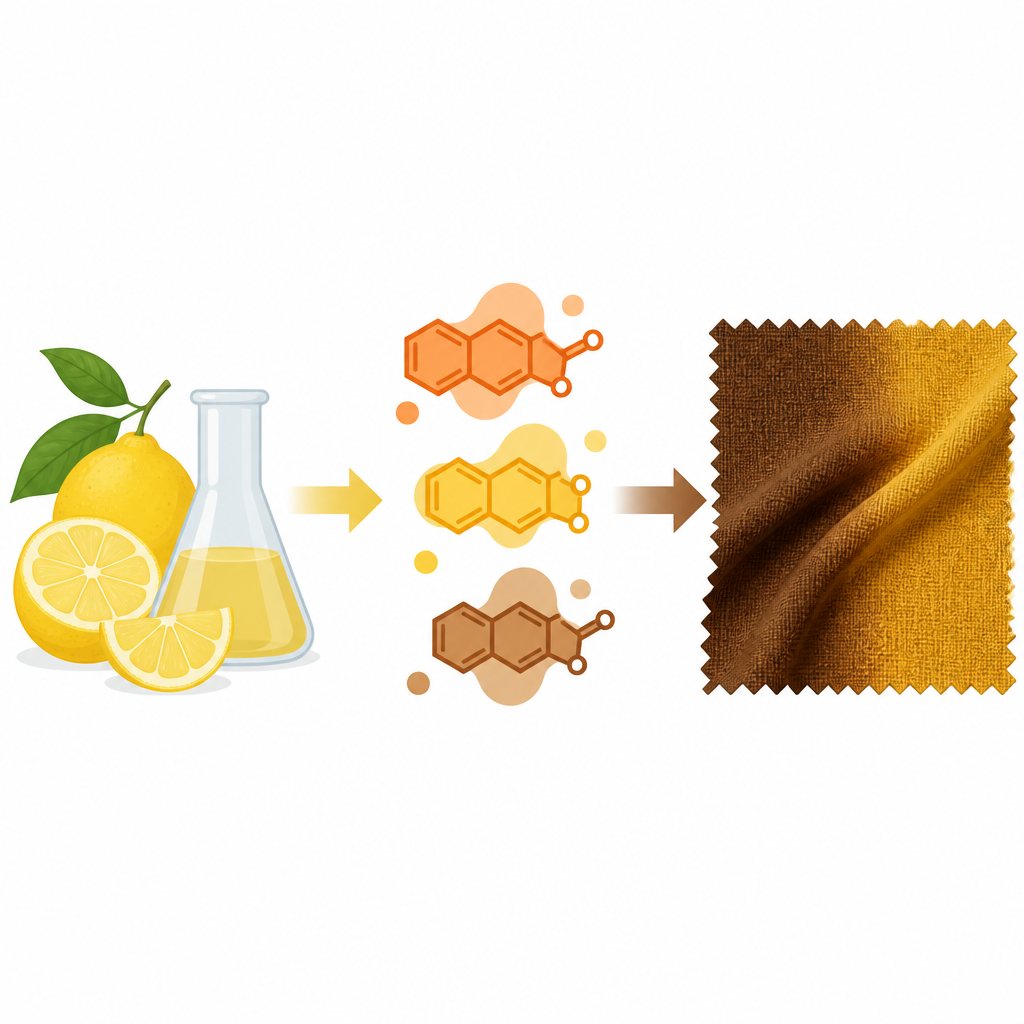
Why Greener Dyes Matter
Conventional dye chemistry often relies on strong mineral acids and toxic solvents that generate problematic waste. At the same time, demand for bright, long lasting colors on synthetic fibers such as polyester keeps rising. The researchers set out to bridge these needs by following green chemistry principles, which favor low waste, mild conditions, and renewable materials. They focused on a family of colorful molecules called coumarins, already known for their strong light absorption and good bonding to polyester, and asked whether these could be made and used with help from natural fruit acid instead of harsher reagents.
Lemon Juice as a Kitchen Table Catalyst
Freshly squeezed and filtered lemon juice, rich in citric acid, played the role of a natural catalyst in several key reaction steps. Rather than stirring chemicals in hot, solvent filled flasks for long periods, the team combined simple grinding of starting powders with a small amount of lemon juice and brief heating. In under minutes, this approach yielded two complex dye molecules based on coumarin and a sulfur containing unit called thiazole, with high isolated yields around ninety percent. Standard tools such as infrared and nuclear magnetic resonance spectroscopy confirmed that the target structures had formed as planned.
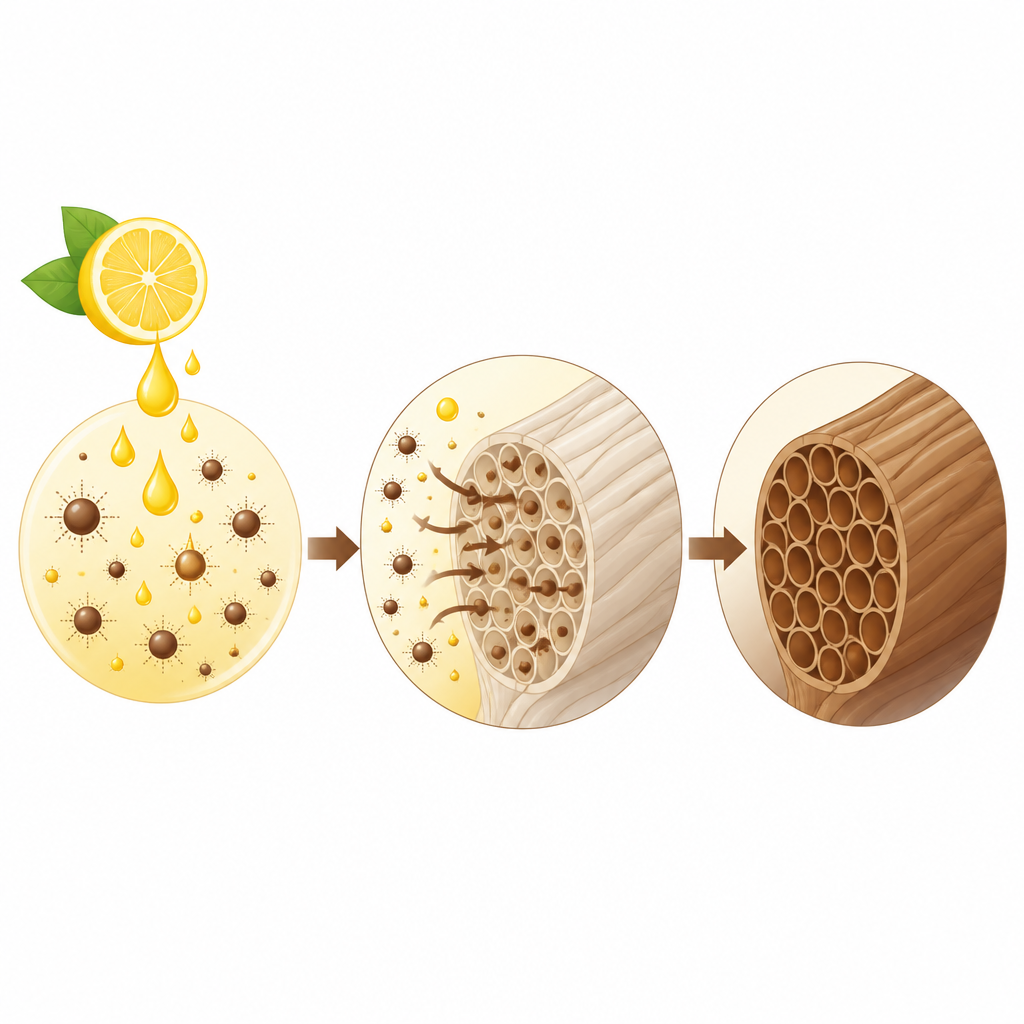
Designing Dyes for Polyester Cloth
The new dyes, labeled 7 and 10, were next tested on real polyester fabric. When applied as disperse dyes, they produced shades ranging from light brown to reddish and dark brown, depending on how the molecules were substituted. The team carefully measured how much dye actually bonded to the fabric by using a parameter called color strength, which is derived from how much light the cloth reflects. By adjusting three practical settings that any textile mill controls temperature, dyeing time, and the acidity of the bath they pinpointed the conditions that gave the deepest, most even color.
Finding the Sweet Spot in the Dye Bath
For both dyes, higher temperatures up to about 130 degrees Celsius helped the color penetrate the polyester, because the fibers become more open and the dye molecules move faster. Longer times, however, did not always mean better color. Across 30, 60, and 90 minutes, the richest shades appeared after only about half an hour, after which some dye began to leave the fabric again. The acidity of the bath also mattered. Dye 7 performed best at a modestly acidic pH of 4, while dye 10 reached its maximum color strength at a stronger acidity of pH 2. Under their own ideal conditions, both dyes gave strong color, with dye 10 slightly surpassing dye 7 in measured color intensity.
How the New Colors Hold Up
The authors also checked whether greener synthesis compromised durability. Polyester samples dyed with the lemon assisted dyes were evaluated for how well they resisted fading in light, washing, and rubbing. After a standard cleaning step, both dyes showed high light fastness and acceptable to good washing performance, along with very good resistance to color loss by rubbing. These results suggest that the new dyes can match the practical demands of clothing use while still being made under milder, less polluting conditions.
What This Means for Everyday Fabrics
In simple terms, the study shows that an everyday ingredient like lemon juice can help build complex, effective colorants for polyester without relying on harsh acids or large volumes of solvent. By fine tuning temperature, time, and bath acidity, manufacturers could obtain deep, stable browns from these coumarin based dyes while following a more sustainable recipe. The authors suggest that similar fruit based catalysts and related dye structures could extend this approach to other fibers and functions, such as fabrics that also protect against microbes or sunlight.
Citation: Ali, A.A., Fouad, S.A. & Abdel-Aziem, A. Eco-friendly synthesis of coumarins using lemon juice as a natural catalyst and application as disperse dyes on polyester fabric. Sci Rep 16, 16291 (2026). https://doi.org/10.1038/s41598-026-53238-4
Keywords: green chemistry, textile dyeing, polyester dyes, natural catalyst, coumarin