Clear Sky Science · en
Prevalence and risk factors of overactive bladder syndrome among Egyptian medical students, and its impact on health-related quality of life, cross-sectional study
Why this study matters to students
Needing to rush to the bathroom, especially during class or at night, can quietly wear down a student’s energy, sleep, and confidence. This study looks at how common these bladder problems are among Egyptian medical students, what everyday habits might make them worse, and how much they interfere with life and study.
Bladder trouble in everyday life
Overactive bladder is a pattern of symptoms rather than a single disease. People may feel a sudden strong urge to urinate, wake up often at night to use the bathroom, or even leak small amounts of urine. For young adults these problems can be embarrassing and easy to hide, but they can still disturb sleep, limit social activities, and raise stress. The authors wanted to know how often these issues affect medical students in Egypt, a group already under heavy academic pressure.
How the researchers asked students
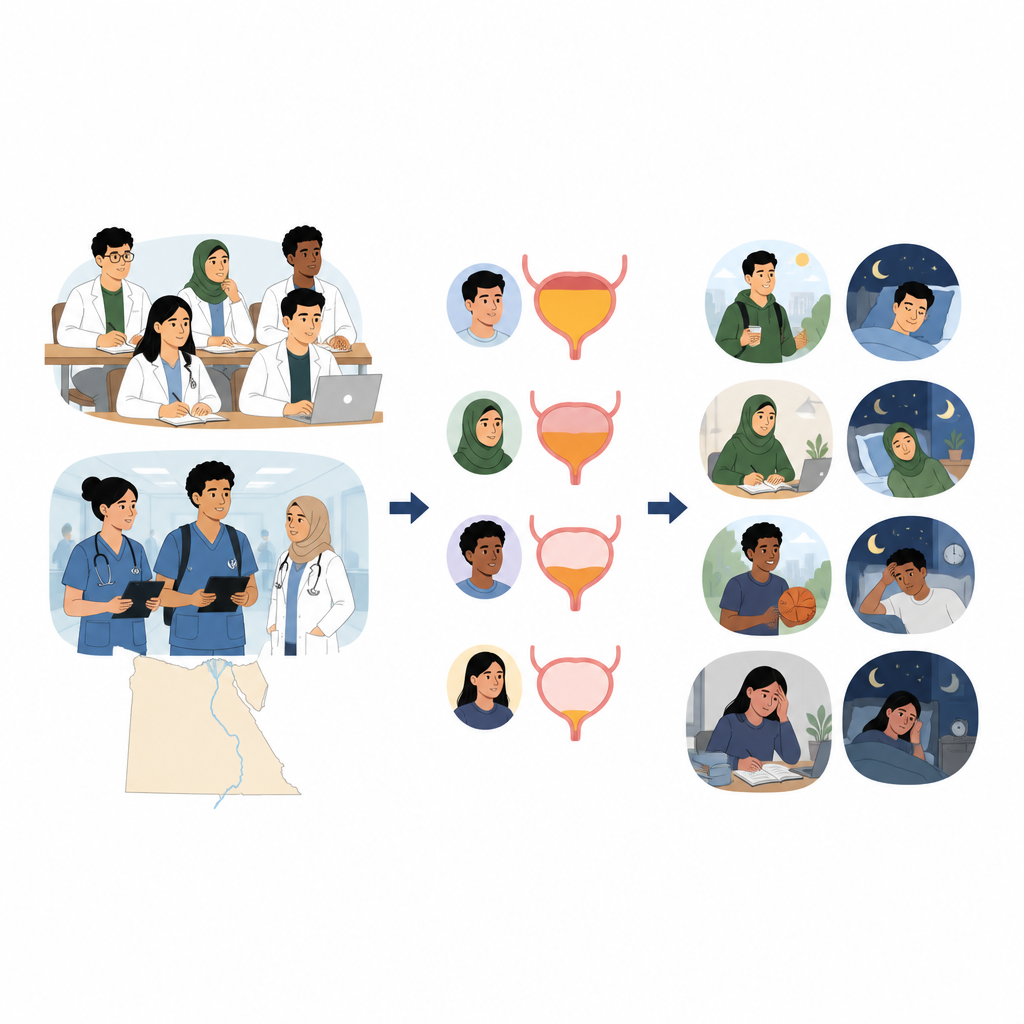
The team ran an online survey between May and June 2025 and invited medical students from across Egypt to take part. Only students aged 18 to 27 who were currently in medical school were included. The questionnaire collected basic information such as age, gender, year of study, body weight, and lifestyle factors like stress level, smoking, and use of coffee, tea, and energy drinks. It then used a standard short form called OAB q SF, which asks about bladder symptoms over the past four weeks and how much those symptoms disturb daily life, sleep, and social activities.
How common the symptoms were
Out of 1138 responses, 1003 students met the study criteria. About half were male, and most were in the later clinical years of training. When their answers were scored, about 15 percent met the threshold for overactive bladder symptoms. Many students reported at least occasional discomfort: nearly one in five felt an uncomfortable urge to urinate, about one in five woke up at night to pass urine, and roughly a fifth said they sometimes leaked urine when the urge was very strong. Yet the typical overall symptom score was fairly low, meaning that most students had mild or no ongoing bother.
Effects on sleep and quality of life
The questionnaire also measured health related quality of life, asking how much bladder issues disrupted sleep, travel, exercise, relationships, and feelings about oneself. Here the picture was more mixed. Even though only a minority met the strict symptom cut off, about half of all students reported some decline in their quality of life. The analysis showed a strong link: as bladder symptom scores rose, quality of life scores fell. Students in the early academic phase had more symptom bother and lower quality of life than those in the clinical years, which the authors suggest may reflect heavier stress and adjustment to a new learning style in the early years.
Habits and risk factors in student life
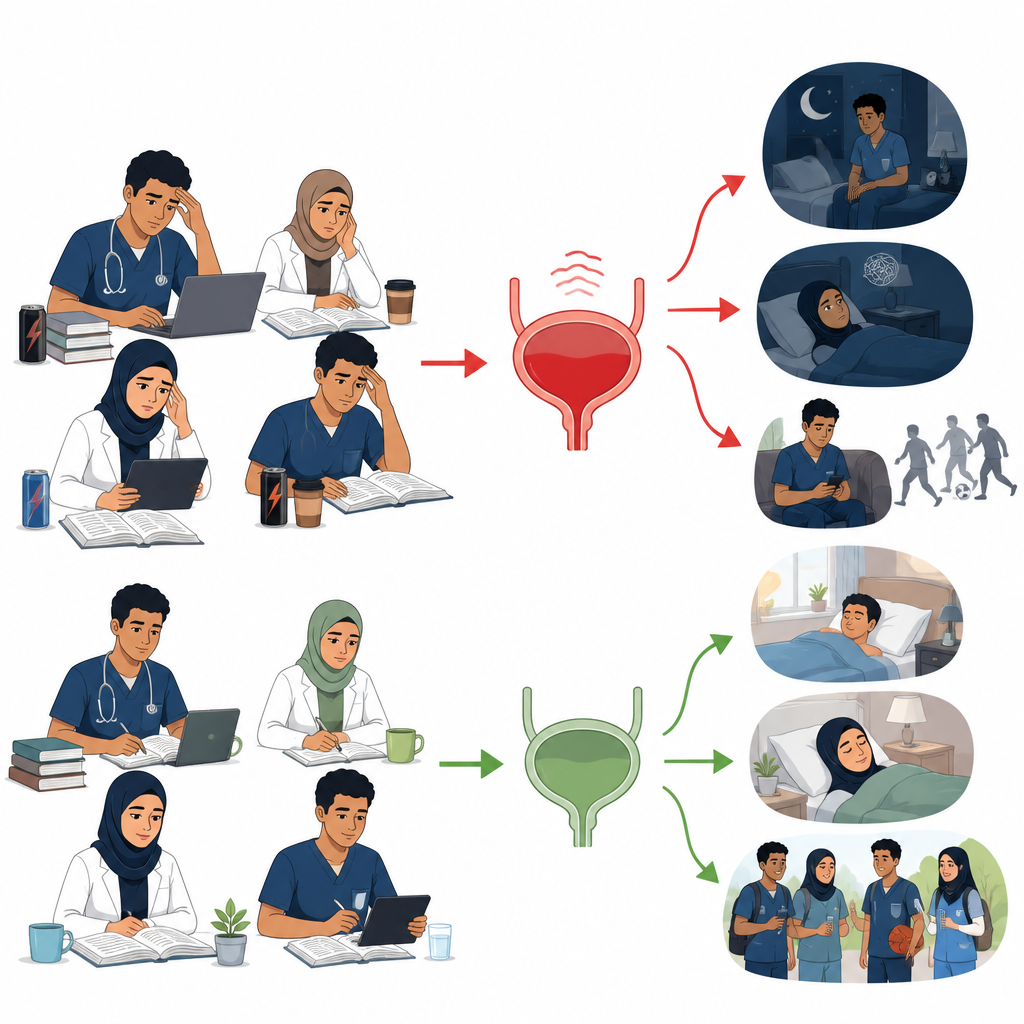
The researchers explored which common habits might be linked to bladder problems. Age, gender, and body weight showed no clear connection with symptoms in this young, fairly healthy group. Smoking also did not seem to matter, possibly because few students smoked. Energy drinks stood out: students who used them more often had higher levels of bladder bother and were more likely to wake at night to urinate. In contrast, regular coffee and tea, while common, were not clearly tied to worse bladder symptoms once other factors were taken into account.
What this means for students and campuses
For Egyptian medical students, troubling bladder symptoms appear in a noticeable minority, and even mild problems can chip away at sleep and daily comfort. The study suggests that early academic years and frequent energy drink use may add to the burden, while factors like gender and body weight matter less in this setting. For students and universities alike, simply recognizing that these issues exist, are not rare, and may be eased by attention to stress and drink choices could be an important first step. The authors call for longer term studies to better untangle causes and guide practical ways to protect student well being.
Citation: Mohamed, A.F., Hagag, A.M., Elgamal, M.M. et al. Prevalence and risk factors of overactive bladder syndrome among Egyptian medical students, and its impact on health-related quality of life, cross-sectional study. Sci Rep 16, 16437 (2026). https://doi.org/10.1038/s41598-026-53181-4
Keywords: overactive bladder, medical students, energy drinks, student health, quality of life