Clear Sky Science · en
Development of a Polyvinylidene fluoride–based membrane incorporating magnetic iron–nickel alloy for vacuum membrane distillation desalination
Turning salty water into drinkable water
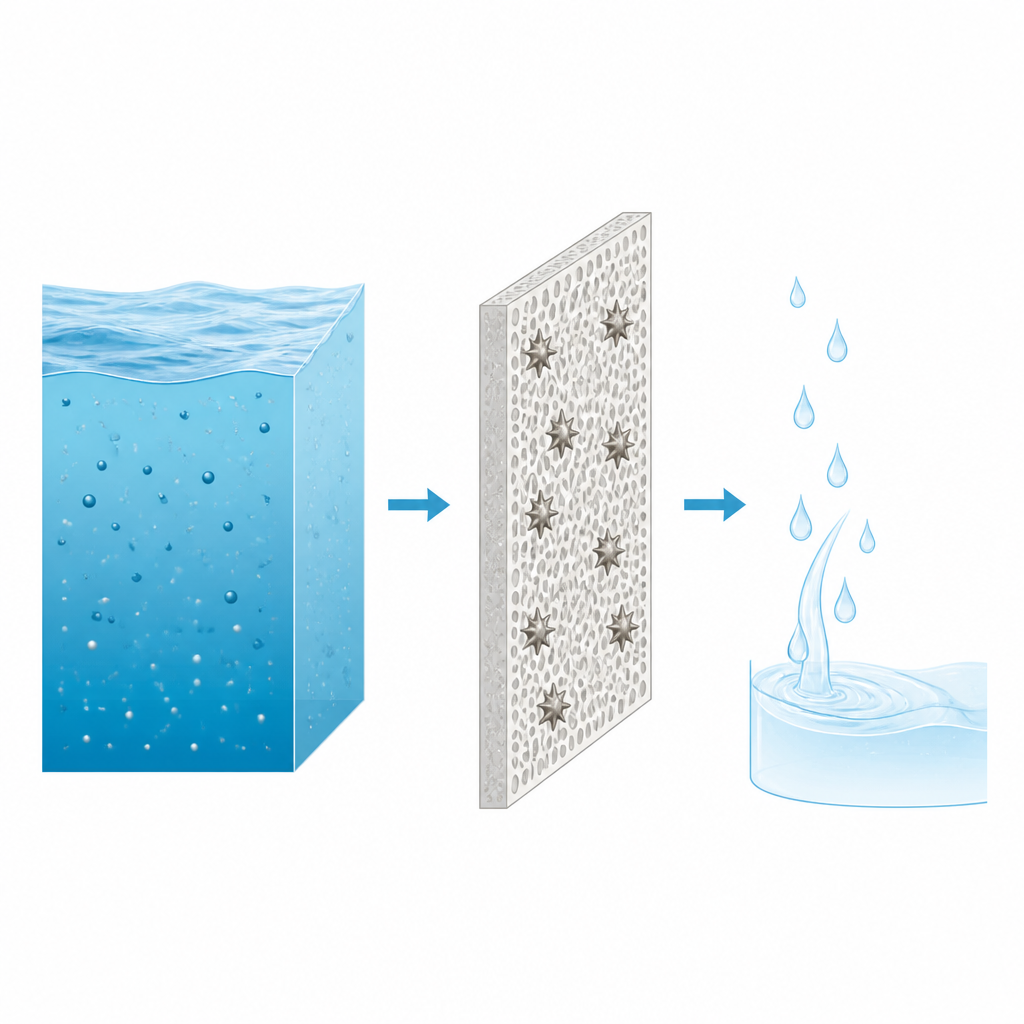
Supplying clean drinking water to growing populations is one of the biggest challenges of this century. Desalination plants already turn seawater into fresh water, but many existing methods are energy hungry and expensive. This study explores a new kind of plastic filter that uses heat and a light vacuum to pull pure water vapor out of salty water. By carefully redesigning the filter material with tiny magnetic particles, the researchers show a way to make this process more efficient and more robust, helping stretch limited freshwater supplies.
A new twist on plastic filters
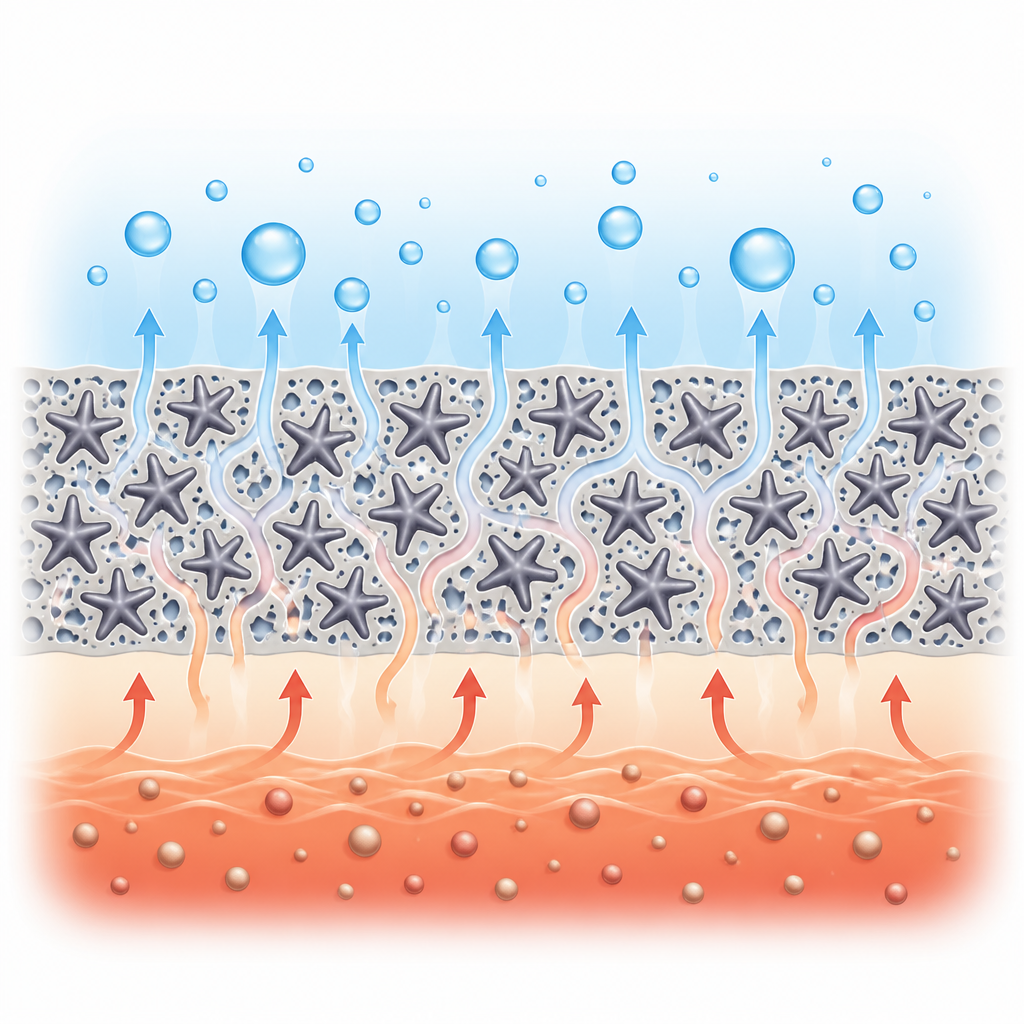
At the heart of the work is a common engineering plastic called PVDF, already used in many water treatment filters. In vacuum membrane distillation, warm salty water flows along one side of a thin, water-repelling sheet, while a vacuum on the other side pulls water vapor through the sheet, leaving salt behind. The team set out to improve this sheet so that it would carry more water vapor without letting liquid water leak through. Their idea was to mix the plastic with a tiny amount of an iron nickel metal alloy that forms starfish like particles and is permanently magnetic. These particles are wrapped in the plastic, so the water does not touch bare metal, but their shape and magnetic nature help sculpt the internal structure of the membrane.
How magnetic starfish change the membrane
The researchers first made the starfish shaped iron nickel particles using a wet chemical method, then mixed small doses into a liquid PVDF blend before casting it into thin films. They examined the resulting membranes with several tools to see how the metal changed the material. Electron microscope images revealed that adding up to 0.2 percent by weight of the alloy opened up more pores and created a more interconnected network of channels. Measurements showed that overall porosity rose from about half empty space in the plain plastic to nearly three quarters empty space in the best blend, while the average pore size increased but stayed within a safe range that still resists liquid water intrusion.
Balancing thickness, texture, and strength
Beyond pore formation, the team carefully tracked how the alloy affected the thickness, surface texture, and strength of the membranes. A slightly higher plastic content made the sheet thicker and sturdier but also slowed water vapor flow. The best performing recipe combined 14 percent PVDF with 0.2 percent alloy. This version was only about 10 percent thicker than the plain membrane but much rougher at the microscopic level and significantly more porous. Tests of how water droplets sit on the surface showed that small amounts of filler initially made the surface more wettable, but higher loading and added roughness pushed it back toward a more water repelling behavior. Mechanical tests confirmed that the metal particles more than doubled the tensile strength, while heat tests showed that the alloy helped the plastic resist breakdown at high temperatures.
Putting the new membranes to the test
To see whether these structural changes actually improved desalination, the scientists ran each membrane in a custom built vacuum distillation setup using salty water similar in strength to seawater. Under the same operating conditions, the optimized membrane with 0.2 percent alloy delivered a water vapor flow about 47 percent higher than the plain PVDF sheet. It reached a flux of 29.1 kilograms of water per square meter per hour while still holding back most of the dissolved salt. Other formulations, including one with more polymer and less alloy, showed lower porosity, lower flux, and higher resistance to flow, even though they were mechanically strong. This highlighted the need to tune several features at once rather than change only a single ingredient.
What this means for future clean water
For non specialists, the key message is that small changes inside a filter can have a big impact on how well it turns salty water into fresh water. By sprinkling in starfish shaped magnetic particles and adjusting the plastic recipe, the team created a membrane that carries water vapor faster, stays strong at high temperatures, and still keeps salt out. While the study focused on short term tests in the lab, it points to a promising direction for future desalination systems that use low grade heat or solar energy. With further work on long term stability and fouling, such membranes could help make clean water production more efficient and more widely accessible.
Citation: Farag, E., Nady, N. & El-Zanati, E. Development of a Polyvinylidene fluoride–based membrane incorporating magnetic iron–nickel alloy for vacuum membrane distillation desalination. Sci Rep 16, 15501 (2026). https://doi.org/10.1038/s41598-026-52863-3
Keywords: desalination, membrane distillation, PVDF membrane, magnetic alloy, water treatment