Clear Sky Science · en
Characterization and evaluation of the efficacy of phage E21 therapy in a wound animal model of biofilm-associated Pseudomonas aeruginosa infection
Why stubborn wound infections matter
Many people assume that a course of antibiotics can handle any skin infection. Yet certain bacteria, such as Pseudomonas aeruginosa, are becoming increasingly hard to treat, especially when they form sticky communities called biofilms inside burns and other wounds. This study explores an alternative approach that uses a harmless virus, called a bacteriophage, packaged in a simple skin gel to help clear these difficult infections and support wound healing in animals.
A viral hunter found in wastewater
The researchers began by collecting bacteria from patients with infected skin wounds and burns. Most of these Pseudomonas aeruginosa samples produced thick, strong biofilms, which are slimy protective layers that help bacteria resist antibiotics and the immune system. To find a natural enemy of these bacteria, the team searched hospital wastewater, a place rich in microscopic life. From these samples they isolated one promising bacteriophage, named phage E21, that could infect and kill several of the strongest biofilm-forming Pseudomonas strains.
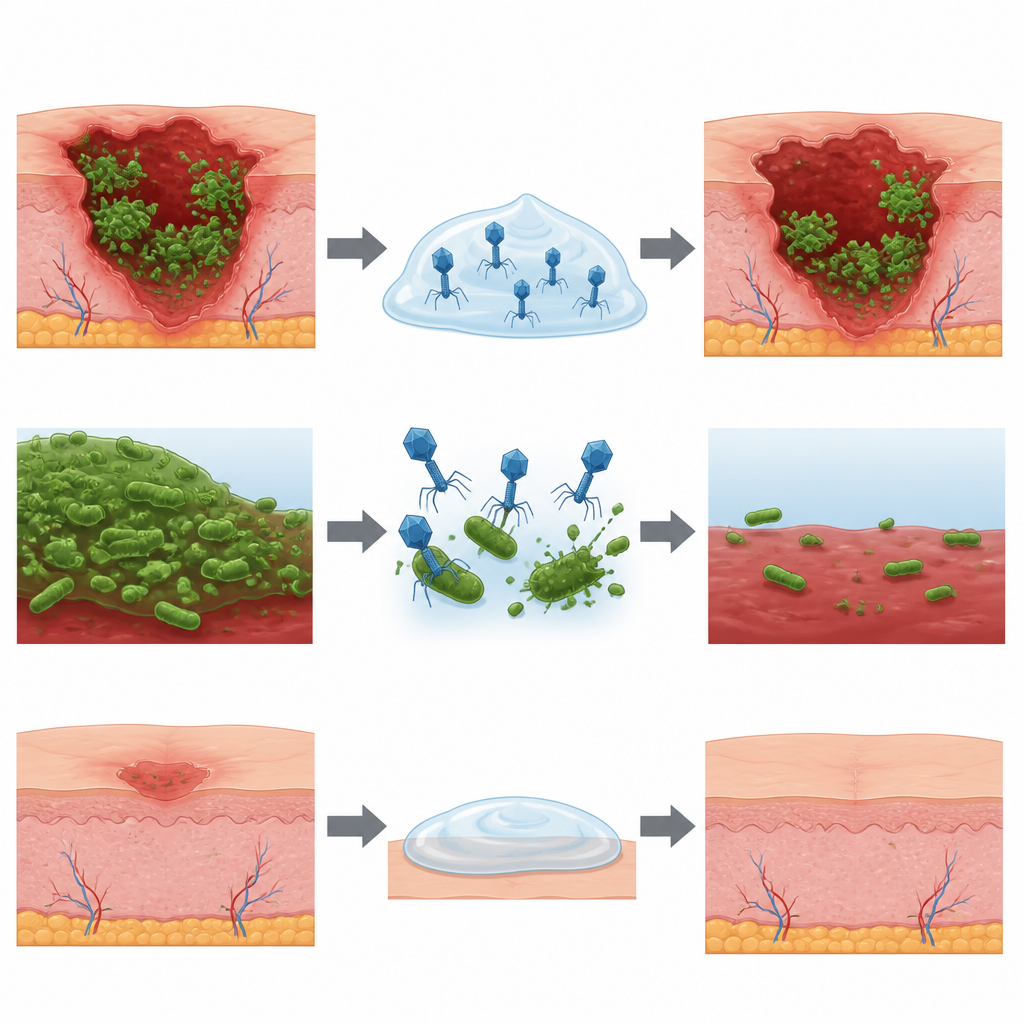
Understanding the useful virus
To be sure phage E21 would be suitable as a therapy, the team examined it in detail. Electron microscope images showed that it has the classic shape of many bacterial viruses, with a geometric head and a tail used to attach to its target. Genetic sequencing revealed that E21 belongs to a known phage family and carries a toolbox of enzymes that help it break down bacterial cell walls and components of the biofilm matrix. These traits are important, because they allow the phage not only to burst open individual bacteria but also to chip away at the protective shield that surrounds them in chronic infections.
Turning a virus into a wound gel
Next, the scientists needed a way to deliver this fragile virus to a wound without destroying it. They used carboxymethylcellulose, a common thickening agent, to make a clear hydrogel and gently mixed in a high dose of phage E21. In lab tests, this phage-loaded gel produced clear zones where Pseudomonas could not grow, while a plain gel without phage had no effect. The gel also kept the phage active for at least three months in cold storage, suggesting it could be prepared in advance and used when needed.
Testing the treatment in burned skin
To mimic severe human burns, the team used a rat model in which a square patch of skin was burned and then infected with a strong biofilm-forming Pseudomonas strain. Some animals received no treatment, some were treated with a standard silver-based burn cream, and others received the phage E21 gel on the wound twice daily. Over two weeks, the phage-treated wounds shrank faster, showed less pus, and approached full closure, while untreated wounds remained inflamed and the silver cream group showed slower improvement. Counts of live bacteria from the wound surface were lower in the phage-gel group, and microscopic examination of the skin revealed more orderly tissue repair, healthier collagen patterns, and new small blood vessels compared with infected controls.
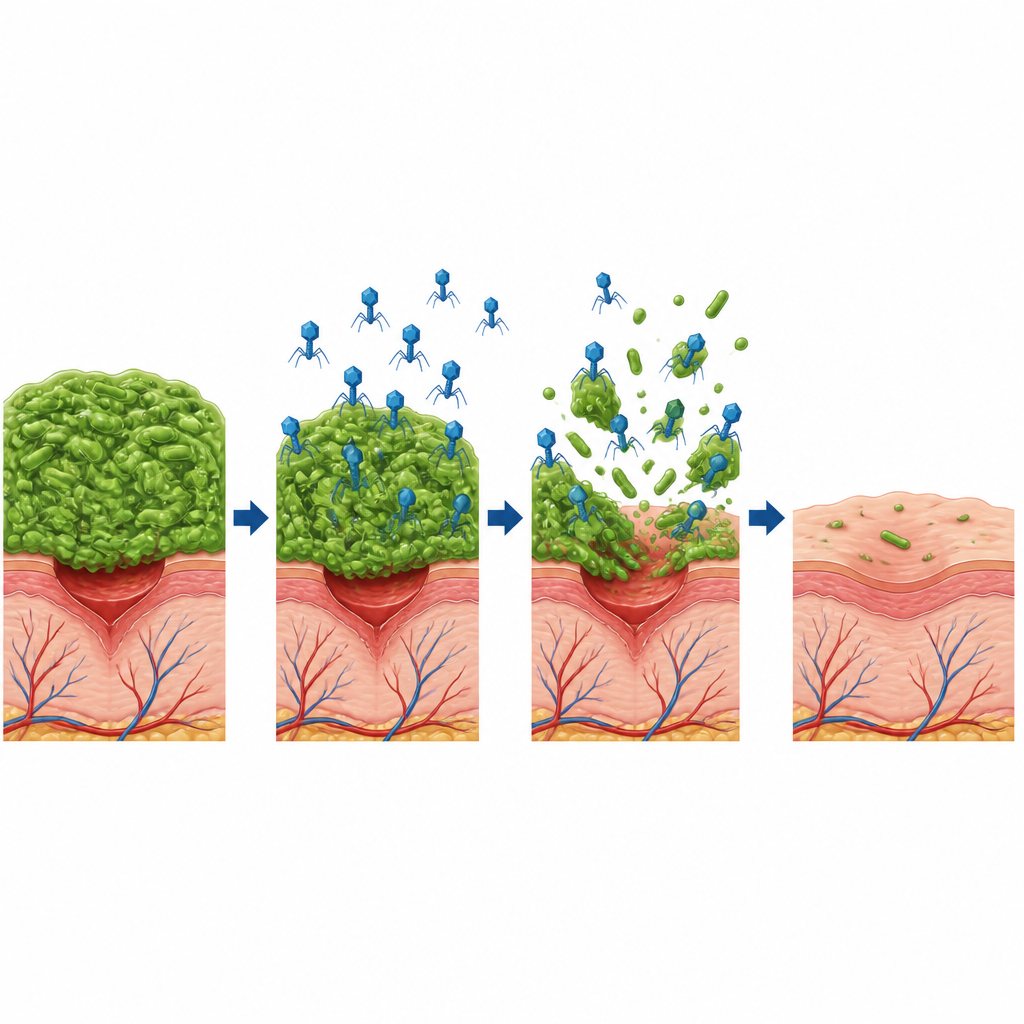
What this could mean for future care
In simple terms, this study shows that a carefully chosen virus, delivered in a basic wound gel, can help clear stubborn Pseudomonas biofilm infections and promote healing in a burn model. The treatment did not harm the animals, reduced bacterial numbers, and led to skin that looked closer to normal under the microscope than skin treated with a common burn medication. While this work was done in rats and the phage targets only certain bacterial strains, it adds to the growing evidence that phage-based gels could one day become another tool for doctors when standard antibiotics are no longer enough.
Citation: Eldin, A.M.S., Zaid, A.S.A., Shebl, R.I. et al. Characterization and evaluation of the efficacy of phage E21 therapy in a wound animal model of biofilm-associated Pseudomonas aeruginosa infection. Sci Rep 16, 15490 (2026). https://doi.org/10.1038/s41598-026-52857-1
Keywords: phage therapy, Pseudomonas aeruginosa, biofilm infection, wound healing, hydrogel