Clear Sky Science · en
Cold atmospheric plasma for bacterial inactivation in Nile water and wastewater
Why cleaner water matters
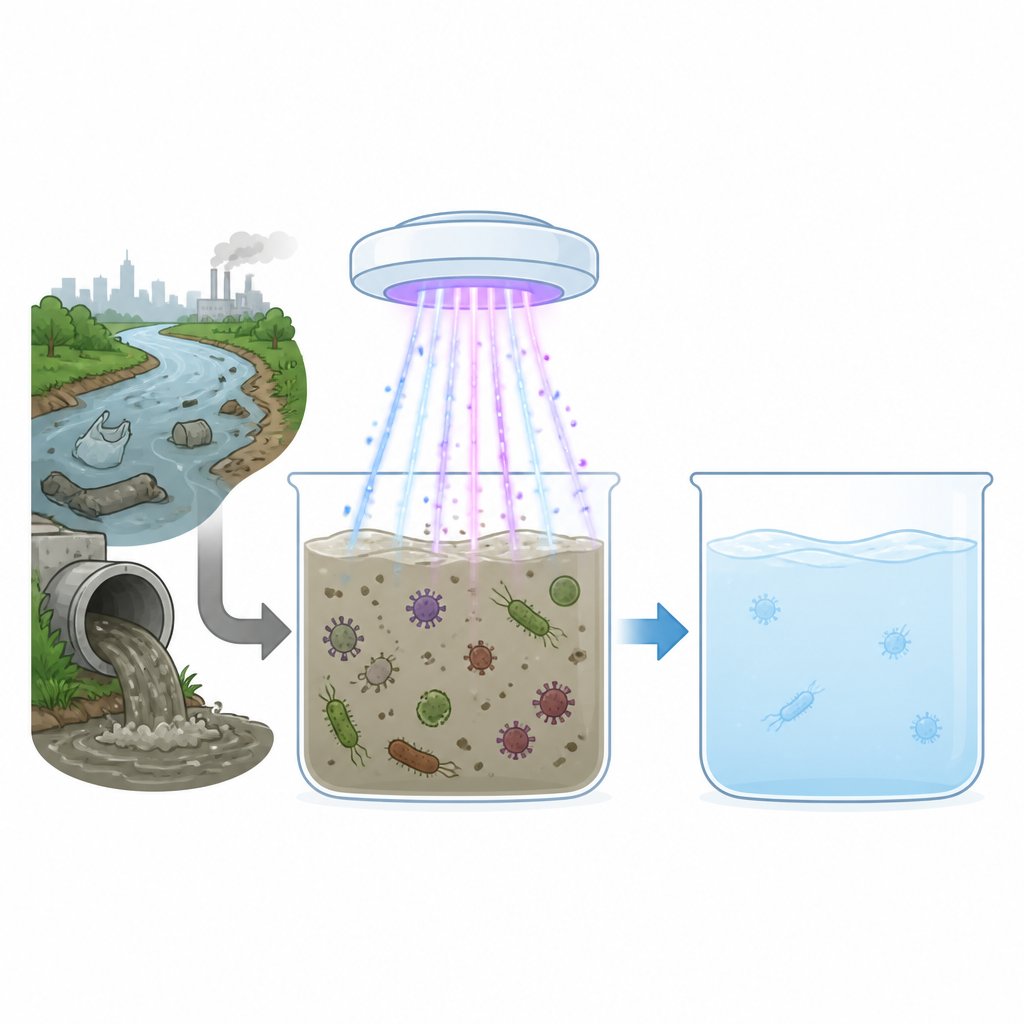
Safe water underpins public health, yet rivers and wastewater streams often carry disease causing microbes that slip past traditional treatment. This study explores a tool from modern physics called cold atmospheric plasma, a room temperature ionized gas, to see whether it can quietly and efficiently knock out harmful bacteria in Nile River water and raw sewage without adding chemicals.
A new way to clean dirty water
The researchers focused on two common groups of bacteria that signal fecal pollution and can be hard to remove: Escherichia coli, a Gram negative bacterium widely used as an indicator of contamination, and Bacillus species, Gram positive bacteria that form hardy spores. They collected real Nile water and wastewater, not just clean lab water, to test how this approach performs in complex, naturally dirty mixtures. Their goal was to find out how fast cold atmospheric plasma could reduce living bacteria and whether it could work as a practical, environmentally friendly step in water treatment.
How the plasma treatment works
In their setup, a thin wire electrode sat just above the water surface inside a glass tube, fed by an ordinary high voltage power supply. When switched on at a carefully chosen voltage, this created a soft, non thermal corona discharge: a web of tiny plasma filaments between the wire and the water. Although the gas above the surface stayed near room temperature, it became filled with energetic electrons, ions, and short lived reactive forms of oxygen and nitrogen. These reactive particles dive into the water, where they generate longer lived chemical species such as hydrogen peroxide and nitrate that can attack microbes without boiling the liquid.
What happened to the microbes
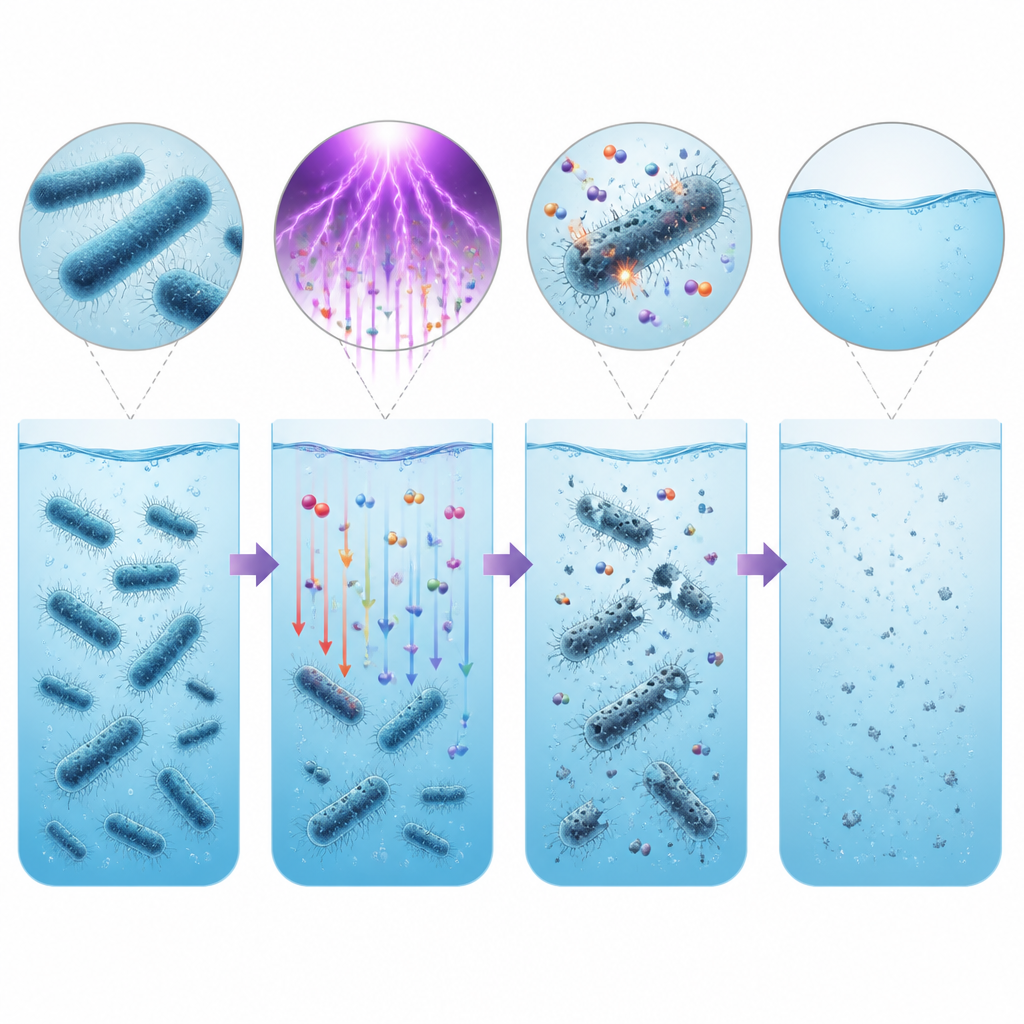
To track the effect on bacteria, the team counted colonies growing on nutrient plates before and after brief exposures to plasma. In Nile water, eight minutes of treatment cut bacterial numbers by at least one million fold, down to the point where no colonies grew. In wastewater, six minutes were enough to remove detectable bacteria. Gram negative E. coli proved easier to inactivate than Gram positive Bacillus, reflecting their thinner cell walls and more fragile outer layers. When the scientists followed the growth of E. coli over a full day, they saw that exposing cultures during their active growth phase caused sharp drops in turbidity, partial regrowth by survivors, and then a final decline, showing that plasma produced lasting damage rather than a temporary setback.
Changes inside the cells and in the water
Scanning electron microscopy offered a close up view of the battle between plasma and bacteria. Untreated cells looked like smooth rods, but plasma treated cells became dented, pitted, and eventually collapsed into shriveled fragments riddled with holes. These shapes are hallmarks of oxidative damage to membranes and supporting structures. At the same time, the water itself changed: its temperature rose only to about 54 degrees Celsius at the surface, well below typical heat sterilization levels, confirming that this was not a thermal process. The pH fell from near neutral to acidic values around 3, and electrical conductivity increased as new ions formed, consistent with the buildup of reactive oxygen and nitrogen compounds that help inactivate microbes.
What this could mean for future water treatment
Taken together, the findings show that corona based cold atmospheric plasma can strongly reduce bacterial contamination in both river water and wastewater without relying on chlorine or high heat. It damages cells through chemically reactive species and electric effects rather than by boiling them, and it remains effective even against relatively resistant Gram positive bacteria. While more work is needed to scale the method and assess long term by products, this study suggests that non thermal plasma could become a useful, eco friendly addition to the toolkit for making drinking water safer and treating wastewater in regions that struggle with persistent microbial pollution.
Citation: El-Hossary, F.M., Noureldein, E.A., El-Kassem, M.A. et al. Cold atmospheric plasma for bacterial inactivation in Nile water and wastewater. Sci Rep 16, 15749 (2026). https://doi.org/10.1038/s41598-026-52839-3
Keywords: cold atmospheric plasma, water disinfection, Nile River, wastewater treatment, bacterial inactivation