Clear Sky Science · en
Systemic sclerosis in children and older juvenile-onset patients: real-life map by the Egyptian college of Rheumatology
Why this rare childhood illness matters
Systemic sclerosis is an uncommon but serious illness in which the body’s own defenses attack the skin and organs. When it begins in childhood, it can shape growth, daily activities, and long term health. This study followed Egyptian children and teenagers who developed the disease, offering a real world picture of who is affected, how their symptoms unfold, and how the illness changes as they grow into young adults. Families, patients, and clinicians can all learn from this national snapshot of a rare condition.
Who was included in the study
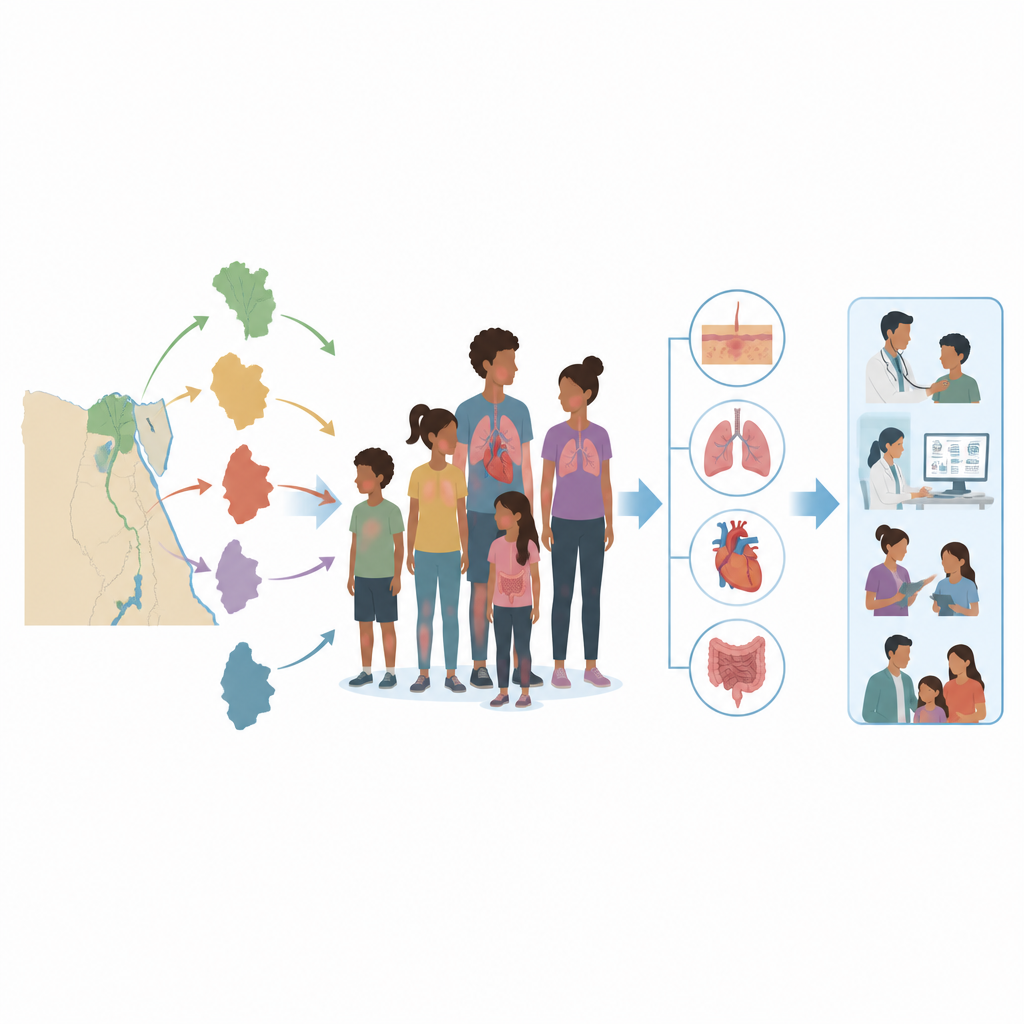
Doctors from 15 major hospitals across Egypt combined their records to study 66 people whose disease started before age 18. Twelve were children younger than 16 at the time of the study, and 54 were older teenagers or adults who had first fallen ill earlier in life. Almost all were female. The team grouped patients according to how much of their skin was affected, distinguishing a form with more limited skin changes from one with more widespread thickening, and also noted a small group who had features of other rheumatic diseases alongside systemic sclerosis.
What the doctors found on the skin and hands
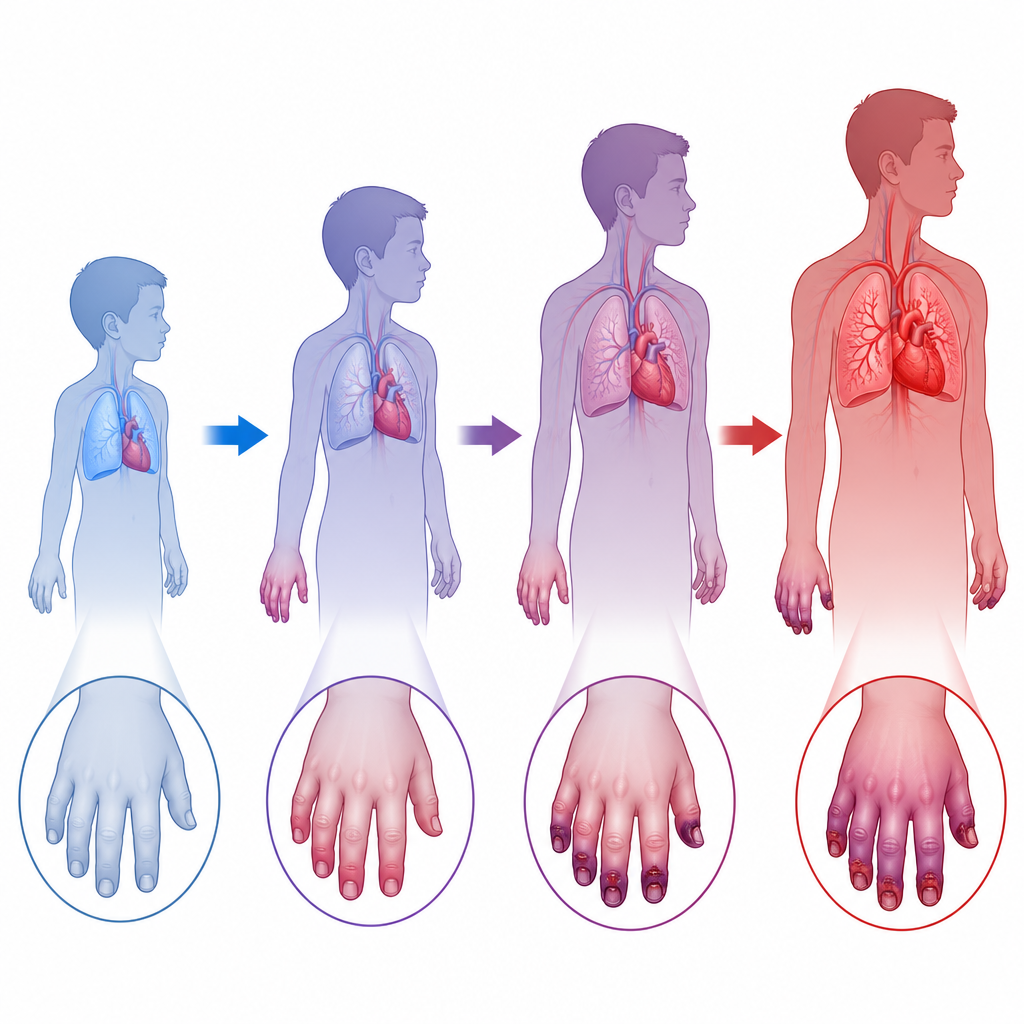
Children in the study tended to show more obvious changes in their hands. They more often had small pits or scars at the fingertips and puffiness of the hands. These findings reflect damage to tiny blood vessels and early tissue injury. Many also had color changes of the skin, tightening around the mouth, and episodes where the fingers turned pale or blue in the cold, a problem known as Raynaud’s phenomenon. Older patients shared many of these features, but on average their skin was scored as less severely thickened than has been reported in some other countries, which may point to differences in how the disease behaves or how quickly patients reach specialty care.
How the lungs, heart, and gut were involved
Inside the body, the lungs, heart, and digestive system were the organs most often affected. Scarring in the lungs was seen in about four out of ten patients, similar to rates elsewhere. In contrast, high blood pressure in the lung arteries, a serious problem that can strain the heart, was far more common in older juvenile onset patients than in the children. This suggests that pressure in the lung circulation tends to rise as the illness advances into adulthood. Nearly half of the older group also had trouble with swallowing, heartburn, or bowel changes, showing that the gut is frequently drawn into the disease, while kidney and nerve problems were rare.
Patterns across disease types and regions
When patients were divided by skin pattern, the more widespread form was linked to higher skin scores and more fingertip ulcers, but lung and heart involvement were seen in both major subtypes. Those with overlapping conditions such as lupus or inflammatory muscle disease had more joint problems and a distinctive set of blood test markers. People were enrolled from all over Egypt, but their main clinical features were surprisingly similar from one area to another. When compared with reports from Europe, Asia, and the Americas, the Egyptian patients showed both shared themes and local differences, especially in the high rate of lung artery pressure problems.
What this means for children and families
Overall, the study confirms that systemic sclerosis starting in childhood is rare but serious, and that its face changes over time. In Egyptian children, early damage often shows up in the hands and skin, while lung artery pressure problems become more prominent as patients age into late teens and adulthood. The work also underlines that patterns of illness and blood tests can vary from country to country. Because the study captured only one moment in time and involved a modest number of children, the authors call for larger, long term projects to follow young patients as they grow, so doctors can better predict who is at risk for organ damage and tailor monitoring and treatment accordingly.
Citation: Zayed, H.S., Gheita, T.A., Hammam, N. et al. Systemic sclerosis in children and older juvenile-onset patients: real-life map by the Egyptian college of Rheumatology. Sci Rep 16, 15542 (2026). https://doi.org/10.1038/s41598-026-52795-y
Keywords: juvenile systemic sclerosis, childhood autoimmune disease, pulmonary hypertension, Egypt rheumatology, connective tissue disease