Clear Sky Science · en
Integrative evaluation of utilization the nanomaterials as a modifier to asphalt mixtures: traditional and Superpave tests
Why stronger roads matter
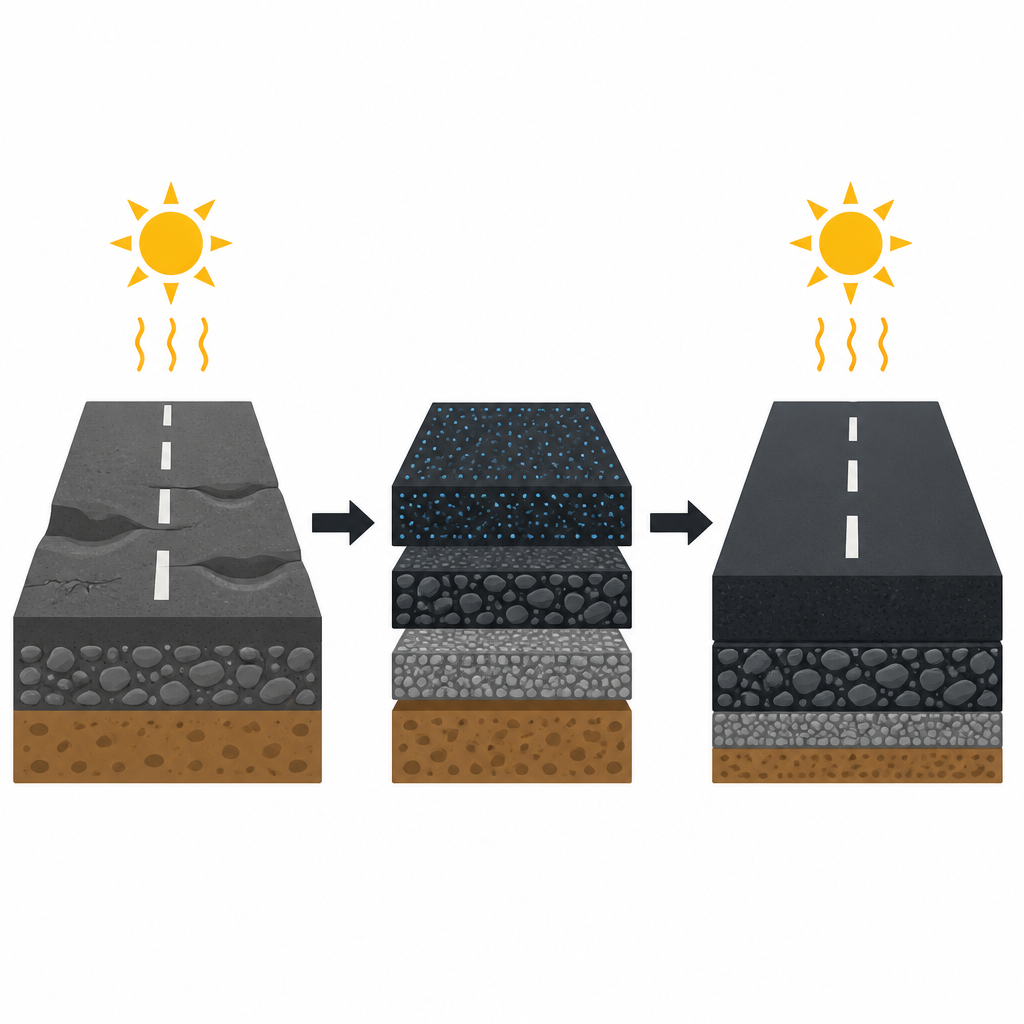
Anyone who has driven over rutted or cracked pavement knows how quickly roads can wear out under heavy traffic and extreme temperatures. Repairing these defects is costly and disruptive. This study explores whether adding a very fine mineral powder called nano metakaolin to asphalt can make roads last longer, resist heat and traffic damage, and potentially reduce maintenance needs.
A tiny additive for tough surfaces
Traditional asphalt is a mix of crushed stone and sand held together by a sticky petroleum binder. Over time, this binder softens in summer heat, stiffens and becomes brittle in cold weather, and slowly deforms under repeated wheel loads. The researchers tested nano metakaolin, a powder made by heating a common clay mineral and grinding it down to extremely small particles. Because it is stable at high temperatures and mechanically strong, the team suspected it could reinforce the asphalt binder and improve the overall mix.
How the materials were prepared and tested
The study was carried out in two main stages. First, the team blended different amounts of nano metakaolin into the asphalt binder, ranging from small additions to relatively high doses. They measured how easily the binder could be penetrated by a needle, how much it softened when heated, how viscous it was when flowing, and the temperature at which it might ignite. They also used a device that gently twists small samples to see how well they resist shear deformation at various temperatures, a key part of the modern Superpave pavement design system.
Putting the modified mixes under stress
In the second stage, the modified binders were combined with coarse and fine aggregates to produce full asphalt mixtures. These were shaped into test specimens and subjected to standard road engineering checks. The Marshall test evaluated strength and stiffness under load, while the indirect tensile test probed how easily the mix might crack. A wheel tracking device repeatedly rolled over slab samples at high temperature to mimic rut formation under heavy traffic. Another set of tests measured how the mixtures responded to different temperatures and loading speeds, providing a picture of how stiff and flexible they would be over a range of real world conditions.
What changed inside the asphalt
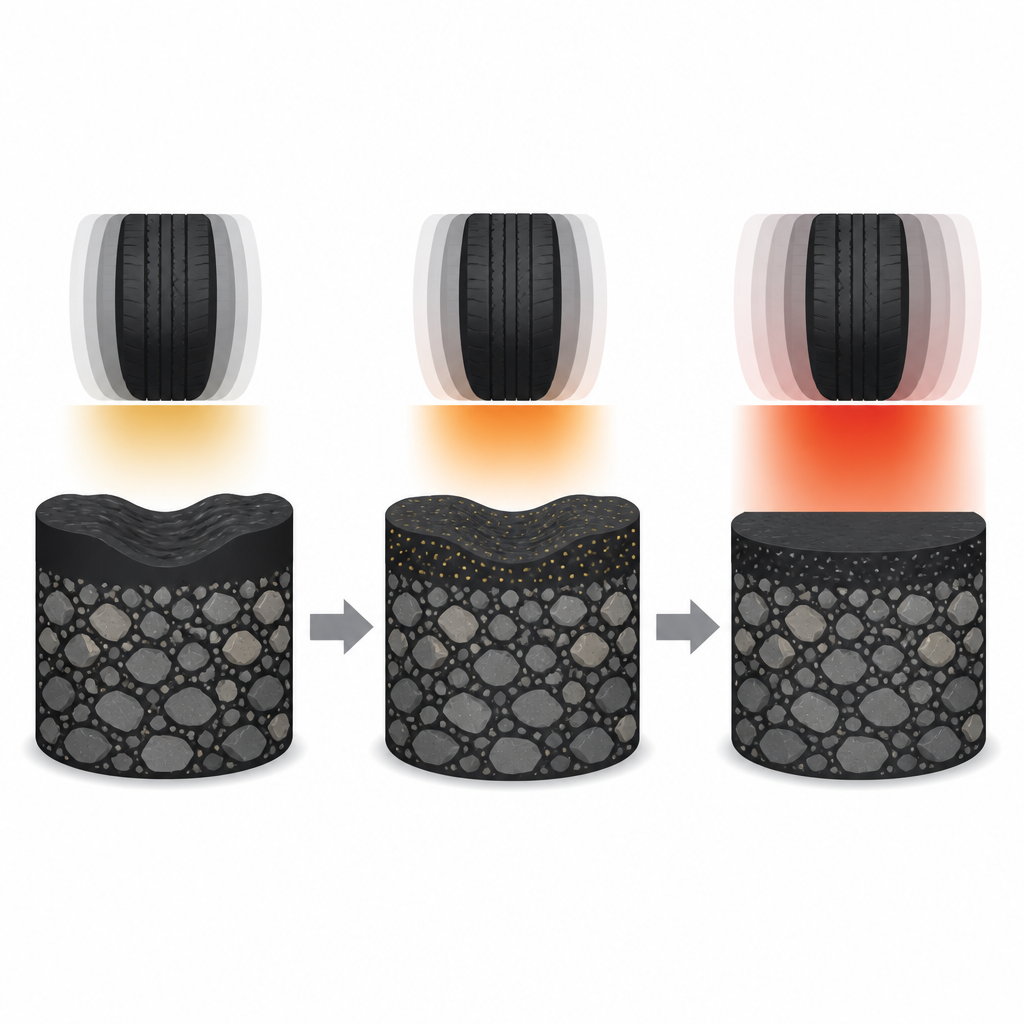
Adding nano metakaolin made the asphalt binder notably stiffer and less sensitive to temperature. Penetration values dropped, softening point rose, and viscosity increased, all signs that the binder would be less likely to flow and deform in hot weather. The advanced twisting tests showed that the resistance to rutting improved most at about five percent nano metakaolin in the binder. In the full mixtures, strength and stiffness increased, rut depth under the rolling wheel fell, and resistance to cracking improved as the nano content rose up to around seven percent of the asphalt weight.
Finding the sweet spot for road performance
The results reveal that there is an optimal range for this nano additive. At around five percent nano metakaolin, the binder itself gains good protection against heat related deformation and cracking. In complete asphalt mixtures, a content close to seven percent offers the best balance between stiffness, rutting resistance, and flexibility to avoid fatigue and thermal cracks. Higher amounts begin to reduce performance, likely because the mix becomes too stiff and harder to compact properly.
What this means for future roads
To a non specialist, the message is straightforward: a small dose of a finely ground mineral can make asphalt pavements stronger, more stable under traffic, and more durable in hot conditions. By fine tuning the amount of nano metakaolin, engineers can design road surfaces that resist ruts and cracks longer, cutting down on repairs and associated costs. While these findings are from laboratory work and must still be confirmed in real road sections, they point to a practical way to build tougher, potentially more sustainable pavements using a locally available material.
Citation: Ragab, M., Kotb, S.A., Afify, H.A. et al. Integrative evaluation of utilization the nanomaterials as a modifier to asphalt mixtures: traditional and Superpave tests. Sci Rep 16, 15330 (2026). https://doi.org/10.1038/s41598-026-52794-z
Keywords: nano metakaolin, asphalt mixtures, pavement performance, rutting resistance, Superpave tests