Clear Sky Science · en
Phytochemical profiling, metabolomics, and molecular docking studies of Atriplex halimus aerial parts revealing potential insecticidal activity against the malaria vector Anopheles pharoensis
Plant power against bugs and germs
Malaria and bacterial infections remain serious global health concerns, and many people are looking for safer, plant based tools to help control them. This study explores Atriplex halimus, a hardy shrub common in salty, dry regions, to see whether its leaves contain natural chemicals that can repel malaria carrying mosquitoes and slow the growth of harmful bacteria.
What makes this desert shrub special
Atriplex halimus, sometimes used in folk medicine and as animal feed, thrives where few other plants survive. Its leaves are known to be rich in various natural compounds. The researchers collected the aerial parts of the plant in Egypt and prepared a main extract using watered down alcohol, then separated this extract into several portions using different solvents that pull out different kinds of molecules. This allowed them to compare which types of leaf chemicals end up in each fraction.
Mapping the plant’s chemical library
Using a sensitive technique that combines liquid separation with mass measurement, the team built a detailed chemical map of the plant extracts. They tentatively identified seventy eight different substances. Nearly half belonged to the flavonoid family, a group of plant pigments also found in tea, onions, and many fruits. The next largest group were triterpenoids, complex oily molecules related to plant steroids. Smaller amounts of tannins, phenolic acids, and other classes were also present. A heat map analysis showed that the water rich and butanol portions looked chemically similar, while the dichloromethane and ethyl acetate portions formed another group with their own mix of compounds. The original mixed extract also contained some unique components not seen in the individual fractions. 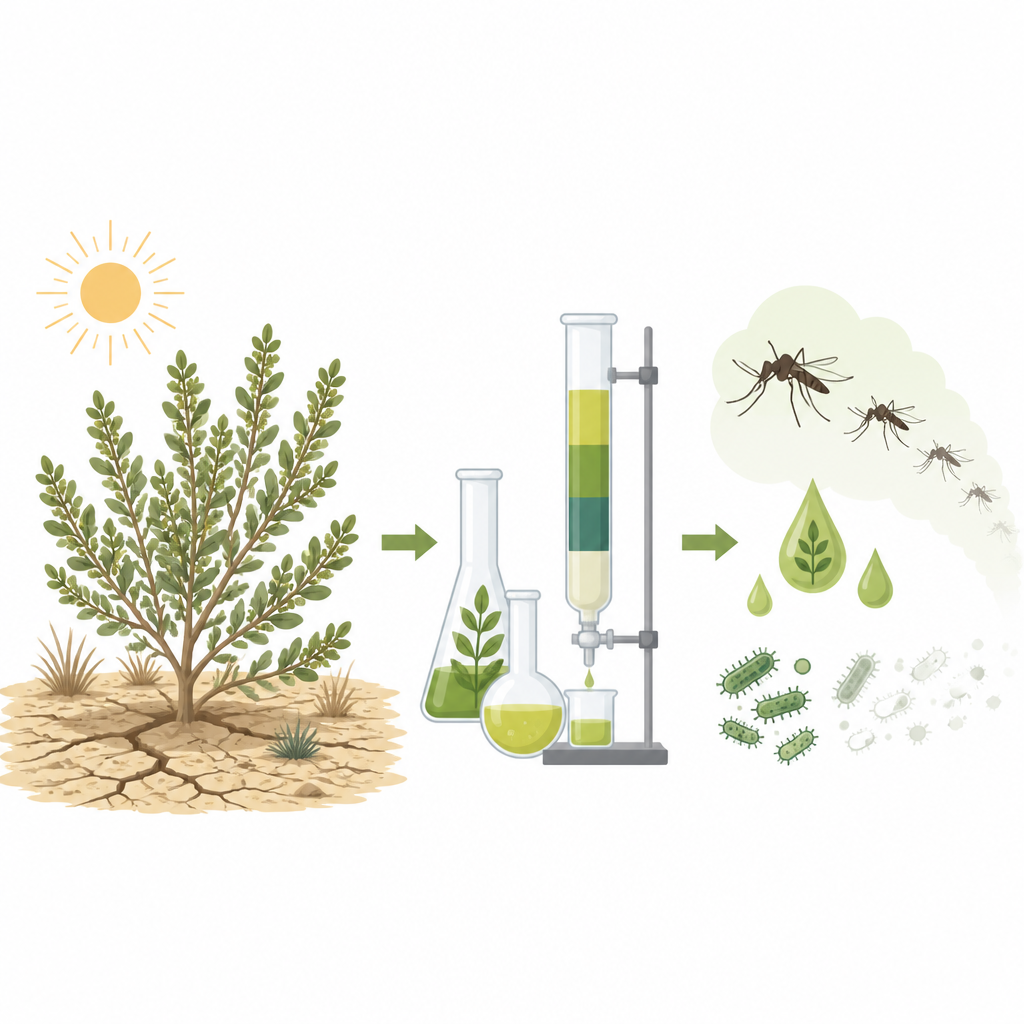
Testing for antibacterial punch
The scientists next checked whether these extracts could slow the growth of germs that commonly cause disease. In a standard lab test, paper discs soaked with each extract were placed on plates seeded with bacteria, and the clear zones where bacteria failed to grow were measured. The alcohol based main extract and the ethyl acetate portion showed the strongest action against two test species, Staphylococcus aureus and Escherichia coli, with larger clear zones around the discs. The water and dichloromethane fractions were active only against S. aureus, while the butanol fraction did not noticeably affect any of the microbes tested. None of the plant samples stopped the growth of certain other bacteria or yeast in this assay, suggesting a focused rather than broad effect.
Keeping malaria mosquitoes at bay
To see whether the plant could help repel mosquitoes, the team tested the extracts on starved female Anopheles pharoensis, a regional malaria vector. Small areas of pigeon skin were treated with different doses of each extract and then exposed to cages of mosquitoes, and the number of insects willing to land and feed was counted. The fraction made with dichloromethane stood out: at the highest tested dose it kept more than four fifths of mosquitoes from biting, approaching the performance of the well known synthetic repellent DEET. The butanol and ethyl acetate fractions also reduced mosquito landings in a dose dependent way, while the main alcohol extract showed the weakest but still meaningful effect at comparable doses. Higher concentrations of any fraction led to stronger repellency, showing a clear link between dose and response. 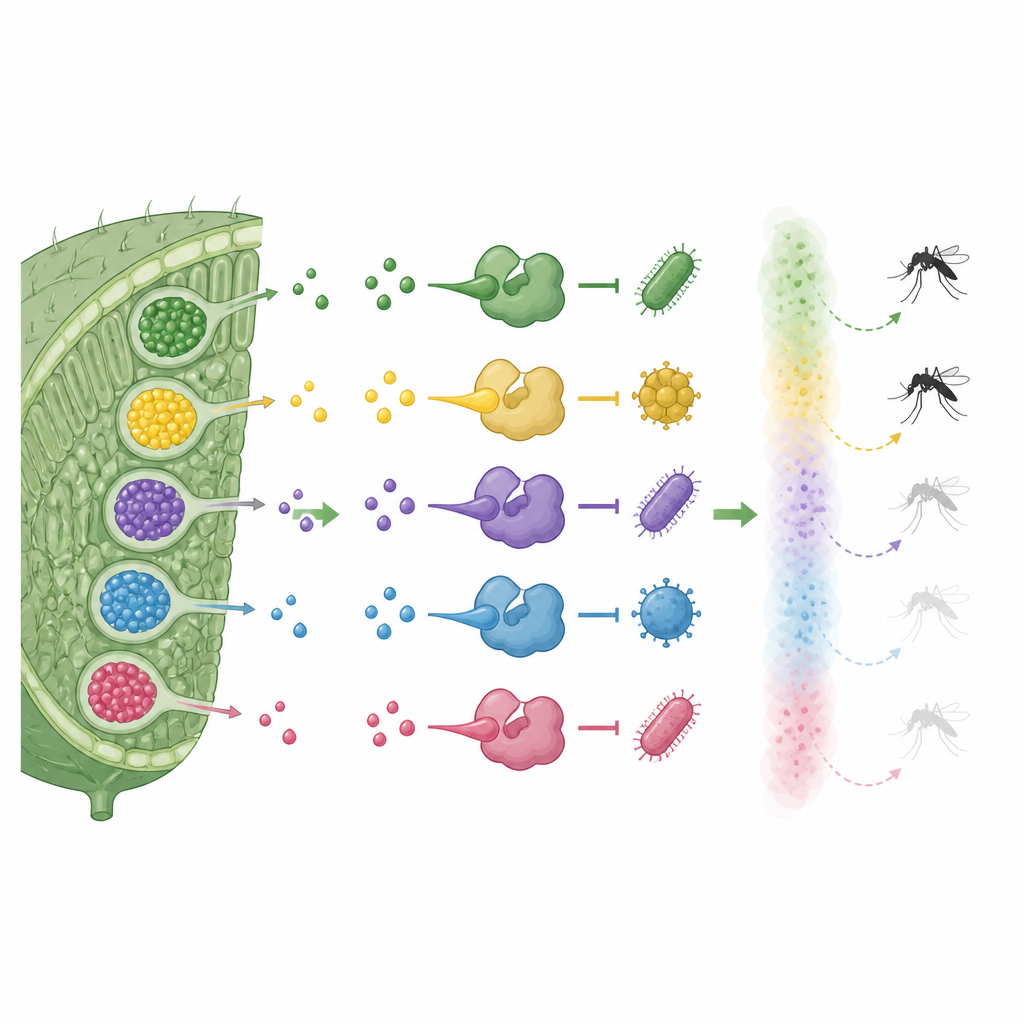
Peeking inside at the molecular level
To connect these effects to specific plant chemicals, the researchers used computer modeling to see how abundant compounds might fit into key proteins in insects and bacteria. For mosquito control, they focused on acetylcholinesterase, an enzyme essential for nerve signaling in Anopheles species. For bacteria, they examined a sensor protein that helps Staphylococcus aureus resist antibiotics and the core enzyme that copies DNA into RNA in E. coli. Many of the modeled plant compounds, especially certain flavonoids and triterpenoids, nestled well into the active pockets of these proteins and formed stabilizing contacts there. In several cases, their calculated binding energies were similar to or higher than those of known reference molecules, hinting that these natural products could interfere with nerve function in mosquitoes or survival pathways in bacteria.
Why these findings matter
Overall, the work shows that Atriplex halimus leaves contain a rich toolkit of natural chemicals that can both discourage malaria carrying mosquitoes from biting and inhibit the growth of some bacteria under lab conditions. The most promising mosquito repellent activity came from the dichloromethane fraction, likely due to its blend of more oily, moderately volatile compounds that interact well with insect proteins and senses. While these results are still early and based on controlled experiments and computer models, they support the idea that this tough desert shrub could contribute to future, plant based approaches for vector control and antimicrobial products, especially if future studies isolate and test the individual key compounds.
Citation: Elhawary, E.A., Waheeb, H.O., Abdelhafiz, A.H.A. et al. Phytochemical profiling, metabolomics, and molecular docking studies of Atriplex halimus aerial parts revealing potential insecticidal activity against the malaria vector Anopheles pharoensis. Sci Rep 16, 15880 (2026). https://doi.org/10.1038/s41598-026-52695-1
Keywords: Atriplex halimus, mosquito repellents, malaria vector control, plant antimicrobials, flavonoids