Clear Sky Science · en
Highly sensitive voltammetric determination of Pb²⁺ and Cd²⁺ ions using a carbon paste electrode modified with Mn₀.₅Zn₀.₅Fe₂O₄ spinel ferrite nanoparticles
Why cleaner water needs smarter sensors
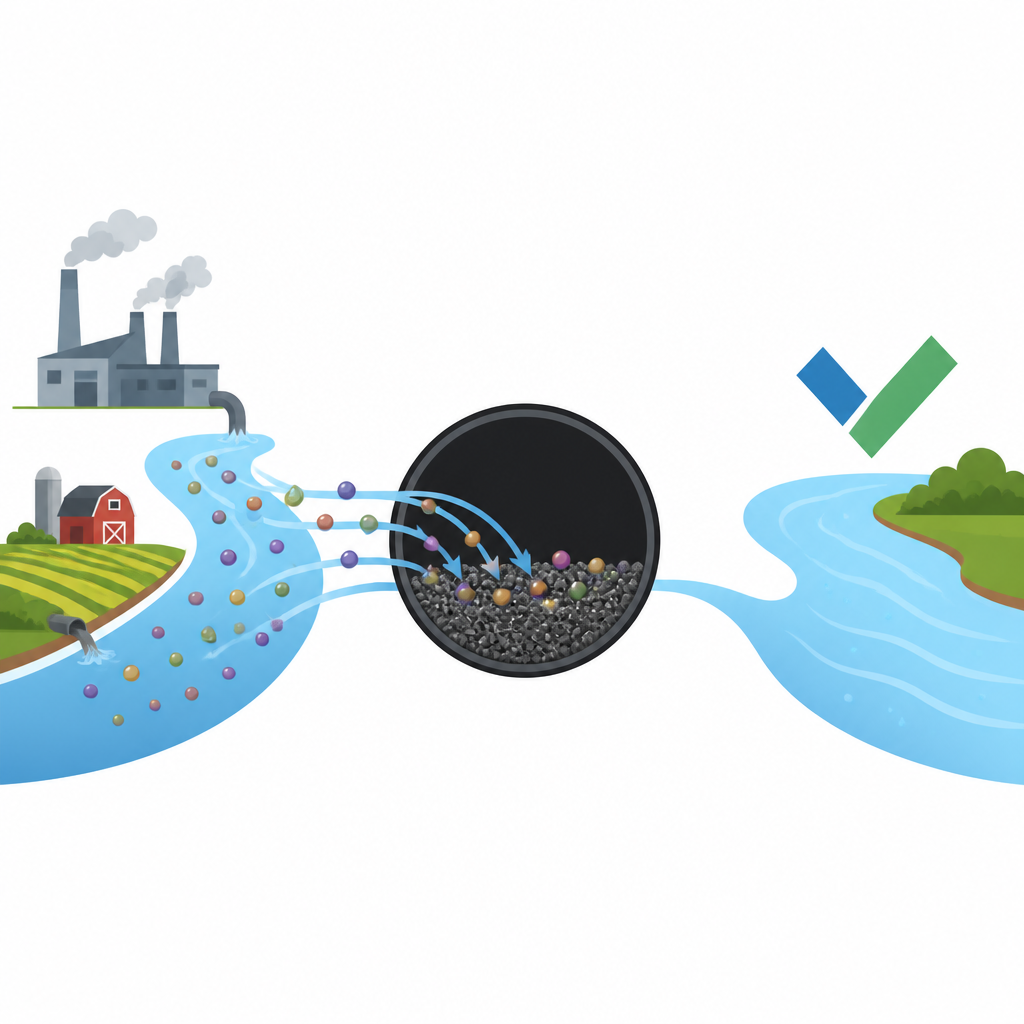
Lead and cadmium are invisible troublemakers in our rivers and drinking water. Even at tiny levels, they can damage the brain, kidneys, and bones, and they do not break down naturally. Today, checking water for these metals usually means sending samples to expensive laboratories. This study presents a simple, low-cost sensor that can spot vanishingly small amounts of lead and cadmium directly in water, opening the door to more routine and widespread safety checks.
Toxic metals hiding in plain sight
Modern industry, farming, and household waste all release heavy metals into the environment. Lead and cadmium can travel through water and soil into crops and the wider food chain, where they slowly build up in living organisms. Because safe limits in drinking water are extremely low, we need tools that can detect these metals at concentrations measured in parts per billion or less. Traditional methods such as advanced spectroscopy are highly accurate but demand costly instruments, trained staff, and lab-based testing, which makes frequent on-site monitoring difficult.
A new twist on a simple carbon sensor
The researchers turned to electrochemistry, which measures tiny electrical signals when substances interact with an electrode. They started with a basic carbon paste electrode, a soft mixture of graphite powder and wax that is easy to make and refresh. To boost its performance, they blended in specially prepared manganese–zinc–iron oxide nanoparticles, forming a rough, sponge-like surface full of tiny nooks and crannies. These particles were made by a straightforward chemical recipe and carefully checked with techniques that confirm their crystal structure, composition, and nano-sized features.
How the sensor catches hidden metals
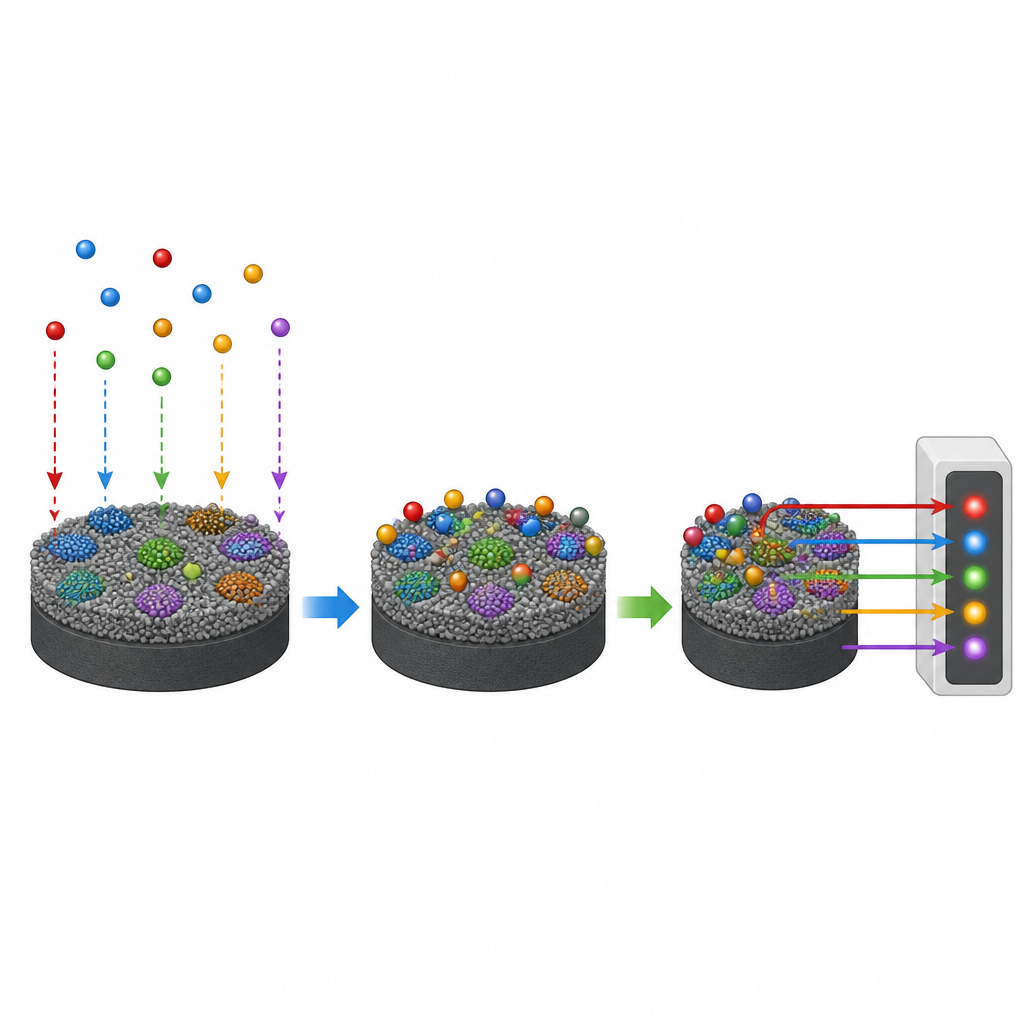
In use, the sensor is placed in slightly acidic water, and an electrical potential is applied to attract metal ions. Lead and cadmium in the water are pulled toward the electrode, where they stick to the nanoparticle-covered surface and are briefly converted to a metallic form. When the potential is swept back, these metals are stripped off again, creating distinct electrical peaks that reveal both their presence and amount. Compared with the unmodified carbon paste, the nanoparticle-enhanced version shows much sharper, stronger peaks and a larger active surface area, meaning more metal can be collected and more clearly measured.
Finding tiny amounts in real water
The team systematically tuned the conditions, such as solution acidity, the voltage used to collect the metals, and the collection time, to get the best signal. Under these optimized settings, the sensor could detect lead and cadmium at extremely low levels, far below typical safety limits and across a wide range of concentrations. It could measure both metals at the same time without their signals overlapping, and common ions present in natural waters had little effect on the readings. Tests on Nile River water and tap water, spiked with known amounts of lead and cadmium, showed that the sensor recovered values very close to the true ones, with good day-to-day consistency.
What this means for everyday water safety
This work shows that a simple carbon-based sensor, enhanced with carefully designed nanoparticles, can rival far more complex equipment in detecting trace lead and cadmium. The device is inexpensive to build, reusable, and stable over weeks of storage, making it a strong candidate for field testing rather than lab-only use. While it still relies on a small electronic reader, its low cost and high sensitivity suggest that frequent spot checks of rivers, reservoirs, and household taps could become more practical, helping communities catch dangerous metal pollution before it becomes a health crisis.
Citation: Khodari, A.A., Shamroukh, A.A., Tawfik, A.R. et al. Highly sensitive voltammetric determination of Pb²⁺ and Cd²⁺ ions using a carbon paste electrode modified with Mn₀.₅Zn₀.₅Fe₂O₄ spinel ferrite nanoparticles. Sci Rep 16, 15756 (2026). https://doi.org/10.1038/s41598-026-52676-4
Keywords: heavy metal detection, lead and cadmium, electrochemical sensor, water quality monitoring, nanoparticle electrode