Clear Sky Science · en
Innovative silver-salicylic acid nanoparticle coatings based on CMC and chitosan for mango (Mangifera indica L. cv. “Fajri Klan”) fruit preservation
Why keeping mangoes fresh matters
Mangoes are a favorite fruit around the world, but they spoil quickly once they leave the tree. Bruising, rot, and loss of flavor can happen in just days as the fruit breathes, softens, and becomes an easy target for microbes. This study looks at a new, food friendly way to keep mangoes firm, tasty, and safe for longer using ultra thin coatings that include tiny particles of silver paired with a common pain relief ingredient, salicylic acid.
A new protective jacket for fruit
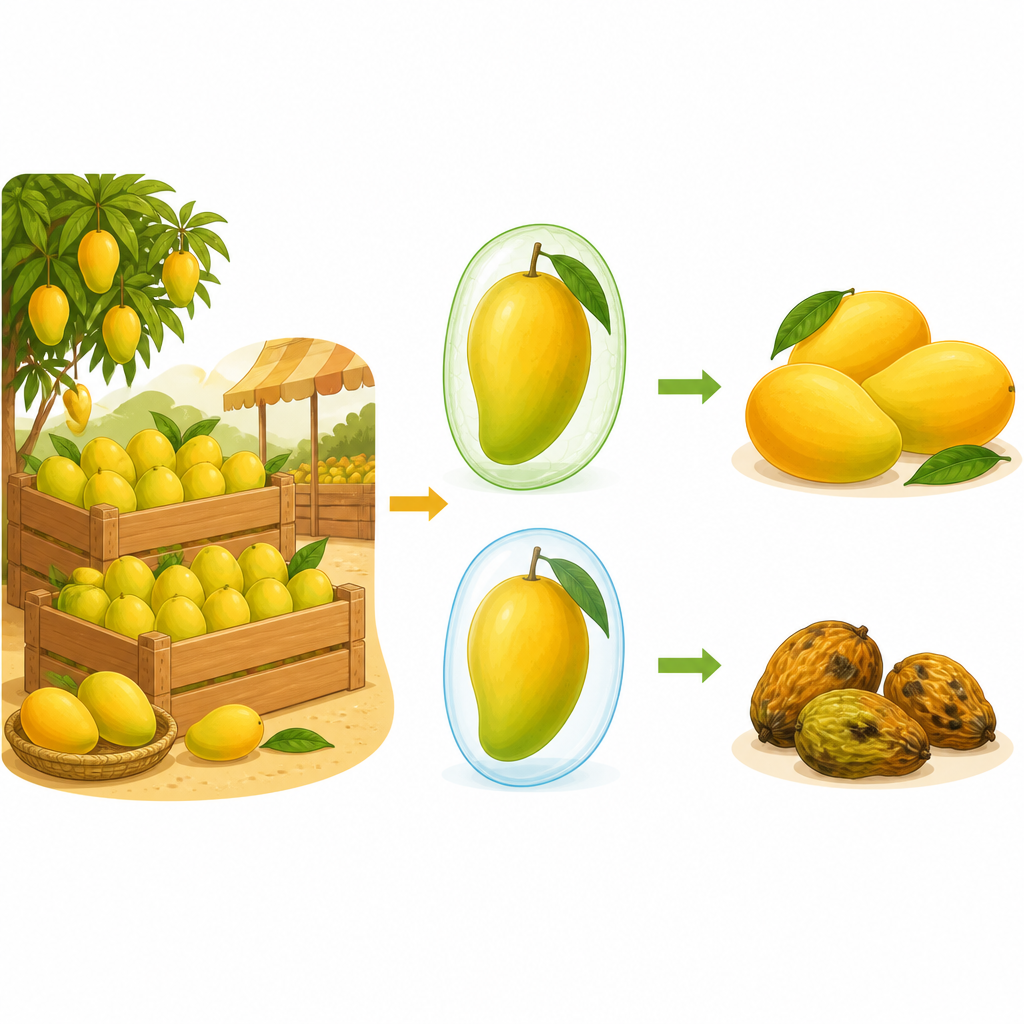
The researchers created very small silver particles linked with salicylic acid, then mixed them into two natural coating materials made from plant and shellfish sources. One coating was based on carboxymethyl cellulose, a cellulose derivative already used in foods, and the other on chitosan, a biopolymer known for its ability to block gases and fight microbes. When dissolved in water, these materials form clear films that can be used as edible "jackets" for fruit. Mangoes of the Fajri Klan variety were dipped in the silver based mixtures or left uncoated, then stored in cold rooms to mimic commercial handling.
How the tiny particles behave
Before using the coatings on fruit, the team carefully checked what they had made. Under high powered electron microscopes, the silver salicylic particles appeared as smooth, round dots only about 20 to 33 billionths of a meter wide, wrapped in a thin layer of salicylic acid. Measurements of their electrical charge showed a moderately negative surface, which helps the particles stay evenly dispersed instead of clumping. Other tests confirmed the presence of silver and the chemical groups from salicylic acid, showing that this common molecule both built and stabilized the particles in water.
Fighting harmful microbes
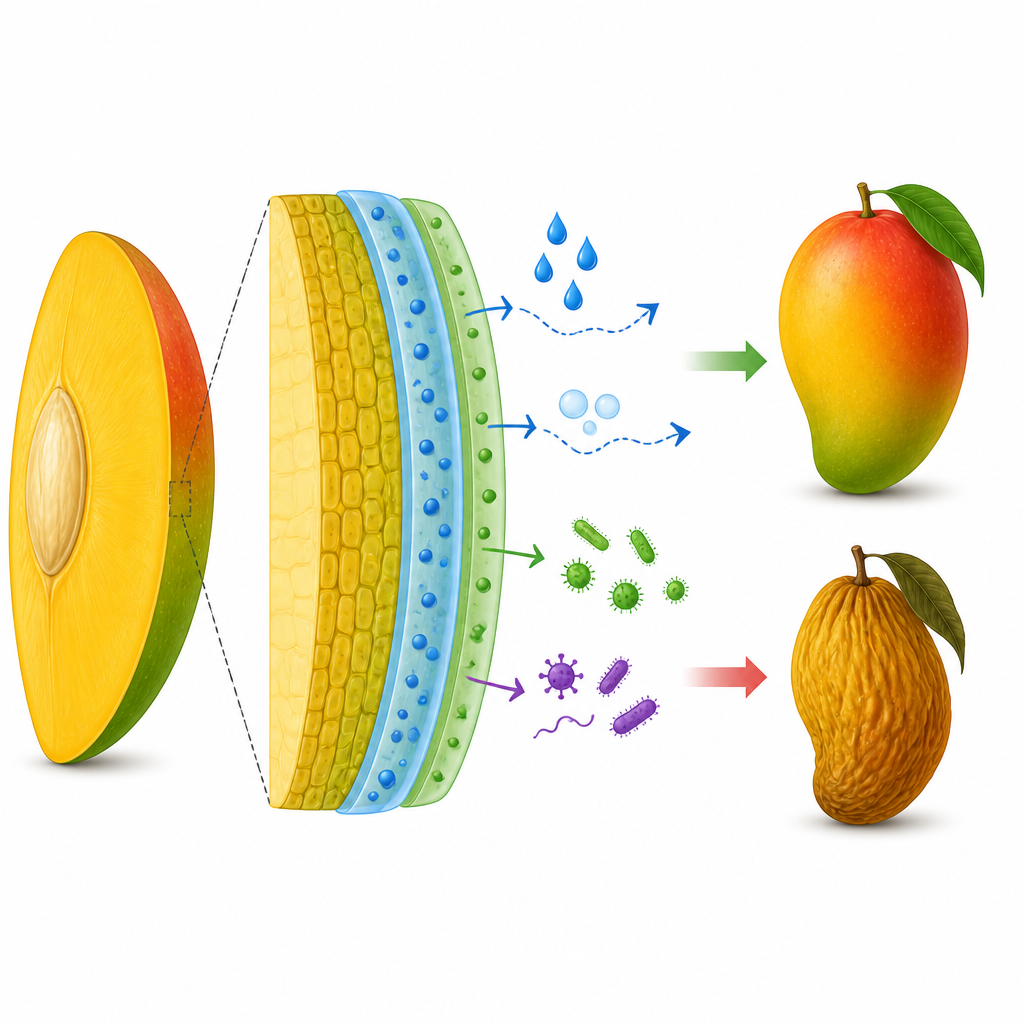
The coatings were then tested against two well known food borne bacteria, Escherichia coli and Staphylococcus aureus. All silver based treatments slowed bacterial growth, but the mixture that combined chitosan with the silver salicylic particles was the most effective, creating the largest clear zones where microbes could not grow. This suggests a team effort in which chitosan weakens bacterial cell surfaces and holds the particles in place, while silver ions and reactive molecules from the particles further damage the cells. The cellulose based coating also improved antibacterial activity compared with silver alone, likely because it helps keep the particles stable and well spread.
Slower ripening and less waste
When applied to mangoes stored at cool temperatures, both coated groups kept their quality better than uncoated fruit. Coated mangoes lost less water, breathed more slowly, and stayed firmer during four weeks of storage. Changes linked with ripening, such as the rise in sweetness, total sugars, and orange pigments, still happened but at a gentler pace in coated fruit. They also held on to more natural antioxidants and helpful plant compounds, especially when chitosan was used. As a result, decay was sharply reduced: the cellulose based coating cut visible rot to only a small fraction of that seen in the control fruit, and overall shelf life after cold storage stretched from four days in untreated mangoes to up to six days in coated ones. Testing of the fruit flesh showed no detectable silver residues, supporting the safety of the approach in this setting.
What this means for shoppers and growers
In plain terms, the study shows that dipping mangoes in thin, edible films that carry tiny silver salicylic particles can keep them fresher, firmer, and less prone to rot without leaving measurable silver behind. By gently slowing ripening and holding back decay causing microbes, these coatings give growers, shippers, and retailers a bit more time to move fruit from orchard to table. If adapted and scaled, similar coatings could help reduce food waste, preserve nutrition and flavor, and make it easier to deliver high quality mangoes to distant markets.
Citation: Hmmam, I., Abdallatif, A., Mamdouh, B.M. et al. Innovative silver-salicylic acid nanoparticle coatings based on CMC and chitosan for mango (Mangifera indica L. cv. “Fajri Klan”) fruit preservation. Sci Rep 16, 15480 (2026). https://doi.org/10.1038/s41598-026-52586-5
Keywords: mango preservation, edible coating, silver nanoparticles, cold storage, postharvest quality