Clear Sky Science · en
Integrating network pharmacology with ex-vivo analysis to assess the effect of IL-2 in halting breast cancer: involvement of Treg/CTLA-4/Blimp-1/caspase-3
Why this study matters to patients and families
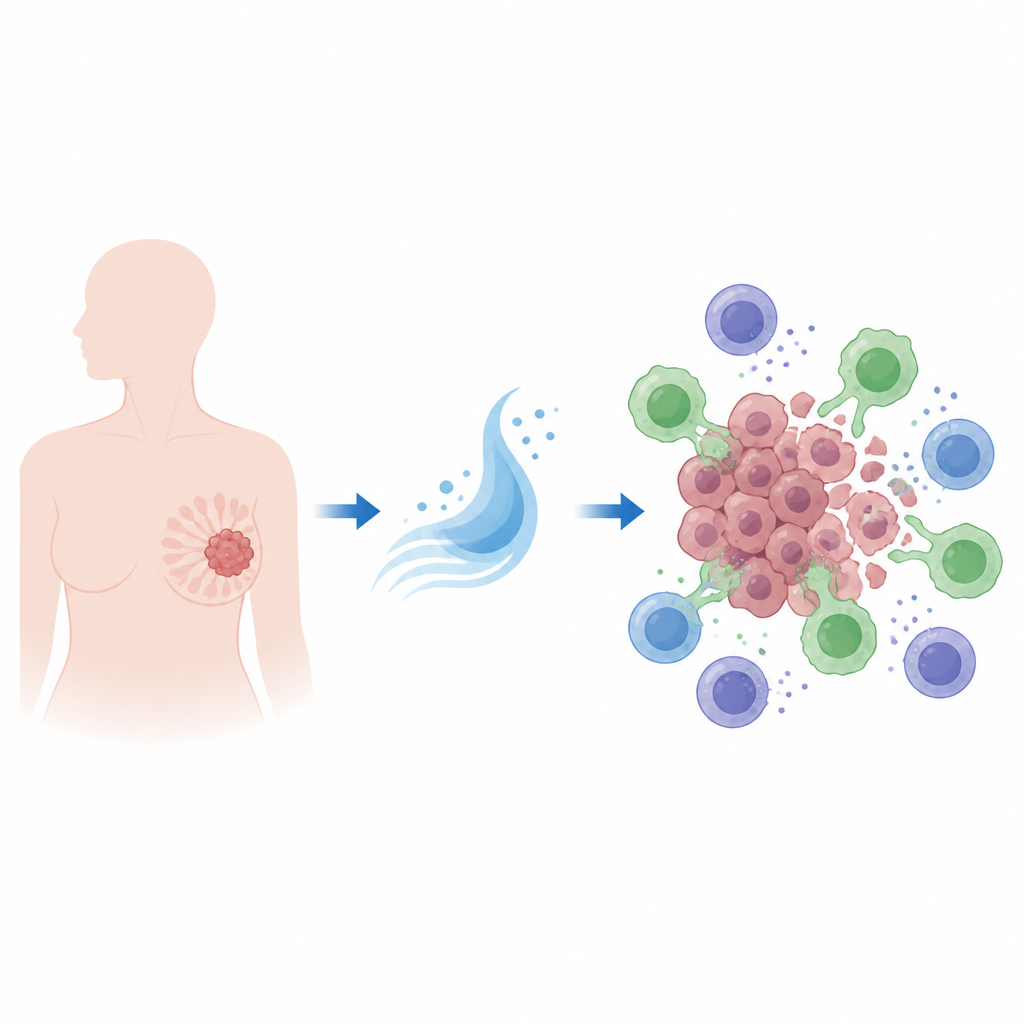
Breast cancer does not grow in isolation. It lives within a busy neighborhood of immune cells and support cells that can either help the body fight the tumor or, unfortunately, help the tumor hide. This study looks at whether a natural immune messenger called IL-2 can push that neighborhood toward fighting breast cancer instead of protecting it, using real tumor samples taken from Egyptian patients.
A closer look at the tumor neighborhood
Inside a breast tumor, cancer cells mingle with many noncancerous cells, blood vessels, and immune cells. Some of these immune cells are helpful attackers that can kill tumor cells. Others, called regulatory T cells, act like brakes on the immune system. In cancer, these brake cells often become too powerful and help the tumor escape immune attack. They do this by using surface molecules that turn down other immune cells and by blocking signals that would normally keep cancer in check.
The double nature of the IL-2 signal
IL-2 is a small protein the immune system uses to talk to its cells. It can encourage the growth of both attacking immune cells and the brake-like regulatory T cells. This mixed reputation has made doctors cautious about using IL-2 in solid tumors such as breast cancer. In this work, the researchers first used computer-based network tools to map how IL-2 might interact with genes involved in breast cancer. They found 35 shared targets, including key players linked to immune brakes and cell death, suggesting that IL-2 could, in principle, influence several important pathways at once.
Testing IL-2 directly on patient tumor tissue
The team then moved from computer predictions to real tissue. They collected tumor pieces and nearby noncancerous breast tissue from 20 women undergoing mastectomy. In the lab, they cultured paired samples with and without a defined dose of laboratory-made IL-2. They measured markers of regulatory T cells, such as CD25 and FOXP3, markers of immune braking, such as CTLA-4, and a protein called caspase-3 that signals cell suicide in tumor cells. They also examined a factor called Blimp-1, which is tied to the ability of T cells to become effective killers.
How IL-2 reshaped immune behavior in tumors
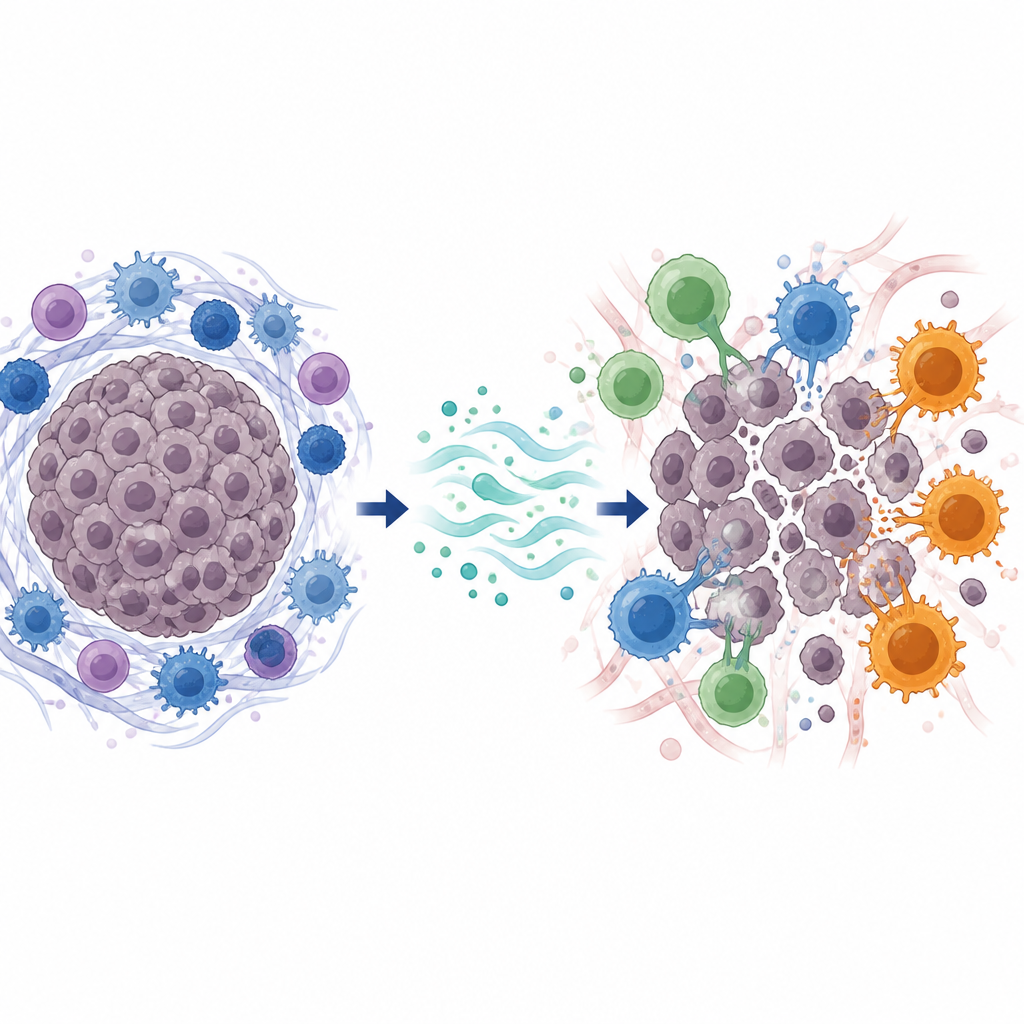
In untreated tumor samples, regulatory T cells and CTLA-4 were higher than in normal tissue, reflecting a suppressive environment. When IL-2 was added to tumor cultures, the picture shifted. Markers of regulatory T cells fell, CTLA-4 levels dropped, and Blimp-1 levels rose, changes that point toward stronger activation of cancer-fighting T cells. At the same time, caspase-3 staining increased in tumor tissue, indicating more cancer cell death. These effects were more clearly linked to earlier stage and smaller tumors, where immune cells may still be more responsive.
What this could mean for future treatment
To a lay reader, the take-home message is that, at least in this ex-vivo setting, IL-2 nudged the tumor neighborhood away from shielding the cancer and toward attacking it. By dialing down immune brakes, boosting activators like Blimp-1, and triggering cell death in breast cancer cells, IL-2 appeared to help restore a more protective immune response, especially in early-stage disease. While this is not yet a treatment guideline, the findings support further work on carefully designed IL-2 based strategies as part of combination immunotherapy for breast cancer.
Citation: Shousha, S.A., Ibrahim, S.S.A., Kadry, H. et al. Integrating network pharmacology with ex-vivo analysis to assess the effect of IL-2 in halting breast cancer: involvement of Treg/CTLA-4/Blimp-1/caspase-3. Sci Rep 16, 16296 (2026). https://doi.org/10.1038/s41598-026-52551-2
Keywords: breast cancer, tumor microenvironment, interleukin-2, regulatory T cells, cancer immunotherapy