Clear Sky Science · en
Phytogenic molybdenum nanoparticles using Pterocarpus santalinus: characterisation, antioxidant, antimicrobial, seed priming and nitrogen fixation activities
Turning plant power into tiny helpers
Feeding a growing world without harming the environment is a major challenge. This study explores how a medicinal tree, red sandalwood, can help create tiny particles that both protect crops from germs and help them use nutrients more efficiently. These plant-made particles are small enough to interact closely with seeds, roots, and microbes in the soil, offering a potential new tool for sustainable farming if they can be shown to be safe in the long run.
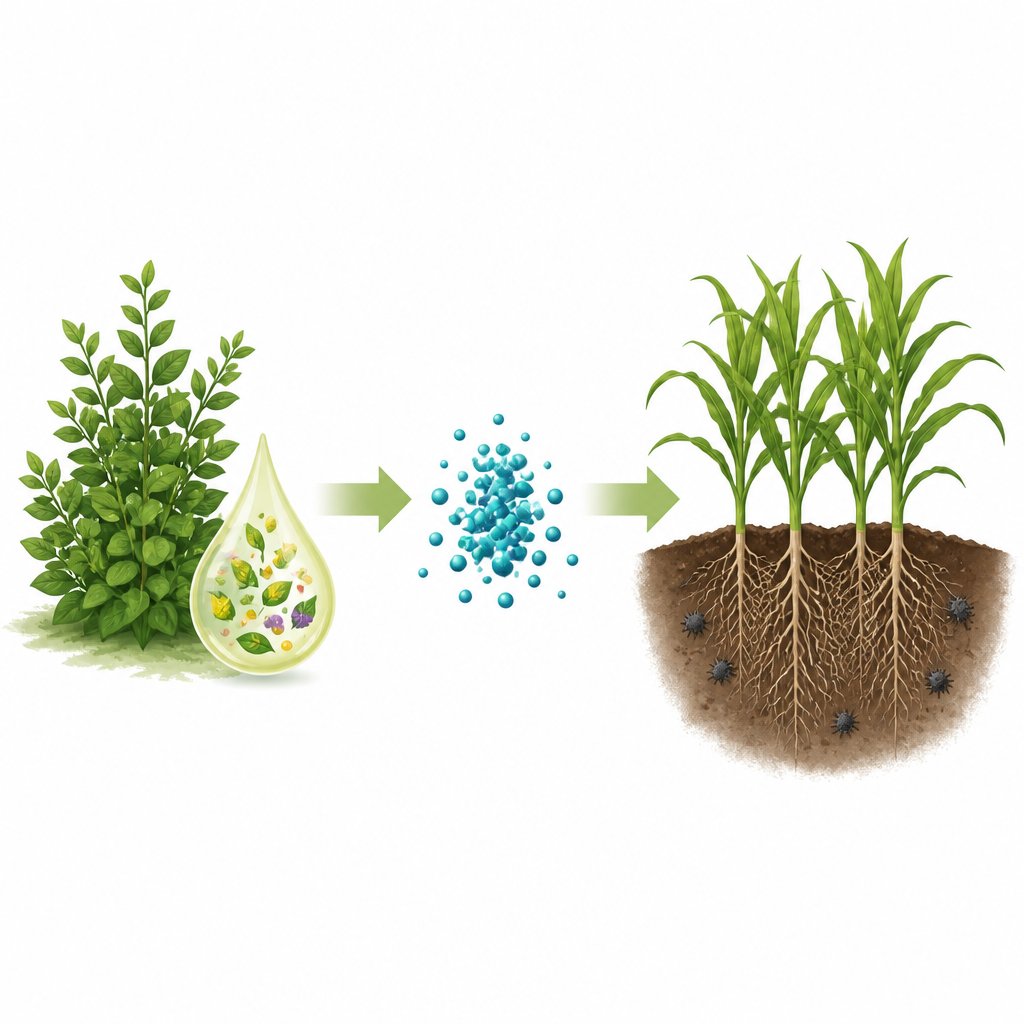
How the special tree makes tiny particles
The researchers started with leaves of Pterocarpus santalinus, also known as red sandalwood, which is rich in natural chemicals with antioxidant and antimicrobial properties. They boiled the leaves in water to make an extract and then mixed this with a molybdenum salt solution. The plant compounds acted as natural “kitchen ingredients” that turned the dissolved molybdenum into solid molybdenum oxide nanoparticles and kept them from clumping. Tests of light absorption, crystal structure, surface chemistry, and particle size showed that the resulting particles were pure, highly ordered, and stably coated with plant molecules, with cores only a few dozen billionths of a meter across.
Tiny particles that fight germs and mop up radicals
The team then asked whether these particles could act as tiny shields against damage. In a chemical test that measures how well a substance can neutralize harmful reactive molecules, the nanoparticles almost matched the performance of vitamin C and clearly outperformed the plant extract alone. When tested against disease-causing bacteria and fungi that attack plants, the particles created clear kill zones on culture plates, and their effects grew stronger as the dose increased. They worked well against several crop pathogens and even matched or exceeded standard drugs under the test conditions, suggesting that plant-made molybdenum particles could serve as part of future protective treatments for seeds and seedlings.
Helping seeds wake up and get a strong start
Because crop performance often depends on the first days after sowing, the researchers soaked groundnut (peanut) seeds in different doses of the nanoparticles, a process known as seed priming. Compared with untreated seeds, primed seeds sprouted faster and more completely, with relative germination rising to more than twice the control. Young plants from treated seeds had longer roots and shoots and higher measures of seedling vigor. These effects increased with nanoparticle dose within the tested range, and the measurements were consistent across repeated trials. The results suggest that small amounts of these particles can nudge early growth processes, possibly by improving water uptake and activating metabolism at just the right moment.
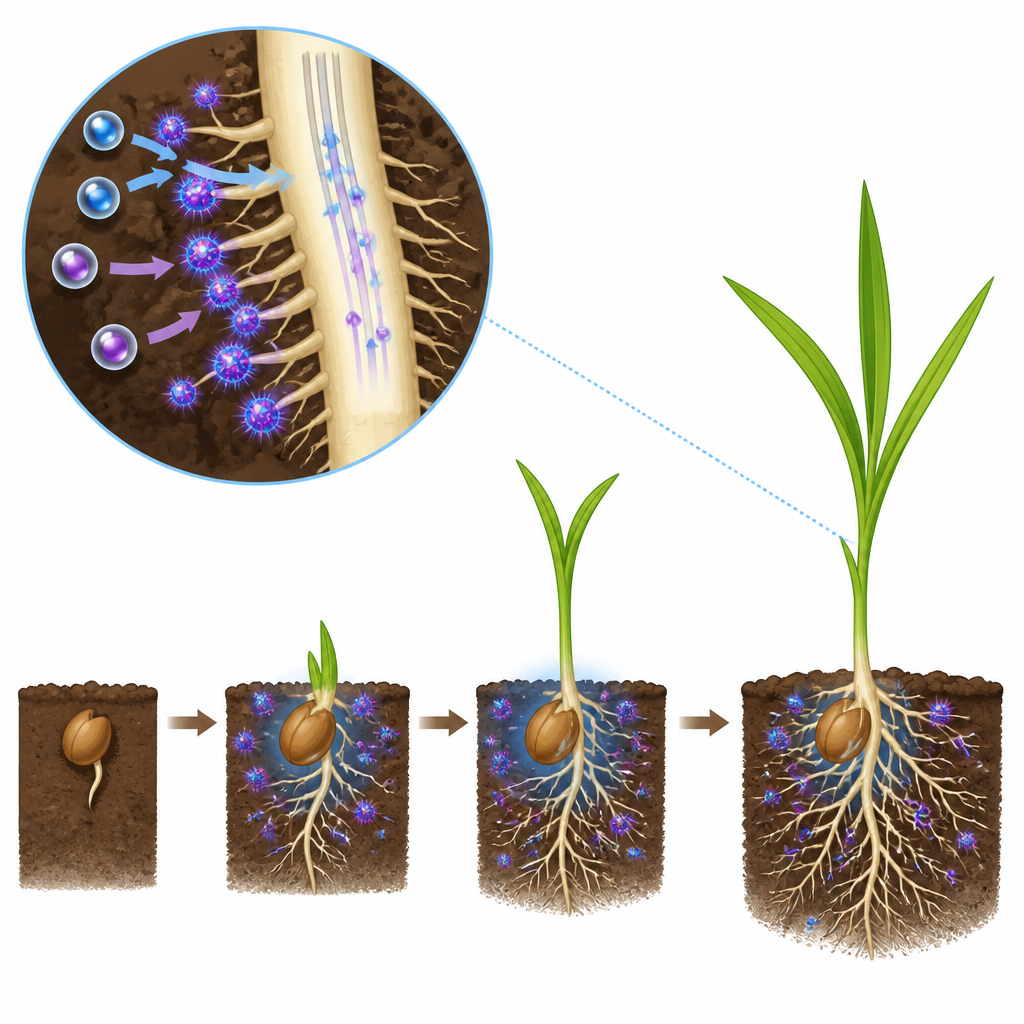
Boosting plant use of nitrogen and growth
The study also examined how the nanoparticles affect a key plant nutrient, nitrogen. In potted groundnut plants, those given nanoparticle treatments showed higher activity of nitrate reductase, an enzyme that converts absorbed nitrate into useful forms, along with lower leftover nitrate in tissues. At the best-performing dose, enzyme activity rose by about two thirds compared with untreated plants. These changes went hand in hand with heavier plants, taller stems, and much higher chlorophyll levels in the leaves, meaning greener, more light-harvesting foliage. Importantly, when the same amount of molybdenum was supplied in a conventional salt form, the benefits were smaller, suggesting that the nanosized form made the nutrient more available and more effective.
Promise for greener farming, with caution
Overall, the work shows that red sandalwood leaves can be used to create molybdenum oxide nanoparticles that combine several useful traits: they quench damaging molecules, suppress harmful microbes, help seeds germinate strongly, and improve a crop plant’s handling of nitrogen and growth under controlled conditions. For non-specialists, this means we may be able to use plant-based nanotechnology to get more food from the same land while relying less on synthetic chemicals. However, the authors stress that these materials must be carefully tested for long-term safety, buildup in soils, and effects on beneficial organisms before they can be widely used on farms.
Citation: Shaik, B., Nakka, S., Kumari Anday, M. et al. Phytogenic molybdenum nanoparticles using Pterocarpus santalinus: characterisation, antioxidant, antimicrobial, seed priming and nitrogen fixation activities. Sci Rep 16, 15477 (2026). https://doi.org/10.1038/s41598-026-52544-1
Keywords: green nanotechnology, molybdenum nanoparticles, seed priming, nitrogen fixation, sustainable agriculture