Clear Sky Science · en
The Corvis ST analysis of underaged versus adults’ healthy eyes with comparable tomography detects softer corneas in children and adolescents as opposed to adults
Why eye softness matters at different ages
Our eyes are often compared to camera lenses, but they are also tiny windows made of living tissue that can flex and bend. Eye surgeons and eye doctors need to know how firm or soft this clear front window, the cornea, is at different ages, because it affects how diseases are detected and how safe certain treatments are. This study asked a simple question with important consequences: are children’s and teenagers’ corneas actually softer than those of adults, even when they look the same on routine scans?
Looking deeper than standard eye scans
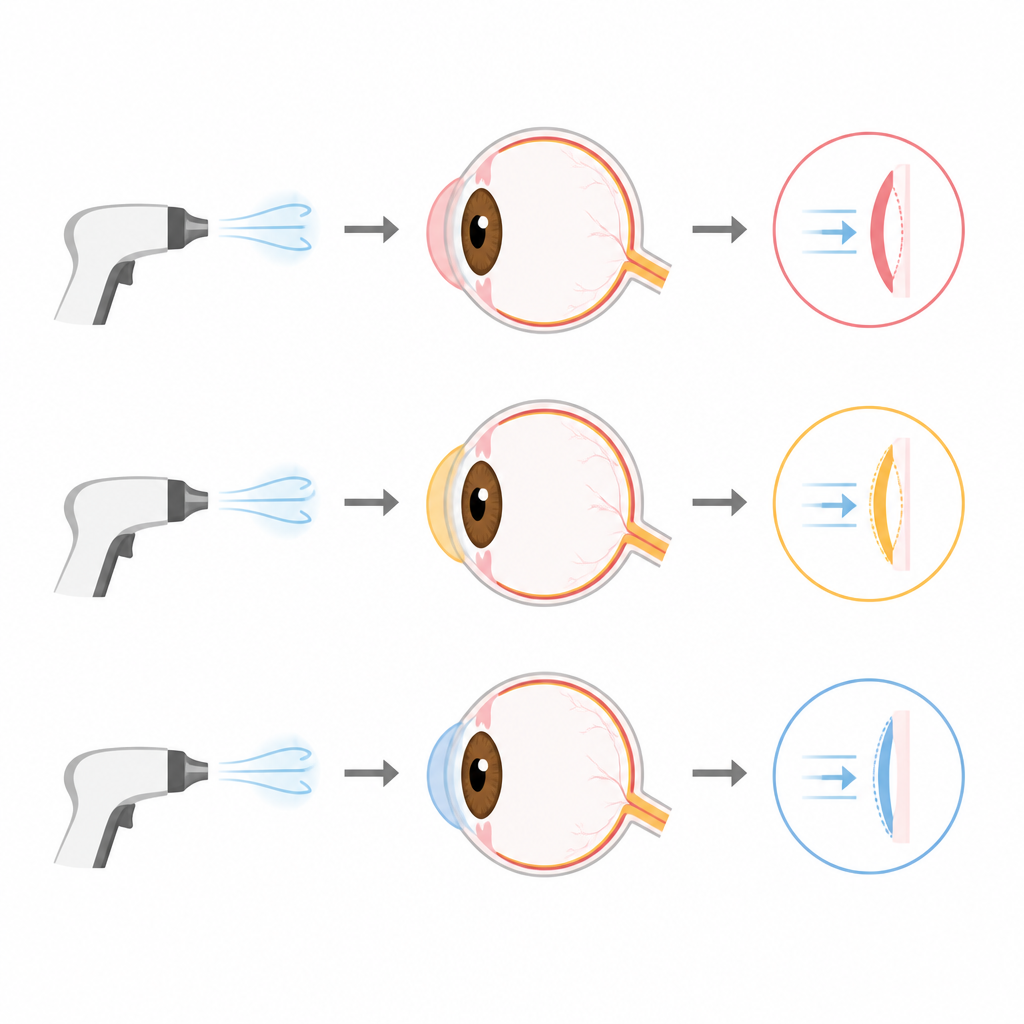
Standard hospital devices can map the curve and thickness of the cornea, much like a topographic map of a landscape. Earlier research showed that these maps often look normal even in people whose corneas are starting to weaken, which can lead to bulging disorders such as keratoconus. To go beyond shape alone, the team used a device that directs a quick puff of air onto the eye and films how the cornea bends and springs back. From the motion, the machine calculates several numbers that together describe how stiff or soft the tissue is and also estimates the pressure inside the eye.
Comparing children, teens and adults
The researchers examined one eye each from 250 children aged 3 to 10, 350 adolescents aged 11 to 20 and 100 adults over 21, all of European background and with healthy vision. First they confirmed that the three groups had nearly identical corneal shape and thickness, as well as similar spectacle strength. This “level playing field” meant that any differences found with the air puff test would mainly reflect true changes in tissue behavior with age, not obvious anatomical differences.
What the air puff revealed about eye softness
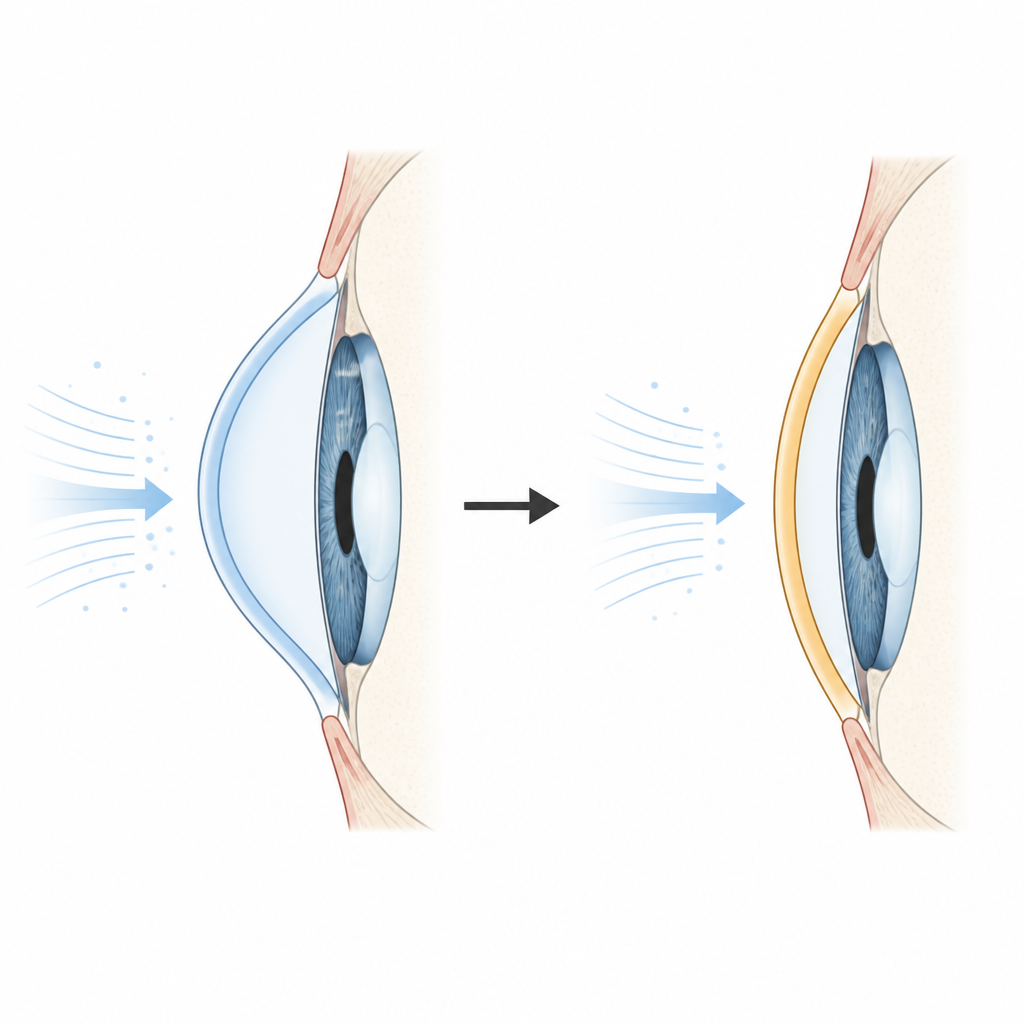
When the air puff pushed on the cornea, some response measures were the same in all age groups, but others changed in a clear pattern. A key stiffness measure rose from children to adults, indicating that the cornea resists bending more as people get older. A combined score that clinics already use to flag possible early corneal disease was, on average, higher in children and teenagers than in adults, even though all eyes were healthy. The index that summarizes overall tissue strength also increased with age. At the same time, estimates of eye pressure were slightly higher in younger participants, which fits earlier work suggesting that measured eye pressure tends to fall with age.
Small differences that still matter
The age-related changes were modest, and many individual values overlapped between groups, but they were consistent enough to be statistically meaningful. The study also checked for differences between boys and girls within each age band. Apart from one thickness-related measure and slightly higher pressure readings in young girls, most biomechanical readings were similar between sexes. This suggests that, at least in healthy young people and adults with similar vision, age has a stronger effect on corneal behavior than gender does.
What this means for eye care
For patients and families, the key message is that a child’s cornea is not just a smaller version of an adult’s. Even when scans show the same shape and thickness, the living tissue is generally softer in children and teenagers than in adults. Because modern tools for finding early corneal disease and planning laser vision correction rely on how the cornea bends under stress, doctors may need to keep age in mind when interpreting these test results. The work offers useful reference data for healthy young eyes and raises the next question: do similar age-related patterns appear in eyes that already have corneal disease, which could influence how risk and disease stage are judged in younger patients?
Citation: Flockerzi, E., Berger, T., Abu Dail, Y. et al. The Corvis ST analysis of underaged versus adults’ healthy eyes with comparable tomography detects softer corneas in children and adolescents as opposed to adults. Sci Rep 16, 15344 (2026). https://doi.org/10.1038/s41598-026-52447-1
Keywords: corneal biomechanics, pediatric eye, Corvis ST, keratoconus screening, intraocular pressure