Clear Sky Science · en
Studying the expression levels of LncRNA-MEG3 and miR-147b in the serum of psoriasis patients with and without dyslipidemia
Why this skin and blood story matters
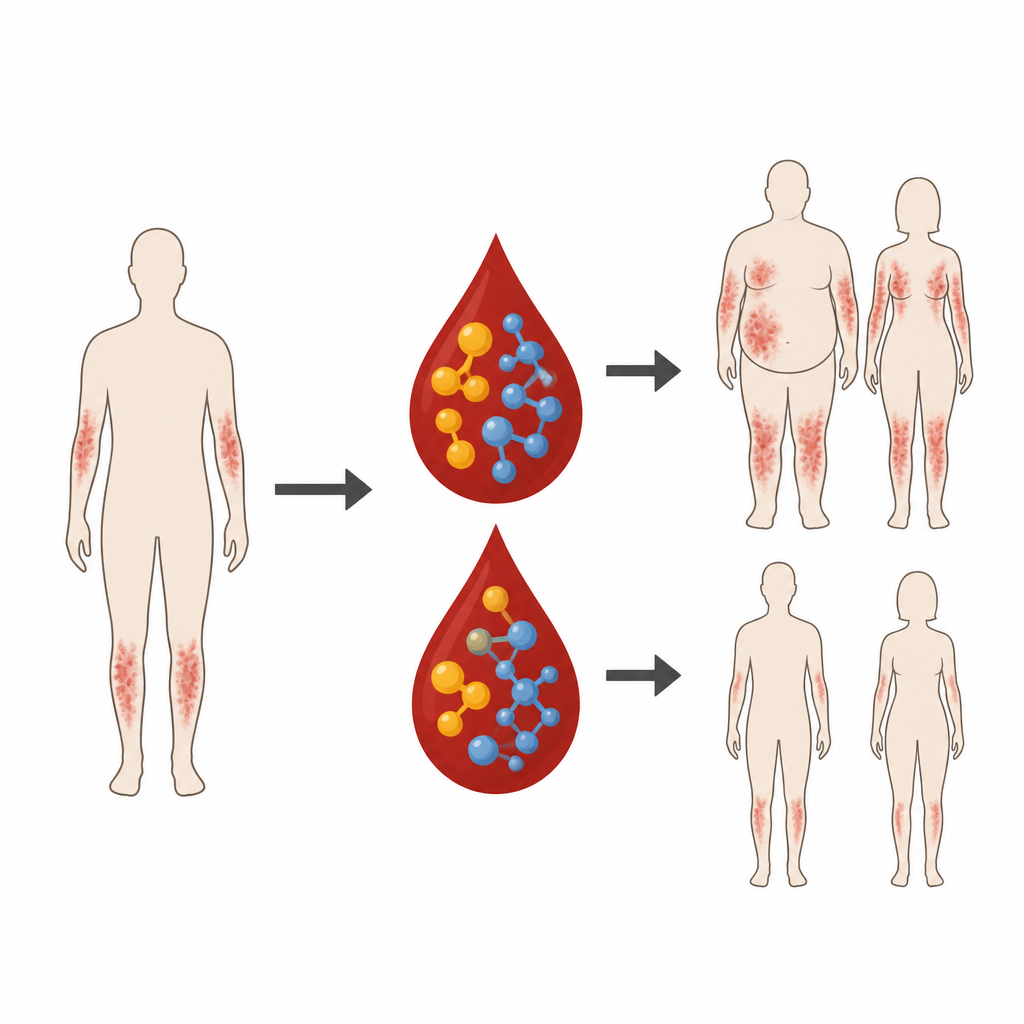
Psoriasis is known for its red, scaly skin patches, but it also links closely to weight gain and unhealthy blood fats. This study looks inside the blood of people with psoriasis to see whether tiny genetic signals, carried in the blood, can help flag who has a heavier metabolic burden, such as abnormal cholesterol levels. If such signals can be tracked in a simple blood test, they might one day help doctors understand both skin flare ups and hidden heart risk at the same time.
Looking at skin disease and blood fats together
The researchers worked with 132 adults divided into four equal groups: people with psoriasis with and without abnormal blood fats, and healthy people with and without the same problem. Everyone had blood tests for sugar and different types of cholesterol, along with careful checks of body weight, waist size, and blood pressure. For those with psoriasis, doctors also recorded how much of the skin was involved, how severe the rash was, and how much it affected daily life and wellbeing.
Two quiet messengers in the blood
The team focused on two non coding genetic messengers that float freely in the blood, called MEG3 and miR 147b. These molecules do not build proteins themselves, but they help control how cells grow and respond to irritation. Earlier work suggested that MEG3 may help calm inflammation, while miR 147b is linked to immune activation. By measuring how much of each messenger was present in the blood, the researchers asked whether their levels were different in psoriasis, and whether they changed further in people who also had unhealthy cholesterol levels.
What they found in patients and controls
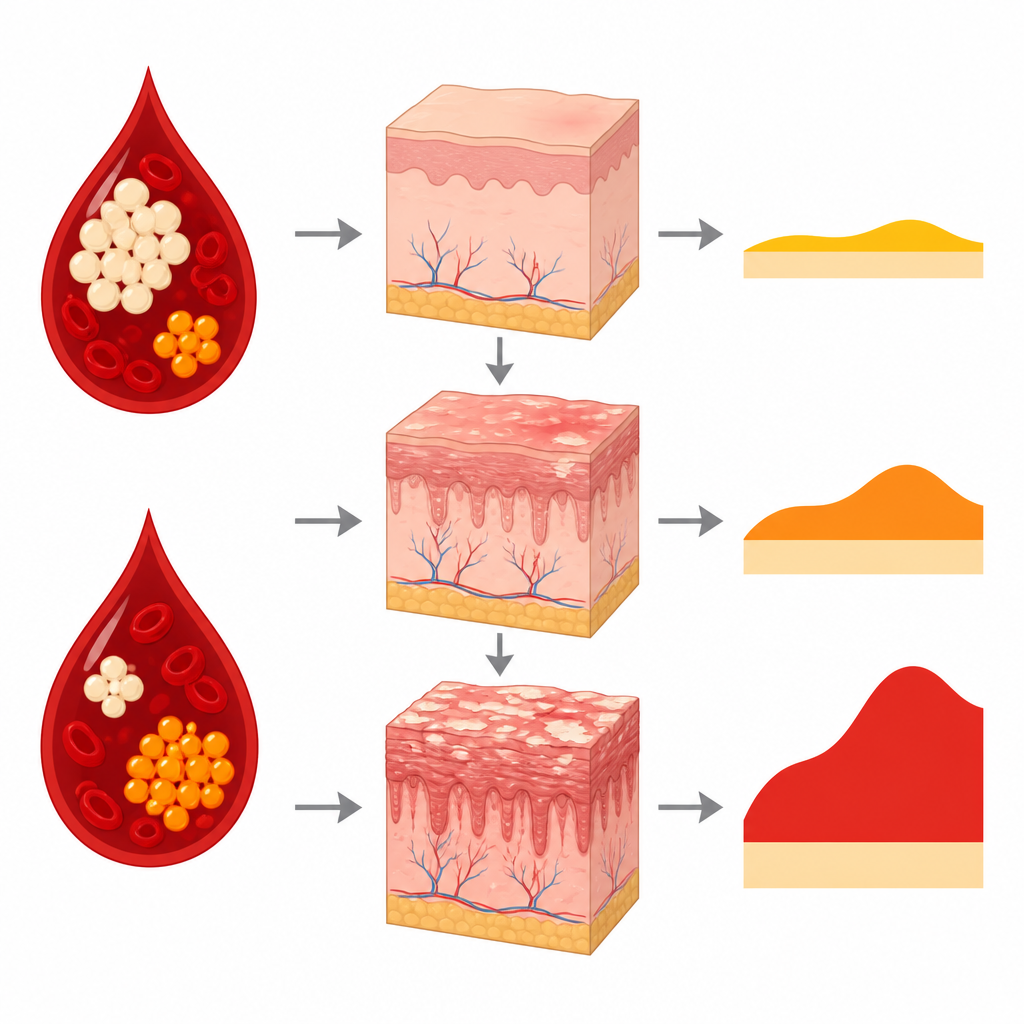
Compared with healthy volunteers, people with psoriasis tended to have a higher body mass index and higher levels of harmful low density lipoprotein in their blood. In these patients, MEG3 levels were clearly lower, while miR 147b levels were much higher than in controls. When the team split the psoriasis group by blood fat status, they saw that both messengers shifted even more in those with dyslipidemia. In general, lower MEG3 and higher miR 147b tracked with worse psoriasis scores, larger affected skin areas, and poorer quality of life. MEG3 was also linked to a more favorable lipid profile, while miR 147b rose alongside higher low density lipoprotein and fell with protective high density lipoprotein.
Links to severity and life impact
Patients were grouped by how much skin was involved, how intense their psoriasis score was, and how strongly the disease affected their daily activities and mood. Across these groupings, MEG3 tended to be higher in milder cases and lower in those with more widespread or distressing disease. miR 147b usually showed the opposite pattern, especially in patients who also had abnormal blood fats. These trends held even after accounting for weight, diabetes, and high blood pressure in a statistical model, suggesting that the two blood messengers carry information that is not simply a side effect of other illnesses.
What this means for patients
To a lay reader, the key message is that psoriasis is not just a skin deep condition, and that subtle signals in the bloodstream may reflect both the state of the skin and the health of blood fats that matter for the heart. In this study, a combination of low MEG3 and high miR 147b in blood samples was strongly associated with having psoriasis and with also having dyslipidemia. While more research is needed before these tests can guide treatment, they point toward a future in which a simple blood sample might help identify psoriasis patients who carry extra metabolic risk and may need closer follow up.
Citation: Kamel, M., Marzouk, R.E., Shaker, O.G. et al. Studying the expression levels of LncRNA-MEG3 and miR-147b in the serum of psoriasis patients with and without dyslipidemia. Sci Rep 16, 15509 (2026). https://doi.org/10.1038/s41598-026-52391-0
Keywords: psoriasis, dyslipidemia, non-coding RNA, biomarkers, cholesterol