Clear Sky Science · en
Valorization of fruit pomaces for glycosidic enzymes production via solid state fermentation
Turning Fruit Waste into Useful Tools
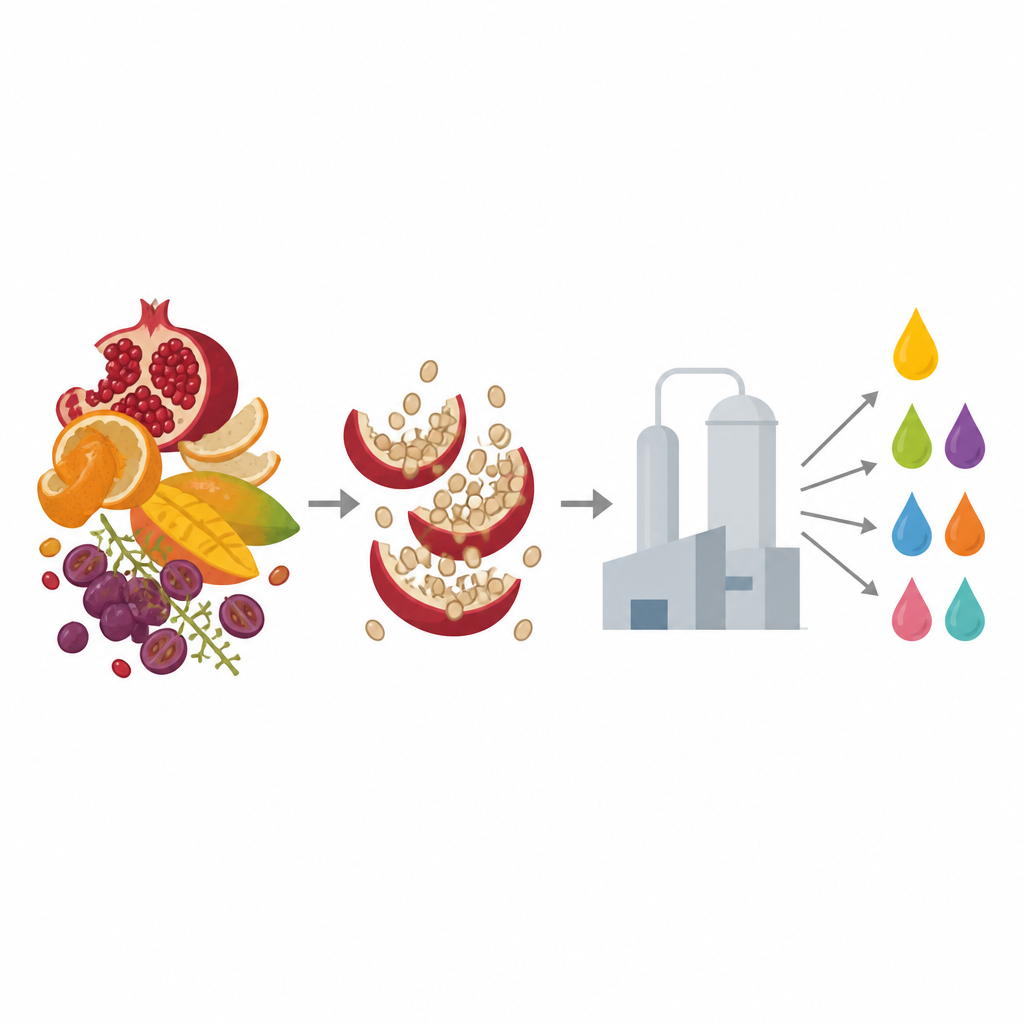
Every day, juice shops and food factories discard mountains of fruit peels and pulp that usually end up in landfills. This study explores a cleaner path: using those leftovers as food for microbes that make helpful enzymes used in detergents, textiles, food processing, and other industries. By finding a simple way to turn waste into valuable products, the work fits neatly into ideas of recycling, circular economy, and cutting pollution.
From Peel Piles to Microbial Factories
The researchers focused on “pomace,” the peels and pulpy solids left over after squeezing juice from pomegranate, mango, orange, and grapes. These colorful scraps are rich in carbohydrates, fiber, and minerals, which can nourish microbes just as well as costly laboratory media. The team tested ten bacterial strains and four yeast strains to see which combinations of microbe and fruit pomace could best produce three important enzymes that break down plant sugars. This first step showed that not all fruit wastes or microbes are equal when it comes to turning trash into useful products.
A Star Partnership: Pomegranate and Yeast
Among all the tested pairs, one stood out. A yeast called Candida guilliermondii grew especially well on pomegranate pomace and produced remarkably high amounts of amylase, an enzyme that cuts long starch chains into smaller sugar units. In unfermented pomace, amylase activity was essentially absent, but when this yeast was added, the pomegranate waste became a tiny enzyme factory. Other pomaces such as mango, orange, and grape supported enzyme production too, but none matched the amylase levels reached with pomegranate, likely because of its favorable balance of carbon and nitrogen and its rich mix of natural plant compounds.
Fine-Tuning the Brewing Conditions
To get the most out of this yeast–pomegranate system, the scientists used a structured statistical approach to tune the fermentation conditions. They systematically varied the acidity (pH), the amount of yeast added, the temperature, and how long the mixture was incubated. Computer-guided analysis helped map how these factors interacted rather than testing them one by one. The sweet spot turned out to be mildly acidic conditions, a moderate yeast dose, a temperature just above typical room temperature, and a short, single-day fermentation. Under those settings, the amylase output reached even higher levels, and experiments closely matched the model’s predictions.
Less Additive, More Natural Power
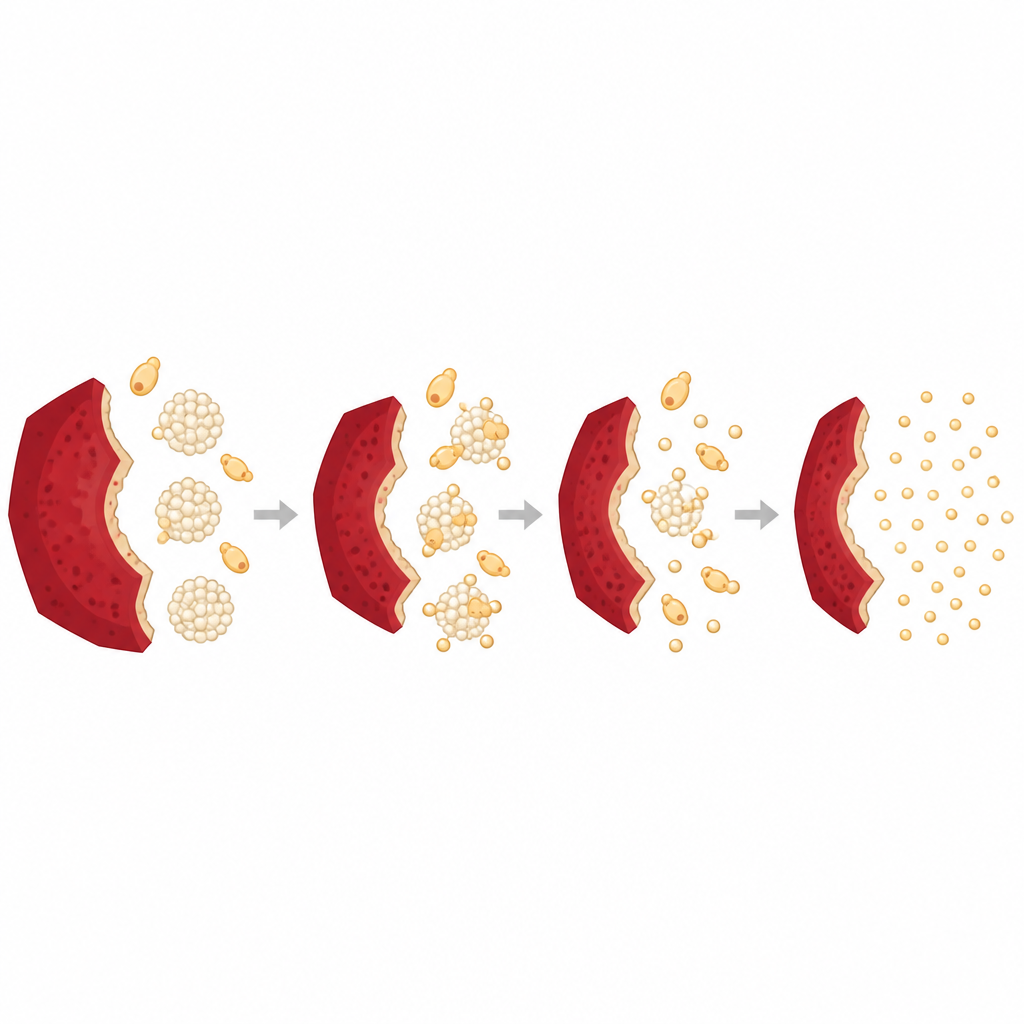
Next, the team asked whether boosting the pomace with extra sugars, proteins, amino acids, or metal salts would push production even higher. Surprisingly, nearly all of these additives made things worse. Simple sugars appeared to switch off the yeast’s need to make amylase, and extra nitrogen or amino acids upset the natural nutrient balance. Added metal salts often stressed the cells instead of helping them. These results suggest that pomegranate pomace already contains the right mix of nutrients, and that “improving” it with extra ingredients can actually hold the process back.
Simple Waste, Valuable Output
In clear terms, this work shows that what we often call fruit waste can serve as a ready-made, low-cost base for making useful industrial enzymes. A specific yeast growing on pomegranate pomace produced large amounts of amylase without needing expensive supplements or complex processing steps. For a layperson, the takeaway is straightforward: instead of paying to dispose of heaps of peels, we can feed them to carefully chosen microbes and harvest valuable products. Such approaches could help industries lower costs, cut waste, and shrink their environmental footprint all at once.
Citation: Hafez, Z.H., Mahmoud, A.E., Mahmoud, H.A. et al. Valorization of fruit pomaces for glycosidic enzymes production via solid state fermentation. Sci Rep 16, 15507 (2026). https://doi.org/10.1038/s41598-026-52343-8
Keywords: fruit pomace, amylase production, solid state fermentation, pomegranate peel, microbial enzymes