Clear Sky Science · en
Regulatory impact of intermittent fasting on autophagy in high fat diet induced structural and cognitive brain deteriorations in rats
Why this study matters for everyday eating
Many people worry that a rich, fatty diet might do more than just add inches to the waistline; it could also harm the brain. This study used rats to ask a question with clear relevance to human life: can intermittent fasting, a popular eating pattern, help protect memory and mood when the diet is high in fat? By looking not only at behavior but also at brain chemistry and cell health, the researchers offer a window into how timing of meals may influence how the brain ages and copes with obesity.
What the researchers set out to test
The team focused on rats made obese with a long term high fat diet and compared them with lean rats on normal chow. Some animals in each category followed an intermittent fasting schedule, eating on four days each week and fasting for 24 hours on the other three days. The scientists evaluated social behavior, signs of low mood, and memory with standard maze and swim tests. They also examined blood and brain tissue for markers of inflammation, oxidative stress, and a self cleaning process in cells called autophagy, which helps clear damaged components. Finally, they looked at the structure of brain regions involved in thinking and emotion, especially the cerebral cortex and hippocampus.
How a fatty diet affected the brain
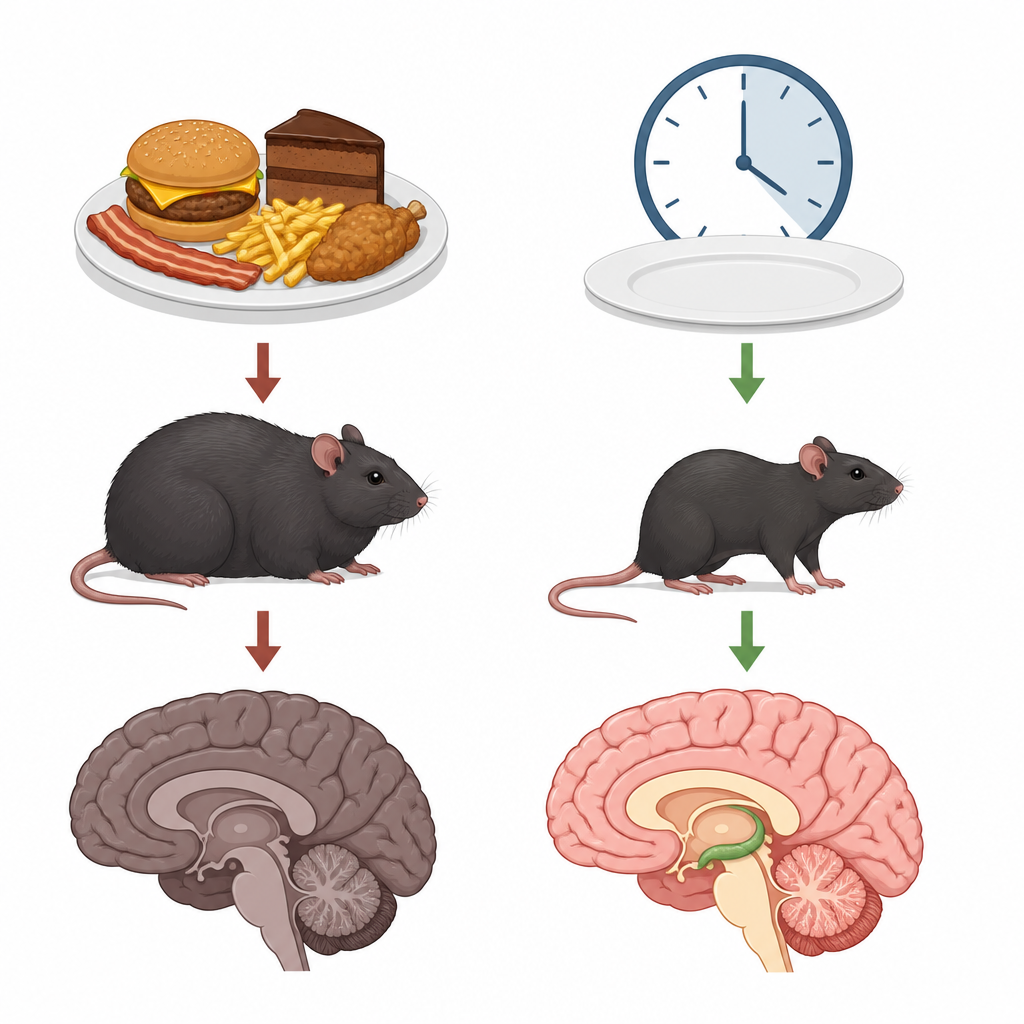
Rats fed a high fat diet without fasting gained more weight and showed clear problems in behavior. They spent less time interacting with other rats, showed more immobility in the swim test, and made fewer correct choices in the T maze, pointing to reduced social motivation, more depressive like behavior, and weaker working memory. In their blood and brain, levels of inflammatory molecules such as TNF alpha and IL 1 beta rose, while a protective growth factor called BDNF, important for forming and maintaining connections between nerve cells, fell. Brain tissue revealed more oxidative stress and striking microscopic damage, including shrunken, dying neurons and congested blood vessels in the cortex and hippocampus.
How intermittent fasting changed the picture
When obese rats followed the intermittent fasting schedule, many of these harmful changes were eased. Although they remained heavier than lean rats, their social behavior and maze performance improved, and signs of low mood were reduced. Inflammation in blood and brain dropped, oxidative stress markers declined, and BDNF in the brain rose back toward normal levels. Under the microscope, their cortex and hippocampus showed fewer dying neurons and less structural disruption than in obese animals that ate freely, suggesting that fasting helped preserve brain tissue despite the underlying high fat diet.
What was happening inside brain cells
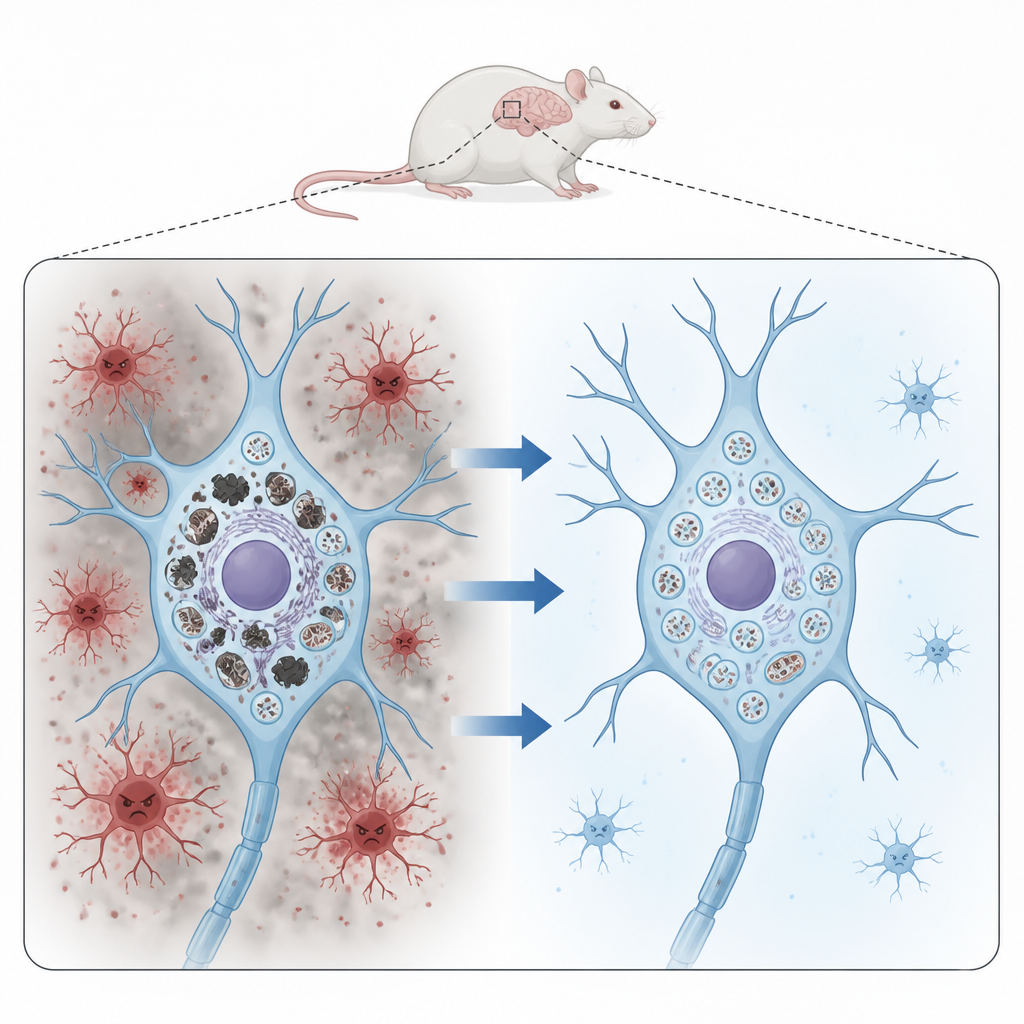
The researchers paid special attention to autophagy, the internal recycling system that helps neurons clear damaged proteins and worn out cell parts. In obese rats, they found a pattern consistent with stalled cleanup: certain markers tied to the early buildup of waste were high, while markers linked to effective recycling were low. This imbalance was seen both in gene activity and in protein staining in cortex and hippocampus. Intermittent fasting shifted this pattern in a more favorable direction, lowering the buildup markers and boosting those associated with active recycling. These shifts lined up with the reductions in inflammation and oxidative stress, hinting that better cellular housekeeping might be a key part of fasting’s protective effects.
What this could mean for brain health
In simple terms, the study suggests that in rats, intermittent fasting can blunt the damage that a high fat diet inflicts on the brain’s structure and function. By calming inflammation, reducing chemical stress, and restoring the brain’s internal cleaning crews, fasting helped preserve memory, social behavior, and nerve cell survival. The work does not prove that the same details apply to people, and it was limited to one fasting pattern and a short time frame. Still, it adds to growing evidence that when we eat may matter almost as much as what we eat, and that giving brain cells regular breaks from constant fuel may help them stay clearer, calmer, and more resilient over time.
Citation: Aref, M., Hadhod, S., Mahran, N.A. et al. Regulatory impact of intermittent fasting on autophagy in high fat diet induced structural and cognitive brain deteriorations in rats. Sci Rep 16, 16140 (2026). https://doi.org/10.1038/s41598-026-52334-9
Keywords: intermittent fasting, high fat diet, autophagy, cognitive function, neuroinflammation