Clear Sky Science · en
Dynamic analysis of the fractional distributed delay models
Why time delays matter in real systems
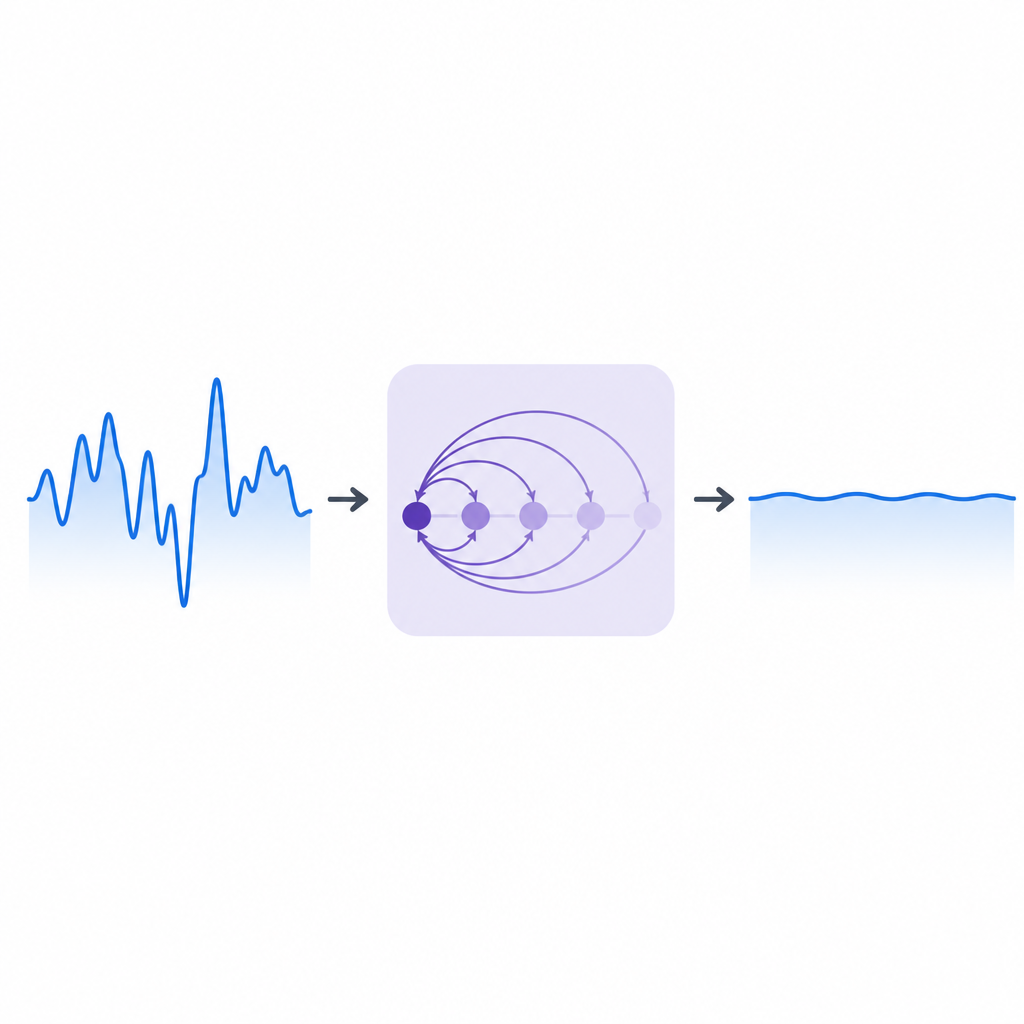
Many real processes, from the spread of infections to the control of machines, do not react instantly to changes. Instead, they respond with a delay and often remember what happened in the past. This paper explores how such delayed and memory-filled responses can make a system either settle down smoothly or wobble in endless cycles, and it shows a way to predict which behavior will occur. Understanding these patterns helps researchers design safer control systems and more realistic models in biology, engineering and the social sciences.
From simple growth to growth with memory
The authors begin with a classic mathematical description of growth, known as the logistic equation, which captures how a population or quantity grows quickly at first and then slows as it nears a limit. They then introduce a time delay so that the current growth depends on conditions some time in the past. Going further, they use a fractional approach, which lets the system keep a graded memory of its entire history instead of just a single past moment. By studying this delayed and memory-based version of the logistic model, they show how small changes in the delay or in the strength of the memory can push the system from a calm steady state into persistent oscillations.
Spreading the delay instead of fixing it
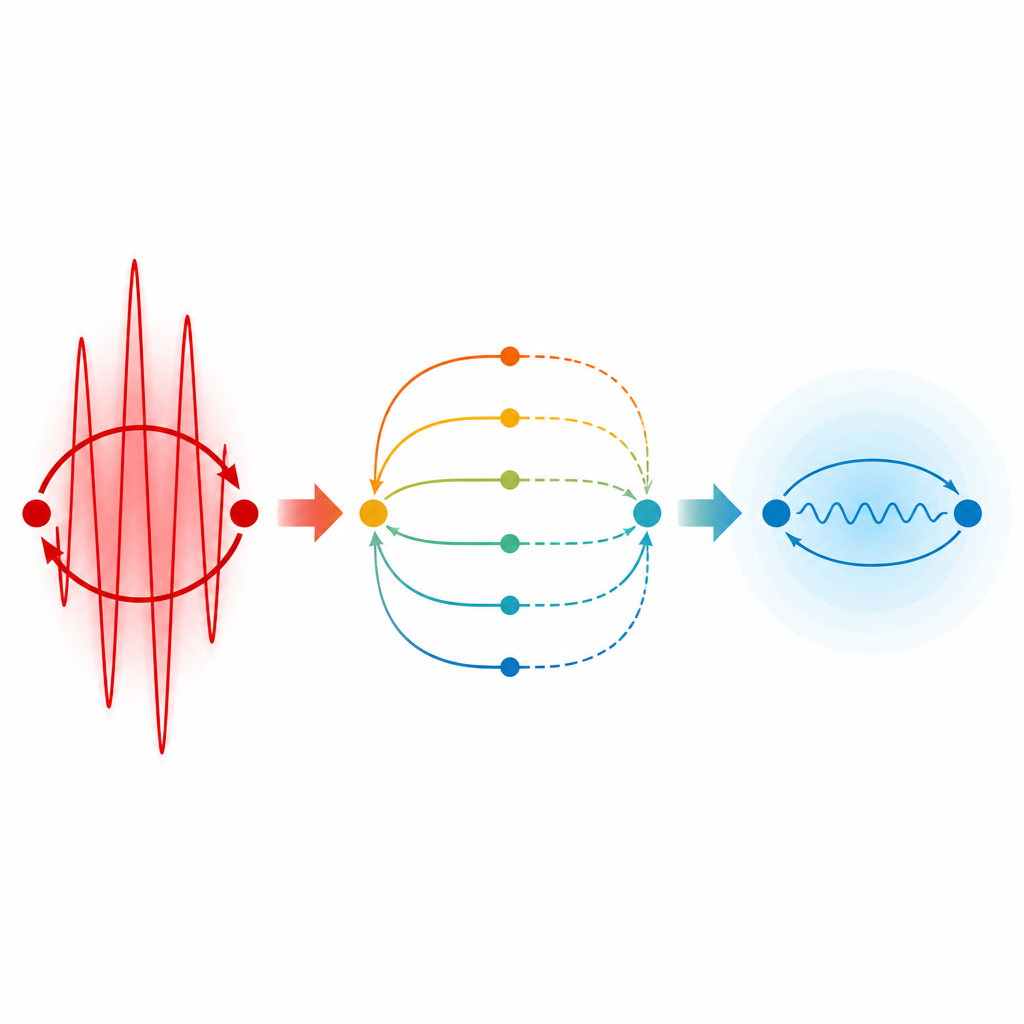
Rather than assuming that all reactions occur after the same fixed delay, the paper focuses on what happens when the delay is spread over a range of times. In this distributed delay setting, the current state depends on a whole weighted history of past states. The authors use a mathematical trick, called the linear chain method, to turn these history-dependent models into systems of coupled equations without explicit delays. This transformation makes it possible to apply known tools for analyzing stability while still capturing the effect of long memory in a compact and tractable way.
Two simple models that capture delayed feedback
Using this framework, the researchers propose two related fractional distributed delay models. In the first, the present growth depends on a smoothed average of the past state, squared, which mimics situations where feedback grows stronger with the size of the past signal. In the second, the model instead averages the square of the past state, representing a slightly different way of encoding delayed impact. For each model they identify two key balances, or equilibrium points: one where the system stays at zero and another where it settles at a positive level. By examining how small disturbances behave near these points, they determine when the system returns to balance and when it drifts away.
Mapping out safe and unsafe operating zones
The authors then explore how three main knobs control stability: the fractional order that measures memory strength, the feedback intensity and a parameter that describes how quickly past effects fade. By scanning across the values of these knobs, they draw regions that mark where the system is stable and where it becomes unstable. Their results show that the stable regions can grow or shrink dramatically as these parameters change, and that spreading the delay over time can enlarge the safe zone compared with models that use only a single fixed delay. Computer simulations back up the analytical predictions, revealing transitions from steady states to repeating cycles right where the theory says they should occur.
What this means in simple terms
In everyday language, this study shows that how a system remembers its past can decide whether it calms down or keeps fluctuating. Treating the delay as a broad memory rather than a single sharp lag often makes the system more stable, giving designers and modelers a larger margin of safety. The work offers a clear roadmap for tuning memory strength, feedback strength and the fading rate of past influences so that delayed systems in biology, technology and other fields are more likely to settle into reliable long-term behavior.
Citation: El-Saka, H.A.A., El-Sherbeny, D.E.A. & El-Sayed, A.M.A. Dynamic analysis of the fractional distributed delay models. Sci Rep 16, 16252 (2026). https://doi.org/10.1038/s41598-026-52327-8
Keywords: fractional delay, distributed delay, stability, delayed feedback, dynamic systems